Video shows four American heavy lift rockets as if they were transparent.
Launch to orbit in real time Fuel Burn and Staging of the Saturn V. Space Shuttle, Falcon Heavy and the Space Launch System (SLS) rockets Launching from Kennedy Space Center Launch Complex 39.
Red = kerosene RP-1 orange = liquid hydrogen LH2 blue = liquid oxygen LOX
Hey all! Curious about what a Moon base will look like? Here is a video on what the first moon base will look like. If you enjoy the video, please subscribe to my channel for more futurist content!
The coming two decades are scheduled to be very interesting decades for human space exploration and colonization. One of the things on America’s agenda for space exploration is creating humanity’s first moon base, which will most likely happen in the 2030s. If you are interested in what this Moon base will look like, please take a look at this video!
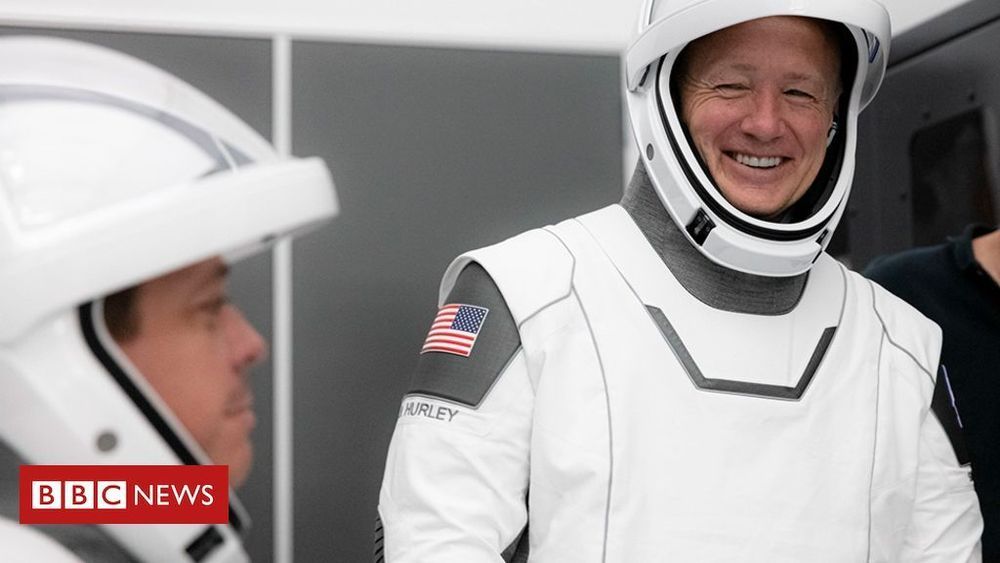
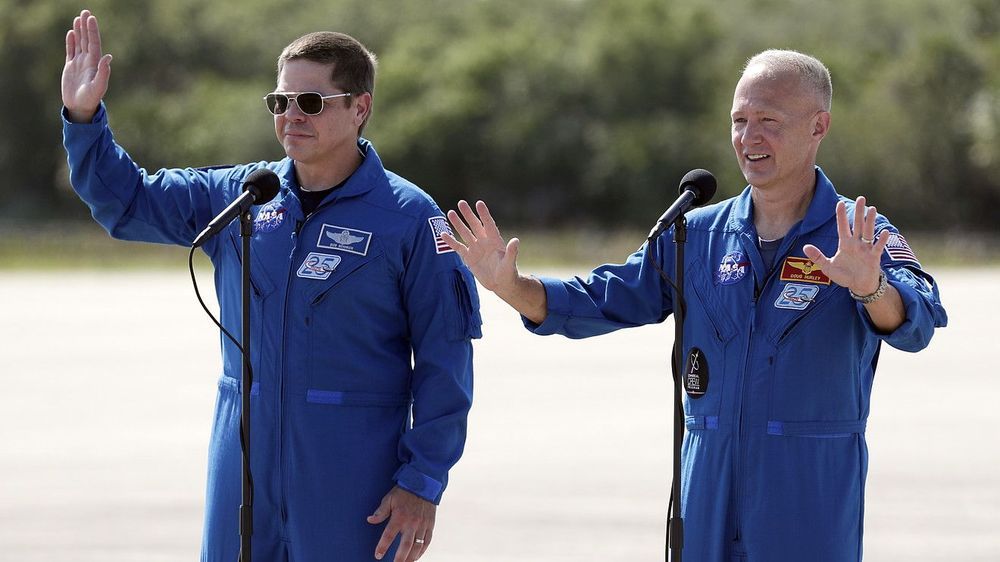
CAPE CANAVERAL, Fla. (AP) — The two astronauts who will end a nine-year launch drought for NASA arrived at Kennedy Space Center on Wednesday, exactly one week before their historic SpaceX flight.
It will be the first time a private company, rather than a national government, sends astronauts into orbit.
NASA test pilots Doug Hurley and Bob Behnken flew to Florida from their home base in Houston aboard one of the space agency’s jets.
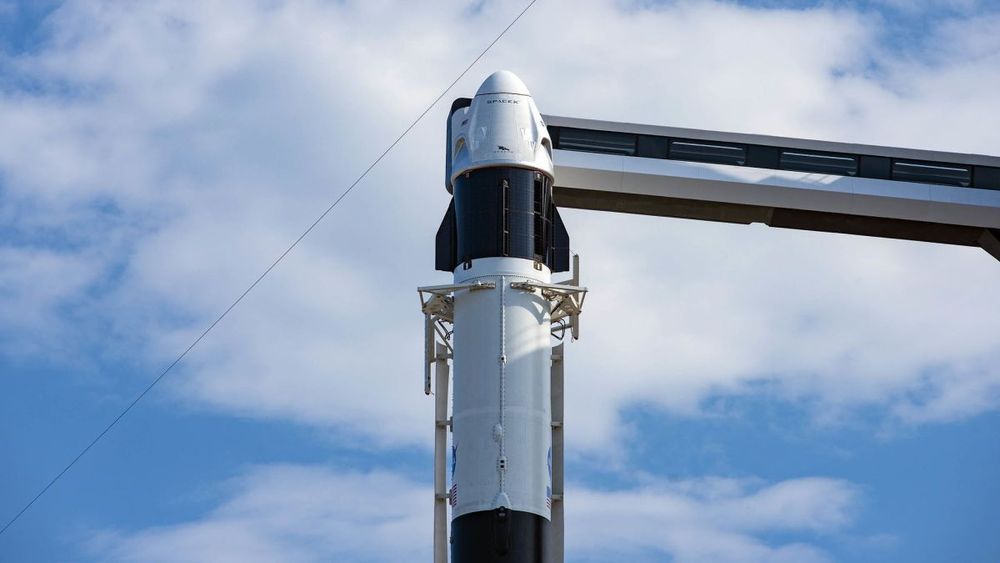
From Kennedy Space Center’s launch complex on May 27, NASA and SpaceX will launch the first crewed flight into orbit from U.S. soil since 2011. NASA astronauts Bob Behnken and Doug Hurley and Douglas Hurley will fly on SpaceX’s Crew Dragon spacecraft, lifting off on a Falcon 9 rocket. SpaceX will be the first private company to launch astronauts to the International Space Station (ISS)
Tune in live at 4 p.m. EDT, as NASA astronauts Douglas Hurley and Robert Behnken arrive at Kennedy Space Center to meet the SpaceX #CrewDragon spacecraft and Falcon 9 rocket that will launch them to the space station and into history.
SpaceX appears to have successfully fired up its fourth full-scale Starship prototype for the third time, although the Raptor engine test ended with the aft end of the ship catching fire and burning for quite some time.
Around May 7th, hours after Starship SN4 completed its second wet dress rehearsal and Raptor static fire in ~24 hours, SpaceX removed the SN18 Raptor engine it had used to support those tests, transporting it back to storage facilities a mile down the road. Three days later, SpaceX sent Raptor SN20 down the same same road and installed it on Starship SN4 – a swap made for unknown reasons.
Regardless, that swap meant that SpaceX would need to perform at least one more static fire test to prove that Starship and its new Raptor engine were getting along before the company could proceed to hop test preparations. After several days of at least 4 aborted Starship static fire attempts, SpaceX has finally managed to fuel Starship SN4 and ignite Raptor engine SN20 – but not before a new challenge cropped up.