Toggle light / dark theme

Exploring Extraterrestrial Oceans: Ice-Grains as Potential Carriers of Life

“For the first time we have shown that even a tiny fraction of cellular material could be identified by a mass spectrometer onboard a spacecraft,” said Dr. Fabian Klenner.


How will we find life on Jupiter’s icy moon, Europa, and Saturn’s icy moon, Enceladus? This is what a recent study published in Science Advances hopes to address as a team of international researchers investigate how ice grains that are discharged from the active plumes of these small moons could possess enough organic material for life to exist. This study holds the potential to help astrobiologists develop the necessary instruments and methods to find life on these small moons, specifically with NASA’s Europa Clipper scheduled to launch this October, whose goal will be to investigate Europa’s habitability potential.

Artist’s illustration of Saturn’s moon, Enceladus, seen here upside down as the plumes are on the south pole. (Credit: NASA/JPL-Caltech)

Image of Jupiter’s moon, Europa, obtained in natural light by NASA’s Juno spacecraft. (Credit: NASA/JPL-Caltech/SwRI/MSSS/Kevin M. Gill)

For the study, the researchers conducted laboratory experiments to simulate how future instruments could fly through the plumes to safely detect bacterial cells, even within one ice grain. The goal was to ascertain if one ice grain was sufficient in detecting bacterial cells as opposed to collecting bulk samples of ice grains. The researchers chose to investigate Sphingopyxis alaskensis, which is a known bacterium that resides off the coast of Alaska, due to its small size and ability to survive in cold environments with little nutrients. In the end, the researchers found they could detect this simple bacterium in a single ice grain using current instruments, including an advanced version of the SUrface Dust Analyzer onboard Europa Clipper.

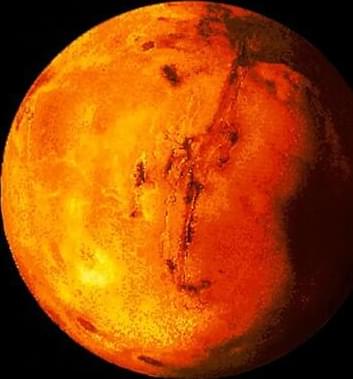
Future of Mars Colonization (2030 — 3000)

This video explores the future of Mars colonization and terraforming from 2030 to 3000. Watch this next video about the 10 stages of AI: • The 10 Stages of Artificial Intelligence.
🎁 5 Free ChatGPT Prompts To Become a Superhuman: https://bit.ly/3Oka9FM
🤖 AI for Business Leaders (Udacity Program): https://bit.ly/3Qjxkmu.
☕ My Patreon: / futurebusinesstech.
➡️ Official Discord Server: / discord.

SOURCES:
https://scitechdaily.com/mars-settlem
https://www.news18.com/news/buzz/elon
https://2050.earth/predictions/a-sust
https://www.businessinsider.com/elon–
https://www.inverse.com/innovation/sp
https://www.inverse.com/article/54358
https://futurism.com/the-byte/elon-mu
https://www.lpi.usra.edu/V2050/presen
https://www.mars-one.com.
https://en.wikipedia.org/wiki/Coloniz
https://www.nationalgeographic.org/hi
https://www.spacex.com/human-spacefli
https://ntrs.nasa.gov/api/citations/2
https://www.space.com/how-feed-one-mi
https://www.usatoday.com/in-depth/new
https://futuretimeline.net/
https://eatlikeamartian.org/
• / realistically_speaking_when_do_you_think_w…
https://www.astronomy.com/space-explo

Official Discord Server: / discord.

💡 On this channel, I explain the following concepts:
• Future and emerging technologies.
• Future and emerging trends related to technology.
• The connection between Science Fiction concepts and reality.

SUBSCRIBE: https://bit.ly/3geLDGO

Disclaimer:

‘Singing’ red giant stars could offer another way to measure the universe’s expansion

The highest rung on the ladder is studied by analyzing the redshifts of distant galaxies. This technique can be used to measure distances across of billions of light-years, by contrast.

Redshift occurs because, as objects race away from us due to the expansion of the universe, the light they emit that takes billions of years to travel to us has its wavelength stretched by this expansion. That lengthening reddens the light and even causes it to move to infrared wavelengths sometimes. This is actually why the James Webb Space Telescope (JWST), which is highly sensitive to infrared light, is so adept and seeing galaxies in the early universe.

The cosmic distance ladder can help cosmologists measure the rate at which the universe is expanding, a value called the Hubble constant, named in honor of astronomer Edwin Hubble. This is because his observations of distant galaxies were key in overturning the idea that the universe exists in a steady state, neither growing nor shrinking.

Supercomputer simulations of super-diamond suggest a path to its creation

Diamond is the strongest material known. However, another form of carbon has been predicted to be even tougher than diamond. The challenge is how to create it on Earth.

The eight-atom body-centered cubic (BC8) crystal is a distinct carbon phase: not diamond, but very similar. BC8 is predicted to be a stronger material, exhibiting a 30% greater resistance to compression than diamond. It is believed to be found in the center of carbon-rich exoplanets. If BC8 could be recovered under ambient conditions, it could be classified as a super-diamond.

This crystalline high-pressure phase of carbon is theoretically predicted to be the most stable phase of carbon under pressures surpassing 10 million atmospheres.

Northrop Grumman wins DARPA contract for a railway on the Moon

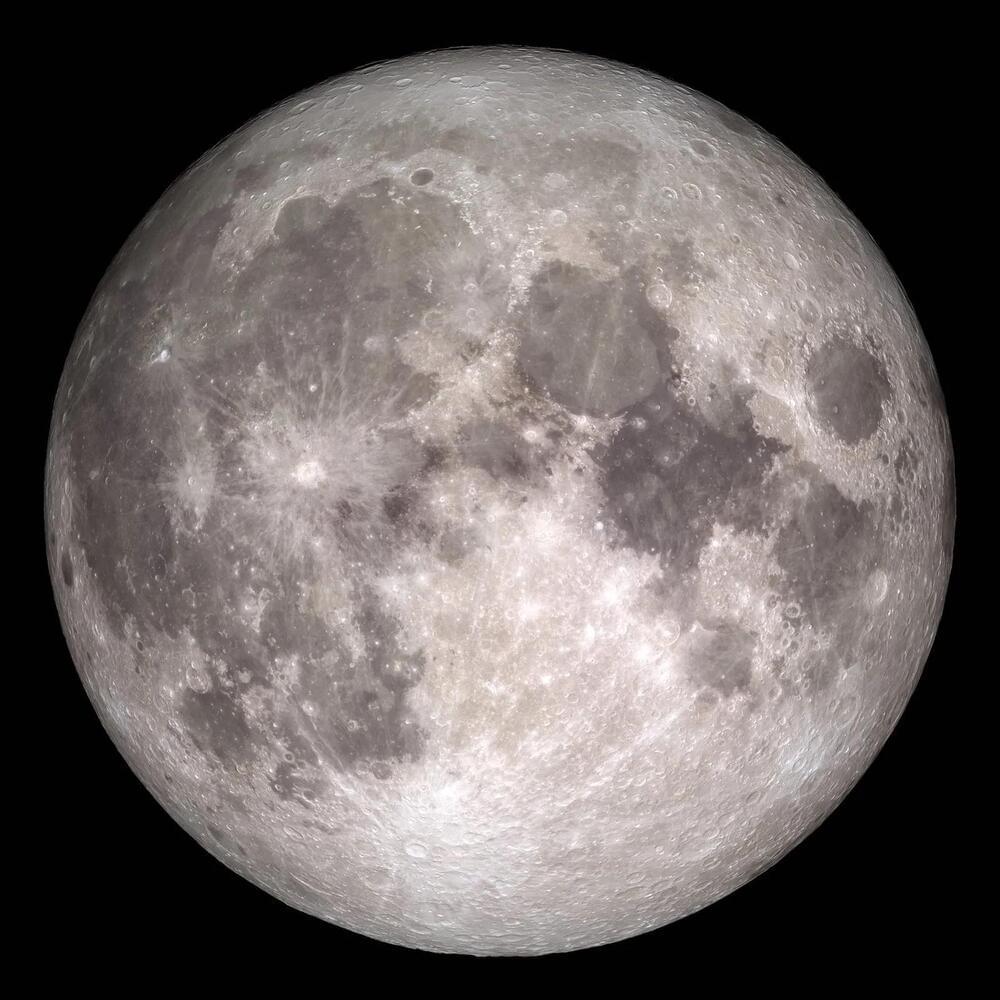
In preparation for a permanent human colony on the Moon, DARPA has awarded a contract to Northrop Grumman to develop a lunar railway concept, as part of the 10-year Lunar Architecture (LunA-10) Capability Study.

Running a train on the Moon may seem profoundly silly, but there is some very firm logic behind it. Even as the first astronauts were landing on the Sea of Tranquility in 1969, it was realized that a permanent human presence on Mars would require an infrastructure to maintain it. That includes mines for water ice, nuclear power plants, factories, and railways.

Though many people think the Moon is small, it is, in fact, a very large place with a surface area equivalent to that of Africa. Over such an expanse, even a limited presence would require some sort of a transport system to link various outposts and activities.

Functional neuronal circuitry and oscillatory dynamics in human brain organoids

Human brain organoids are an intrinsically self-organized neuronal ensemble grown from three-dimensional assemblies of human-iPSCs. As shown here, brain organoids offer a window into the complex neuronal activity that emerges from intrinsically-formed circuits capable of mirroring aspects of the developing human brain32. Applying high-density CMOS MEA to large multi-cellular networks spanning millimeters of the brain organoid cross-sections we isolated single-unit activity and computed the timing of successive action potentials not due to refractoriness referred to as ISIs. As observed in neocortical neurons in vivo, we observed action potentials with irregular ISI’s that followed a Poisson-like process. From a set of 224 neurons analyzed from four different organoids, 16% ± 8% of the total units fit a Poisson distribution (Fig. 3) with, by definition, the CV approaches one for a perfectly homogenous Poisson process, whereas purely periodic distributions have CV values of zero. Thus, a minority fraction of ISIs were highly irregular (Fig. 3), whereas a majority displayed comparatively more regular spiking patterns with less variation (denoted by a lower CV), which may function to send lower-noise spike-rate signals. ISI distributions have also been fitted to gamma distributions that are mathematically equivalent to an exponential distribution when the shape parameter (k) is one and converges to a normal distribution for large k, thus providing a useful measure of ISI-regularity similar to the CV28. Depending on architectonically defined brain regions with specialized cellular compositions and intrinsic circuitry, neurons process information differently67,68,69. Indeed, neuronal firing varies considerably across cortical regions of monkeys28,70,71. Therefore, different organizational features across the brain organoid may exhibit different dynamics to account for the observed ISI distributions. The minority fraction of irregular ISI distributions may be a feature of higher levels of entropy and circuit complexity and contain increased capacity for computation and information transfer as found in prefrontal cortex compared to more regular firing patters found in motor regions28.

We derived a graph of weighted edges that couple single unit node pairs to send and receive spikes over a wide spatial range. Due to the thickness of our organoid slices, many neurons in the slice are too far from any electrode for their spikes to be detected53. Thus, we cannot rule out the possibility that intermediate undetected neurons may account for the coupling between two correlated units. The graph does not imply downstream or upstream routes of information transfer beyond the individual binary couplings. Importantly, what the network does demonstrate is a non-random pattern of a relatively small number of statistically strong (reliable) couplings against a backdrop of weaker couplings. As demonstrated in the murine brain51,52, high anatomical connection strength edges shape a non-random framework against a background of weaker ones (Fig. 6 and Supplementary Fig. 14). The majority of the singe units (nodes), which we refer to as brokers, have large proportions of incoming and outgoing edges. The dynamic balance among receivers and senders could likely reflect short-term plasticity72.

Brain organoids—composed of roughly one million cells—have neuronal assemblies of sufficient size, cellular orientation, connectivity and co-activation capable of generating field potentials in the extracellular space from their collective transmembrane currents. The basis for low frequency LFPs may be the cellular diversity that emerges in the organoid from the variety of GABAergic cells (Fig. 2), consistent with their role in the generation of highly correlated activity networks detected as LFPs31, parvalbumin cells (Fig. 2c), associated with sustaining network dynamics73, and axon tracts that extended over millimeters (Fig. 2b). Coherence of theta oscillations over spatial extents of the organoid was observed and was unlikely due to volume conduction from distant sources, as happens in EEG and MEG measurements54, because the voltage recordings were conducted within a small tissue volume (≈3.5 mm3). Consistent with minimal volume conduction effects, we validated theta oscillations by demonstrating that the imaginary part of coherency54 projected onto the same spatial locations identified by cross-correlation analysis (Supplementary Fig. 19). Correlations between theta oscillations and local neuronal firing (Fig. 7) strongly supported a local source for the rhythmic activity19,20,53. The local volume through which theta dispersed extended to the z-dimension as shown with the Neuropixels shank (Fig. 9).

/* */