Toggle light / dark theme

Neural control of monkeys’ body temperatures could be useful for space travel

The study aims to induce hibernation in monkeys and, eventually, in humans.

In a new study, researchers reduced the core body temperature of crab-eating macaques purely by controlling their brains. The study aims to find a way to induce hibernation in monkeys and, eventually, in humans.


Gremlin/iStock.

Hibernation enables mammals such as bears and rodents to survive adverse weather conditions or a lack of food. During this deep sleep state, they enter a kind of energy-saving mode. Breathing, heart rate, and energy consumption are all drastically reduced; their body temperature plummets, and their metabolism and the chemical reactions that keep them alive slow. Scientists call this condition’ torpor.’ Animals hibernate by alternating between long periods of torpor and brief periods of arousal, during which they wake up to feed.

Ask a Caltech Expert: Physicists Explain Quantum Gravity

As part of Conversations on the Quantum World, a webinar series hosted by the Caltech Science Exchange, Professor of Theoretical Physics Kathryn Zurek and Professor of Physics Rana Adhikari talk about one of the biggest mysteries in physics today: quantum gravity.

Quantum gravity refers to a set of theories attempting to unify the microscopic world of quantum physics with the macroscopic world of gravity and space itself. Zurek, a theorist, and Adhikari, an experimentalist, have teamed up with others to design a new tabletop-size experiment with the potential to detect signatures of quantum gravity.

In conversation with Caltech science writer Whitney Clavin, the scientists explain that at the microscopic, or quantum, level, matter, and energy are made up of discrete components; in other words, quantized. Many scientists believe that gravity is also quantized: if you magnify space itself enough, you should see discrete components. In this webinar, Zurek and Adhikari discuss why measuring quantum gravity is so difficult and how they plan to go about searching for its elusive signatures.

Ultrathin organic solar cells could turn buildings into power generators

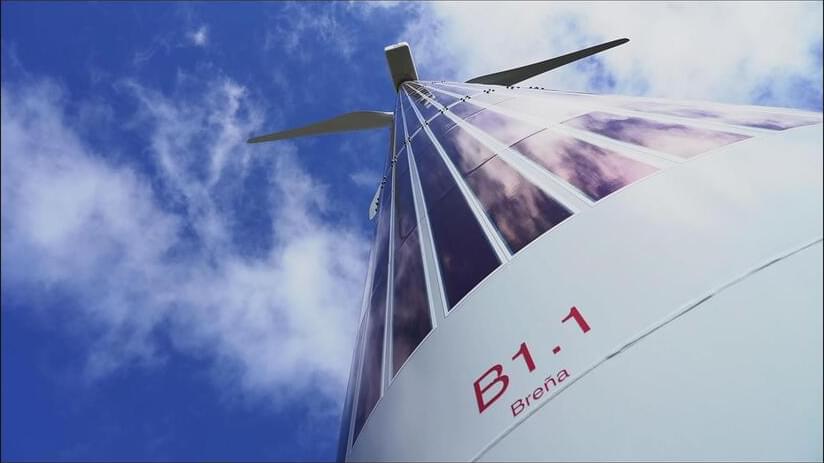
In November 2021, while the municipal utility in Marburg, Germany, was performing scheduled maintenance on a hot water storage facility, engineers glued 18 solar panels to the outside of the main 10-meter-high cylindrical tank. It’s not the typical home for solar panels, most of which are flat, rigid silicon and glass rectangles arrayed on rooftops or in solar parks. The Marburg facility’s panels, by contrast, are ultrathin organic films made by Heliatek, a German solar company. In the past few years, Heliatek has mounted its flexible panels on the sides of office towers, the curved roofs of bus stops, and even the cylindrical shaft of an 80-meter-tall windmill. The goal: expanding solar power’s reach beyond flat land. “There is a huge market where classical photovoltaics do not work,” says Jan Birnstock, Heliatek’s chief technical officer.

Organic photovoltaics (OPVs) such as Heliatek’s are more than 10 times lighter than silicon panels and in some cases cost just half as much to produce. Some are even transparent, which has architects envisioning solar panels not just on rooftops, but incorporated into building facades, windows, and even indoor spaces. “We want to change every building into an electricity-generating building,” Birnstock says.

Heliatek’s panels are among the few OPVs in practical use, and they convert about 9% of the energy in sunlight to electricity. But in recent years, researchers around the globe have come up with new materials and designs that, in small, labmade prototypes, have reached efficiencies of nearly 20%, approaching silicon and alternative inorganic thin-film solar cells, such as those made from a mix of copper, indium, gallium, and selenium (CIGS). Unlike silicon crystals and CIGS, where researchers are mostly limited to the few chemical options nature gives them, OPVs allow them to tweak bonds, rearrange atoms, and mix in elements from across the periodic table. Those changes represent knobs chemists can adjust to improve their materials’ ability to absorb sunlight, conduct charges, and resist degradation. OPVs still fall short on those measures. But, “There is an enormous white space for exploration,” says Stephen Forrest, an OPV chemist at the University of Michigan, Ann Arbor.
Composed By Artificial Intelligence — Fly Me to The Moon

Fly Me to The Moon — Instrumental AI version. Powered by Artificial Intelligence.

We compose background music that can be labeled as for example: sleep music, calm music, yoga music, study music, peaceful music, beautiful music and relaxing music. These tracks are designed to be enjoyed as background music, or use them in your own videos, reels, or clips. All for free.

#music #newmusic #backgroundmusic #jazz #soundtrack.
#FrankSinatra #AI #ArtificalIntelligence

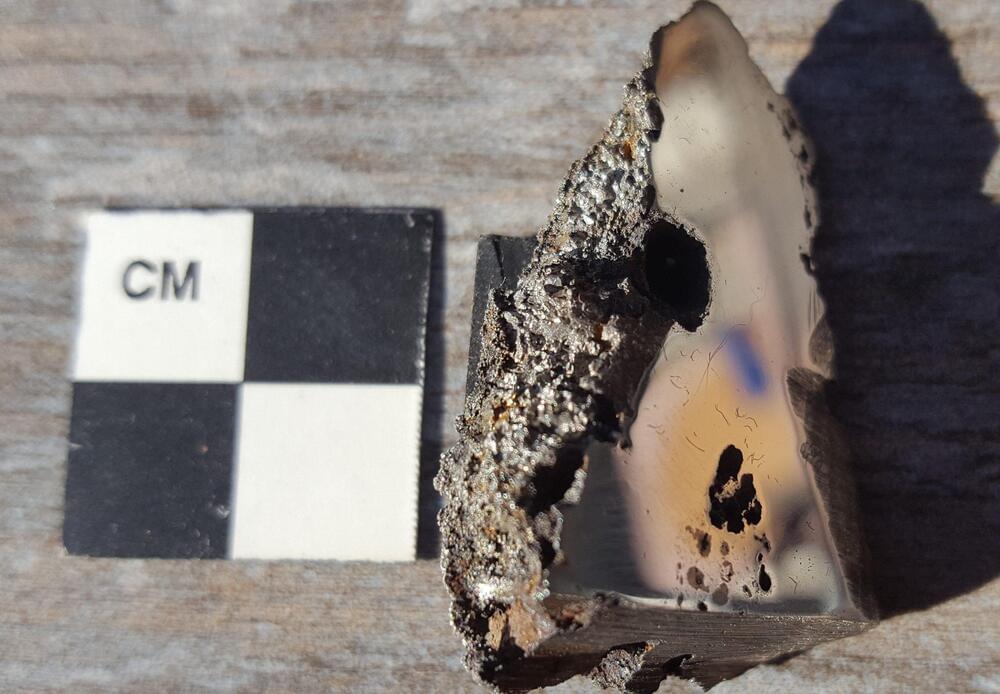
New minerals discovered in massive meteorite may reveal clues to asteroid formation

A team of researchers has discovered at least two new minerals that have never before been seen on Earth in a 15 tonne meteorite found in Somalia — the ninth largest meteorite ever found.

“Whenever you find a new mineral, it means that the actual geological conditions, the chemistry of the rock, was different than what’s been found before,” says Chris Herd, a professor in the Department of Earth & Atmospheric Sciences and curator of the University of Alberta’s Meteorite Collection. “That’s what makes this exciting: In this particular meteorite you have two officially described minerals that are new to science.”

The two minerals found came from a single 70 gram slice that was sent to the U of A for classification, and there already appears to be a potential third mineral under consideration. If researchers were to obtain more samples from the massive meteorite, there’s a chance that even more might be found, Herd notes.

Water From The Sun Has Been Found on The Moon

A new analysis of dust retrieved from the Moon suggests that water bound up in the lunar surface could originate with the Sun.

More specifically, it could be the result of bombardment of hydrogen ions from the solar wind, slamming into the lunar surface, interacting with mineral oxides, and bonding with the dislodged oxygen. The result is water that could be hiding in the lunar regolith in significant quantities at mid and high latitudes.

This has implications for our understanding of the provenance and distribution of water on the Moon – and may even be relevant to our understanding of the origins of water on Earth.

Chinese astronomers detect over 100 new open clusters

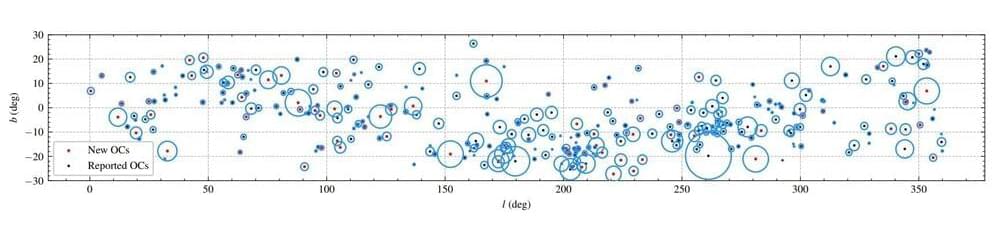
By analyzing the data from ESA’s Gaia satellite, astronomers from the Shanghai Astronomical Observatory (SHAO) in China have detected 101 new open clusters in the Milky Way galaxy. The discovery was presented in a paper published December 21 on the arXiv pre-print repository.

Open clusters (OCs), formed from the same giant molecular cloud, are groups of stars loosely gravitationally bound to each other. So far, more than 1,000 of them have been discovered in the Milky Way, and scientists are still looking for more, hoping to find a variety of these stellar groupings. Studying them in detail could be crucial for improving our understanding of the formation and evolution of our galaxy.

Now, a team of led by SHAO’s Qin Songmei reports the finding of 101 new OCs in the solar neighborhood. The discovery is a result of utilizing clustering algorithms pyUPMASK and HDSBSCAN on the data from Gaia’s Data Release 3 (DR3).

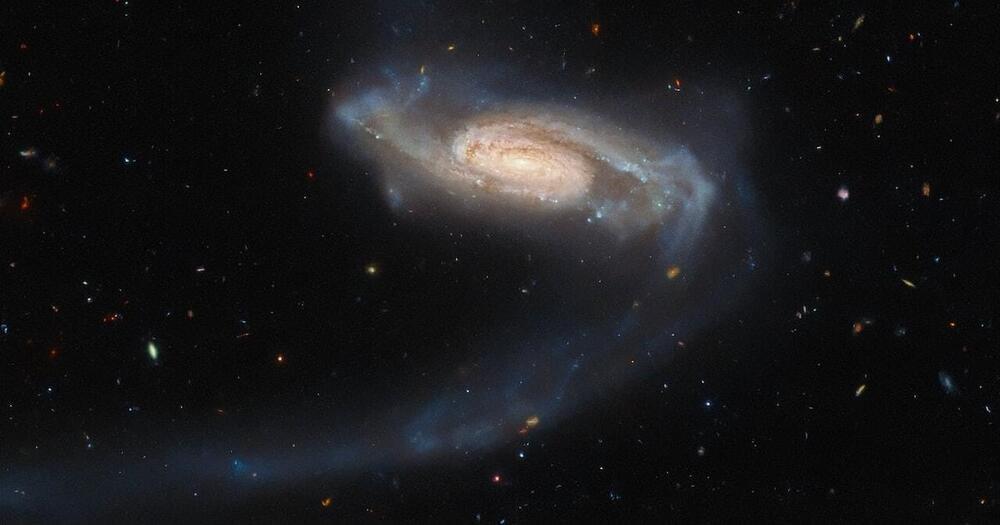
Hubble spots a peculiar galaxy with long, twisting space tentacles

At some point in its history, ESO 415–19 had a close encounter with another galaxy, and it’s never been the same since. The gravity from that passing galaxy drew parts of ESO 415–19 outward into long, curving streams of stars and dust — and then the other galaxy moved on, leaving ESO 415–19 with its arms still stretching out into space.

Astronomers call these bizarrely long arms tidal streams, and they’re what earned ESO 415–19 its coveted place in the Arp Atlas of Peculiar Galaxies, a catalog of 338 of the weirdest galaxies in the known universe.

Researchers could observe the middle corona of the sun in a world first

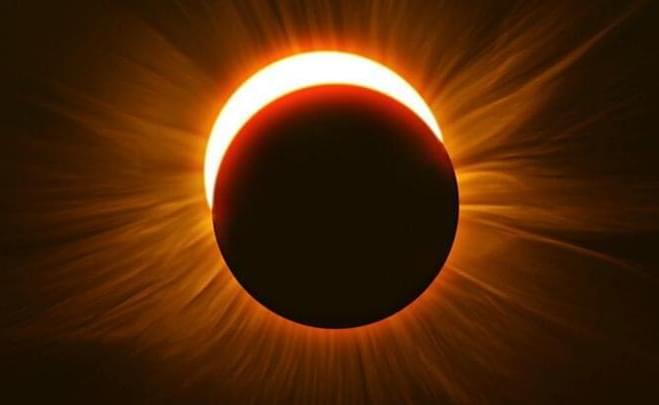
Thanks to a novel technique, scientists are now a step closer to solving a key mystery about the origins of solar wind.

Researchers have discovered web-like plasma structures in the Sun’s middle corona, according to a recent study published in Nature Astronomy.

The results bring us closer to solving a fundamental mystery about solar wind’s origins and its connections with other solar system bodies.

/* */