A group of astronomers studying the planet GJ 1252b found an answer, and it’s not pretty.
What if you placed an Earth-sized planet in a close orbit around an M dwarf star? It’s more than an academic question since M dwarfs are the most numerous stars we know.
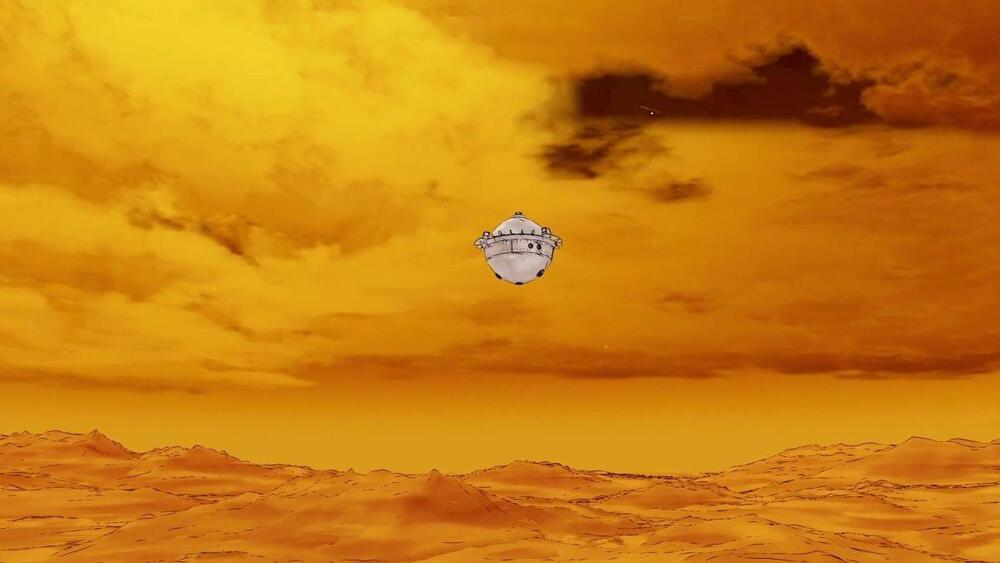
NASA scientists are preparing to paint the most detailed picture to date of the atmosphere of Venus when the aptly named DAVINCI — or Deep Atmosphere Venus Investigation of Noble Gases, Chemistry, and Imaging — mission drops a probe to the planet’s surface.
When the 3-foot-wide (0.9 meters) descent sphere of the DAVINCI mission takes its one-way parachute trip to Venus’ surface in the early 2030s, it will be carrying the VASI (Venus Atmospheric Structure Investigation) instrument along with five other instruments. VASI will collect data regarding the temperature, pressure and winds of Venus’ atmosphere as it makes its hellish descent and enters the planet’s crushing lower atmosphere.
“If Martian life ever existed, even if viable lifeforms are not now present on Mars, their macromolecules and viruses would survive much, much longer,” says study lead author Michael Daly, a pathologist at Uniformed Services University of the Health Sciences, in a statement. “That strengthens the probability that, if life ever evolved on Mars, this will be revealed in future missions.”
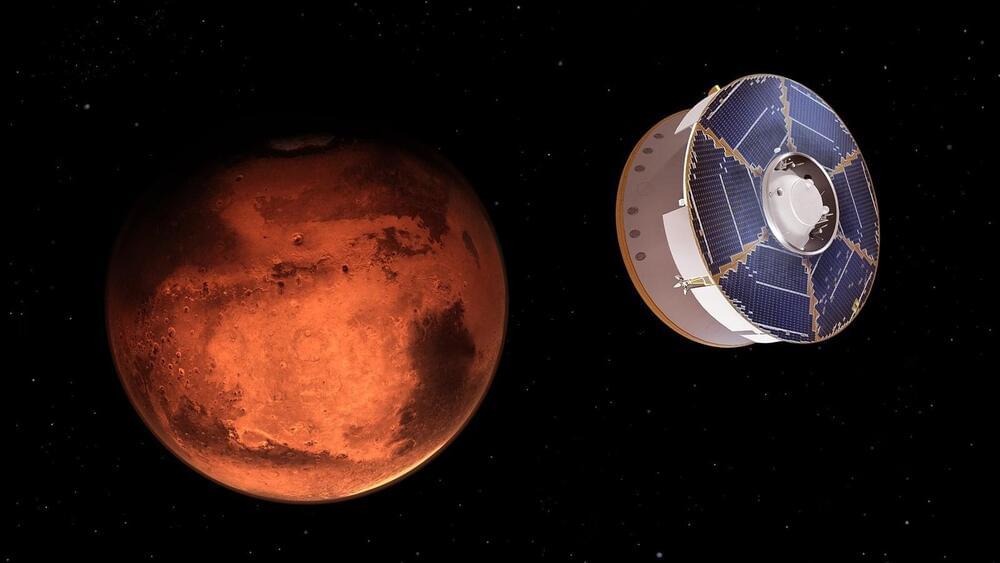
Mars is an exceedingly hostile place. The planet’s surface is dry and frozen, and cosmic radiation and solar protons are constantly bombarding it. But that may not have always been the case—scientists believe water flowed on Mars between 2 and 2.5 billion years ago, which would’ve made the planet slightly more hospitable.
Researchers were curious to know what kind of life might have evolved—and, potentially, survived into the present—on the Red Planet. To attempt to answer that question, they mimicked the cold, arid conditions of Mars here on Earth with six species of microorganisms.
Mars may not be the geologically dead world we thought it was, as hints of magma have been discovered underground.
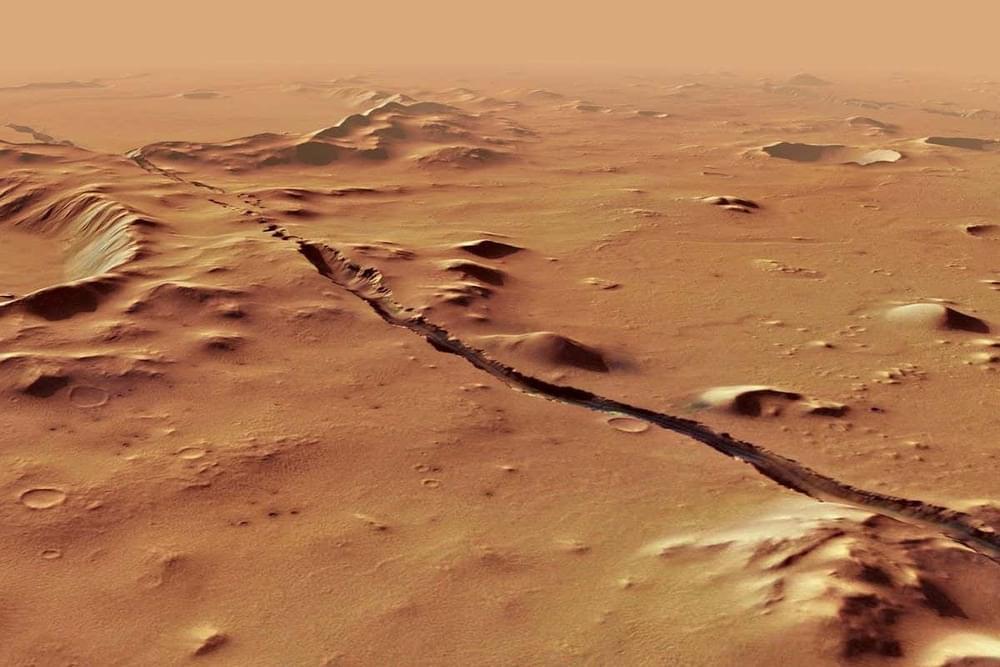
The Red Planet is thought to have been volcanically active in the past, but not for many millions of years. Now, by studying a cluster of more than 20 seismic events on Mars using data from NASA’s InSight lander mission, Simon Stähler at ETH Zurich in Switzerland and his colleagues have uncovered a likely magma deposit near Cerberus Fossae, a region of fissures created by fault lines.
InSight landed on Mars in 2018 with the objective of studying seismic waves that travel across the planet’s surface and from deep within its interior. By investigating the speed and frequency of these waves, we can better understand Mars’s geological structure.
Are we alone in the universe? What could a future for humans in space look like? And what would Creon’s advise to Elon Musk be if he wants to make a self-sufficient mass colony there? This Hope Drop features Creon Levit, chief technologist and director of R&D at Planet Labs.
Creon Levit is chief technologist at Planet Labs, where he works to move the world toward existential hope via novel satellite technologies. He also hosts Foresight Institute’s Space Group.
Creon speaks on:
- His experiences working with NASA & Planet Labs. - Natural systems technologies. - Regenerative Agriculture. - His vision for the future. - And much more!
Creon is chief technologist and director of R&D at Planet Labs, and a Foresight Institute senior fellow. He previously worked at NASA Ames Research Center in Silicon Valley, where he was one of the founders of the NAS (NASA Advanced Supercomputing) division, co-PI on the Virtual Wind Tunnel project, co-founder of the NASA Molecular Nanotechnology Group (the first federally funded research lab devoted to molecular nanotechnology), co-PI on the hyperwall project, investigator on the Columbia accident investigation board, member of the NASA engineering and safety center, investigator on the millimeter-wave thermal rocket project, the Stardust re-entry observation campaign, PI on the LightForce project, special assistant to the center director, and chief scientist for the programs and projects directorate.
Submit your contribution to the storytelling bounty from Creon’s prompt to “Imagine a shift in human nature where we could all have love, community, technology, and adventure, as well as lack of severe hardship or fear.” here: https://680d4kcs6ki.typeform.com/to/jHROTs6z.
Simulations indicate that postmerger gravitational waves from coalescing neutron stars could allow researchers to hear the phase transitions between exotic states of matter.
They believe it was spotted by a student as it descended on Earth and retrieved in a pond.
Science sleuths may have unlocked the century-old mystery of the origins of a Martian meteorite whose toxins make pigs and humans vomit, according to a press release published on Monday by the University of Glasgow.