WASP-39b could be key to finding much calmer, more habitable worlds.
Category: space – Page 497
James Webb Space Telescope reveals an exoplanet atmosphere as never seen before
The James Webb Space Telescope (JWST) has just scored another first: a detailed molecular and chemical portrait of a distant world’s skies.
The telescope’s array of highly sensitive instruments was trained on the atmosphere of a “hot Saturn”—a planet about as massive as Saturn orbiting a star some 700 light-years away—known as WASP-39 b. While JWST and other space telescopes, including Hubble and Spitzer, have previously revealed isolated ingredients of this broiling planet’s atmosphere, the new readings provide a full menu of atoms, molecules, and even signs of active chemistry and clouds.
“The clarity of the signals from a number of different molecules in the data is remarkable,” says Mercedes López-Morales, an astronomer at the Center for Astrophysics | Harvard & Smithsonian and one of the scientists who contributed to the new results.
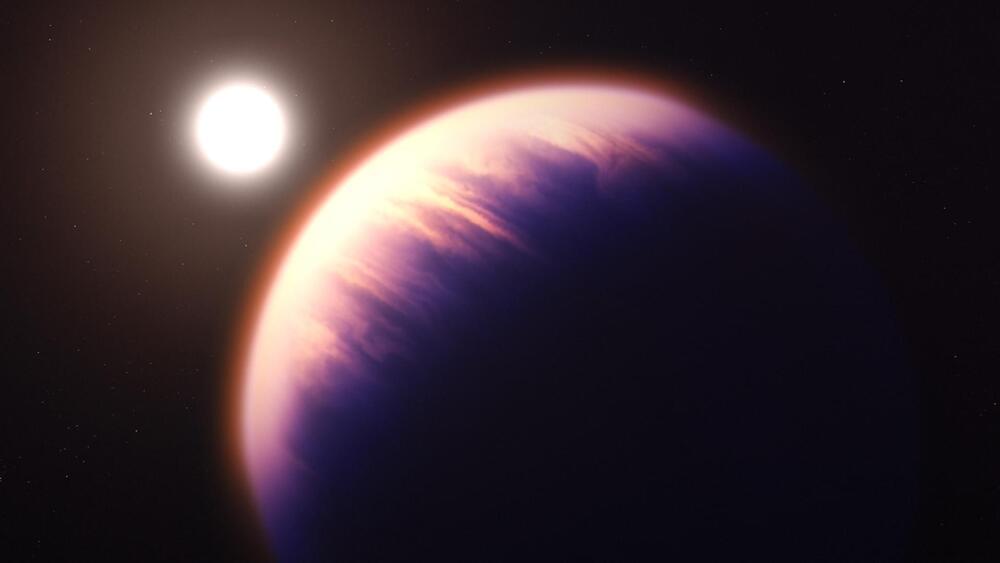
James Webb uncovers the mysteries of an alien world’s atmosphere 700 light-years away
“We are going to be able to see the big picture of exoplanet atmospheres.”
NASA’s James Webb Space Telescope has provided a detailed molecular and chemical profile of a distant exoplanet’s skies in a world first, a blog post from the space agency reveals.
However, the new observations from James Webb reveal the makeup of the exoplanet’s atmosphere like never before and reveal further details of active chemistry and clouds.
NASA, ESA, CSA, Joseph Olmsted (STScI)
The planet — an exoplanet as it is located outside of our solar system — is called WASP-39 b, and it has been observed before by many telescopes, including NASA’s Hubble and Spitzer.
The Species That Eats The Universe | Culture
In this video we discuss the different types of civilizations mention in the Culture series by Iain M. Banks. This video wont have any major spoilers for the series.
Art: https://docs.google.com/document/d/16JYYq4_SqGtPirGfSc6otg_a…sp=sharing.
Music: https://www.youtube.com/watch?v=ZHLcZxOJLAU
Quinn’s New Comic: https://www.quinnhoward.net/theliebehindthestar.
Quinn’s Discord: https://discord.com/invite/sJCwFqxJ
FOLLOW QUINN ON TWITTER: Twitter: https://twitter.com/IDEASOFICE_FIRE
Three-Body Playlist: https://youtube.com/playlist?list=PLRXGGVBzHLUfIzEhovpQJ2ENiNvJoOD2A

Astronomers detect new Jupiter-like exoplanet
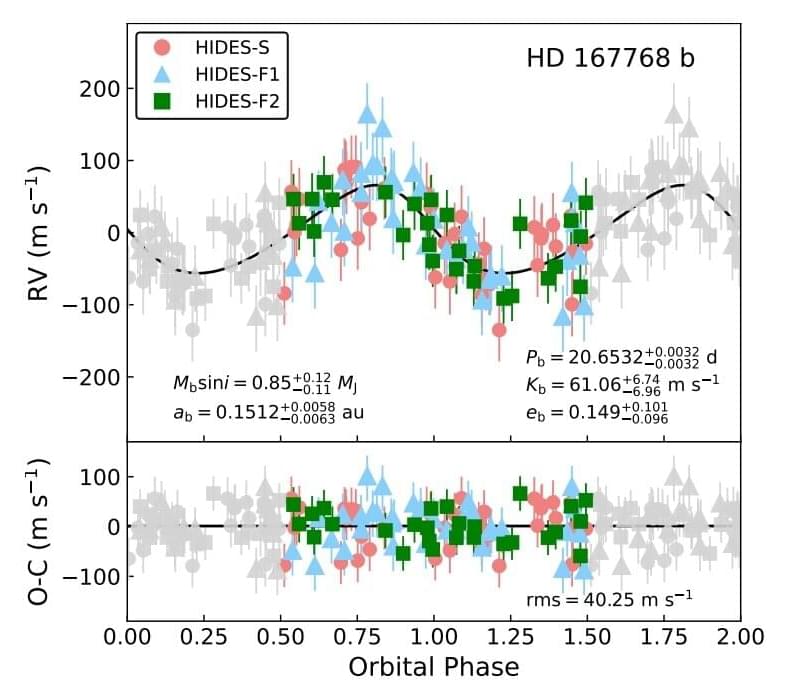
Using radial velocity measurements, astronomers from Japan and China have detected a new exoplanet orbiting a G-type giant star. The newfound alien world is similar in mass to Jupiter but much hotter than the solar system’s biggest planet. The discovery is reported in a paper published November 12 on the arXiv pre-print server.
The radial velocity (RV) method to detect an exoplanet is based on the detection of variations in the velocity of the central star, due to the changing direction of the gravitational pull from an unseen exoplanet as it orbits the star. Thanks to this technique, more than 600 exoplanets have been detected so far.
Now, a group of astronomers led by Huan-Yu Teng of the Tokyo Institute of Technology in Tokyo, Japan, reports the finding of a new giant planet as a result of RV measurements using the HIgh Dispersion Echelle Spectrograph (HIDES) at Okayama Astrophysical Observatory (OAO) in Japan. The planet orbits a deeply evolved solar-mass G-type giant star known as HD 167,768, located some 353 light years away.
NASA returns to the Moon: Orion Spacecraft completes lunar flyby
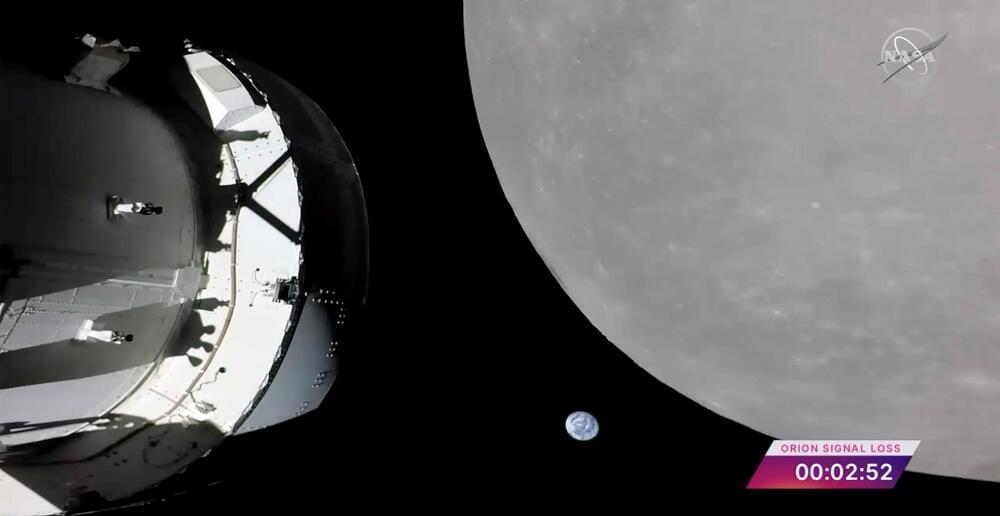
On its journey to a world-record-breaking orbit, NASA’s Orion spacecraft, which had test dummies in place of people, buzzed the lunar surface and whipped around the far side.
It marks a significant accomplishment in the $4.1 billion test journey that started last Wednesday and is the first time a capsule has reached the moon in 50 years.
The crew capsule and its three wired-up dummies maneuvered within 81 miles of the Moon on the far side.

Researcher shows how a common fungus eliminates toxic mercury from soil and water
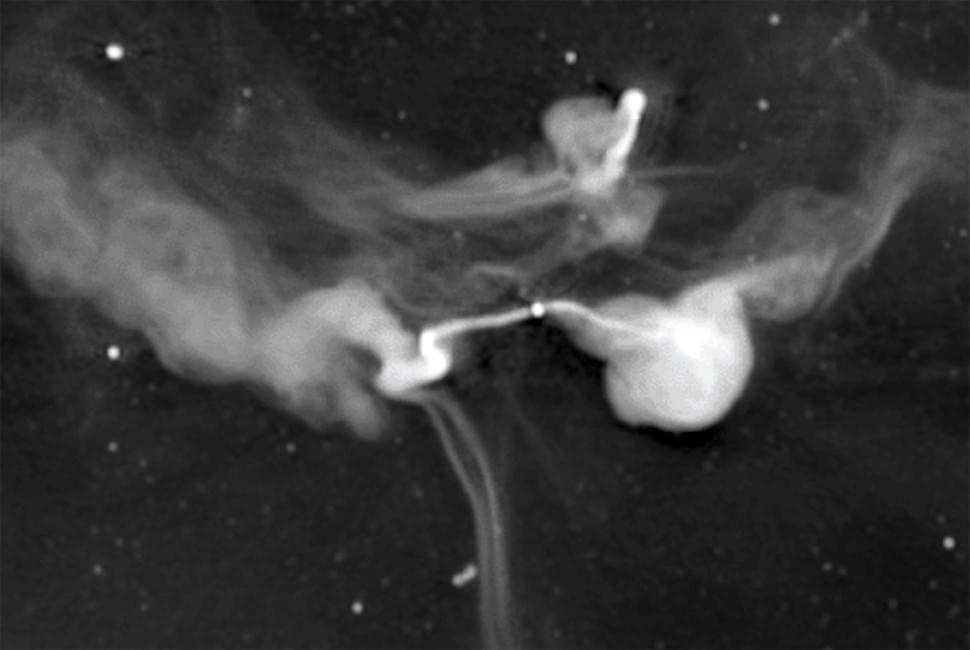
A University of Maryland researcher and colleagues found that the fungus Metarhizium robertsii removes mercury from the soil around plant roots, and from fresh and saltwater. The researchers also genetically engineered the fungus to amplify its mercury detoxifying effects.
Mercury pollution of soil and water is a worldwide threat to public health. This new work suggests Metarhizium could provide an inexpensive and efficient way to protect crops grown in polluted areas and remediate mercury-laden waterways.
The study, which was conducted by UMD professor of entomology Raymond St. Leger and researchers in the laboratory of his former post-doctoral fellow, Weiguo Fang (now at Zhejiang University in Hangzhou, China), was published in Proceedings of the National Academy of Sciences (PNAS) on November 14, 2022.
Ambient Sci Fi Music For People Wishing They Were Born in The Year 3336
🔺An ambient Sci Fi journey that evolves from light to dark, evoking imagery of distant, undiscovered secrets of the beyond. Let the music guide your mind and prepare for a ride smile In all seriousness though, this is quite a nice one. Not superhappy with the results, but it’s good enough. It’s reminescent of my older sci fi journeys. At times you may find it to dark and pressing, but the light will come again. Also, the ambience in this one is really cool. I took my time to sound design passing spaceships and shuttles as distant traffic in the background and it works extremely well and feels totally believable imo. Think I’m gonna do a video just for that ambience. Oh, visuals is kinda great too smile Thanks for your support guys smile Have a great day everyone🔺 SEO: I create ambient space music, ambient sci fi music, ambient cyberpunk music, ambient fantasy music to be used as ambient background music. You can use the music as ambient music for study, ambient music for focus, ambient music for work, ambient music for sleep, ambient music for relaxation, ambient music for reading, ambient music for writing — whatever really smile All my ambient music contains rain ambience or nature ambience. My music is best described as atmospheric ambient music, soothing ambient music, relaxing ambient music, tranquil ambient music, ethereal ambient music, cinematic ambient music, dark ambient music.
Note:
All music on this channel is not to be used without permission. It’s made for this channel only and is protected by Youtube Copyright law.
Please help the channel by liking 👍, write a comment ✏️ and subscribe 🔔, thanks 🙏!
Programs & equipment!
AUDIO CREATED WITH:
Propellerhead Reason.
Audition.
Reaper.
Waves Plugins.
VISUALS CREATED WITH: