Toggle light / dark theme

Farming Robot Kills 100,000 Weeds per Hour With Lasers

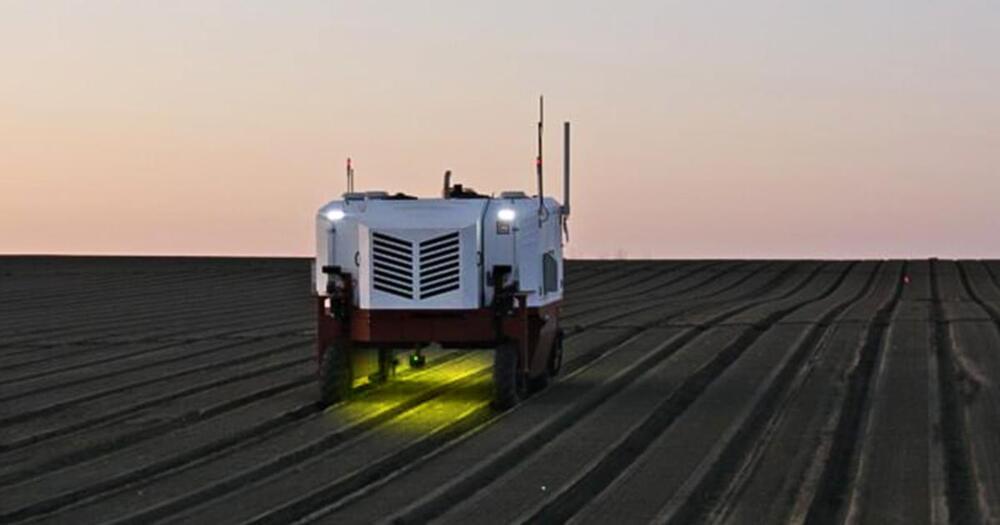
A person can weed about one acre of crops a day. This smart robot can weed 20.


Carbon Robotics has unveiled the third-generation of its Autonomous Weeder, a smart farming robot that identifies weeds and then destroys them with high-power lasers.

The weedkiller challenge: Weeds compete with plants for space, sunlight, and soil nutrients. They can also make it easier for insect pests to harm crops, so weed control is a top concern for farmers.

Chemical herbicides can kill the pesky plants, but they can also contaminate water and affect soil health. Weeds can be pulled out by hand, but it’s unpleasant work, and labor shortages are already a huge problem in the agriculture industry.
The Vera C. Rubin Observatory: New view of the universe

The next era of astronomy will be defined by a wider view of the cosmos.


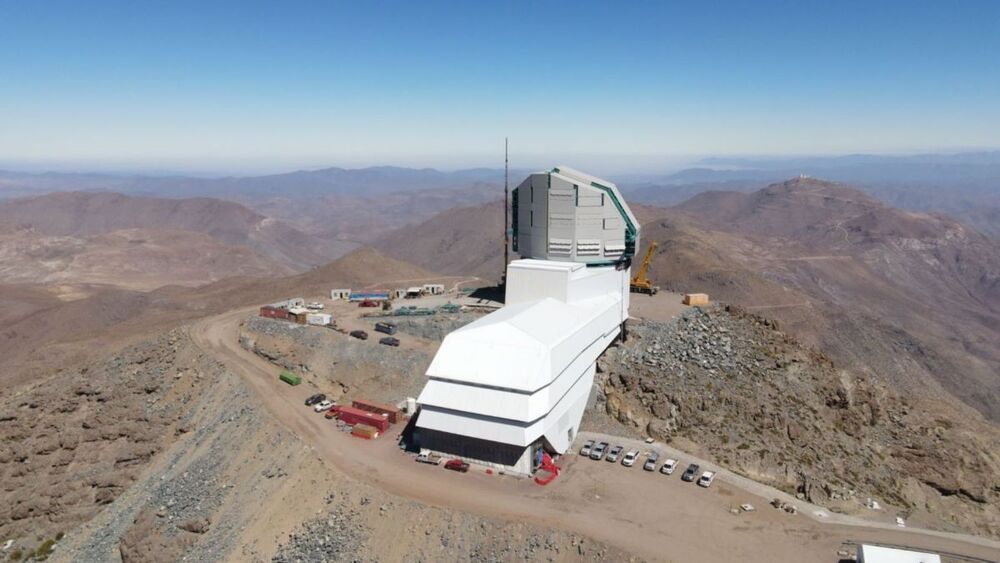
The next era of our investigation of the cosmos is about to be kick-started by the Vera C. Rubin Observatory, a ground-based telescope currently under construction on the El Penón peak of Cerro Pachón in northern Chile. The observatory is a federal project run by the National Science Foundation (NSF) and the U.S. Department of Energy.

The new observatory — named in honor of astronomer Vera Rubin — is scheduled to begin operations in October 2023, according to a statement published on the Rubin Observatory website. When it’s up and running, Rubin will allow astronomers to consider some of the universe’s most pressing mysteries.

Incredible Cosmic Conditions: Bringing Neutron Stars Down to Earth

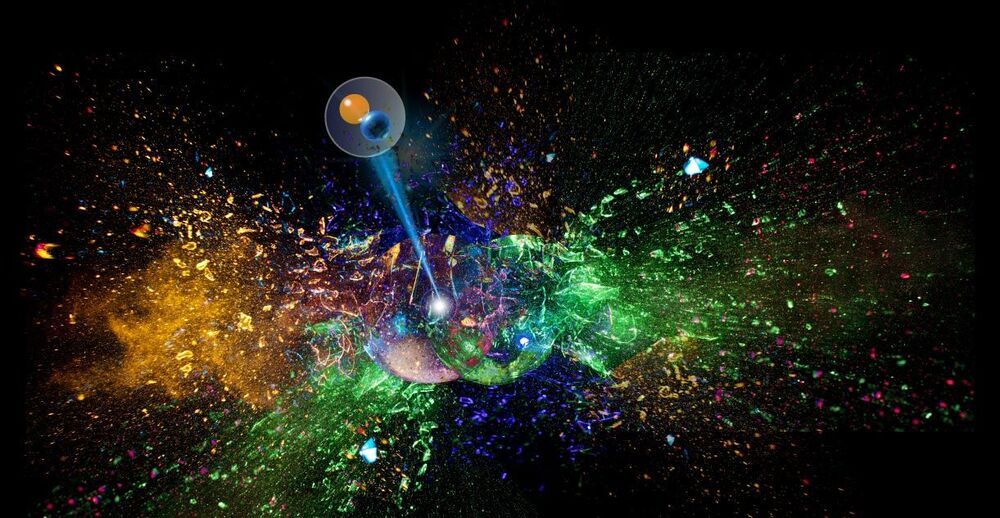
An international research team led by Michigan State University has helped create cosmic conditions at RIKEN’s heavy-ion accelerator in Japan.

Imagine taking all of the water in Lake Michigan — more than a quadrillion gallons — and squeezing it into a 4-gallon bucket, the kind you’d find at a hardware store.

A quick review of the numbers suggests that this should be impossible: that’s too much stuff and not enough space. But this outlandish density is a defining feature of celestial objects known as neutron stars. These stars are only about 15 miles across, yet they hold more mass than our sun thanks to some extreme physics.

‘Our customers are hardcore’: Vollebak is aiming to be the Tesla of fashion, creating clothes fit for the toughest places on Earth and in space

It’s clothing fit for a post-apocalyptic world, not our own. It’s unsurprising then that the company has found a large following in Silicon Valley, which is known for attracting vast resources and the kinds of people absorbed in questions of where we’re all headed. Many have, after all, bought up the boltholes and bunkers to prove it.


A Vollebak rack would sooner belong in a military surplus warehouse than a high street clothing store.

Recruiting in trying times: How Lockheed Martin Space hired thousands (plus 700 interns) in a pandemic

Lockheed Martin Space hired 2700 people plus 700 interns in 2020, a year unlike any other for human resources managers. Almost overnight, the prime contractor with about 23000 employees switched from its traditional in-person approach to virtual recruitment, interviewing and training.

SpaceNews correspondent Debra Werner spoke with Lockheed Martin Space executives Nick Spain, human resources vice president, Renu Aggarwal, talent acquisition director, and Heather Erickson, organizational development director, about the opportunities and challenges posed by heightened demand for talent amid a pandemic.

Researchers’ VR walking simulator feels surprisingly close to the real thing

Despite virtual reality (VR) technology being more affordable than ever, developers have yet to achieve a sense of full immersion in a digital world. Among the greatest challenges is making the user feel as if they are walking.

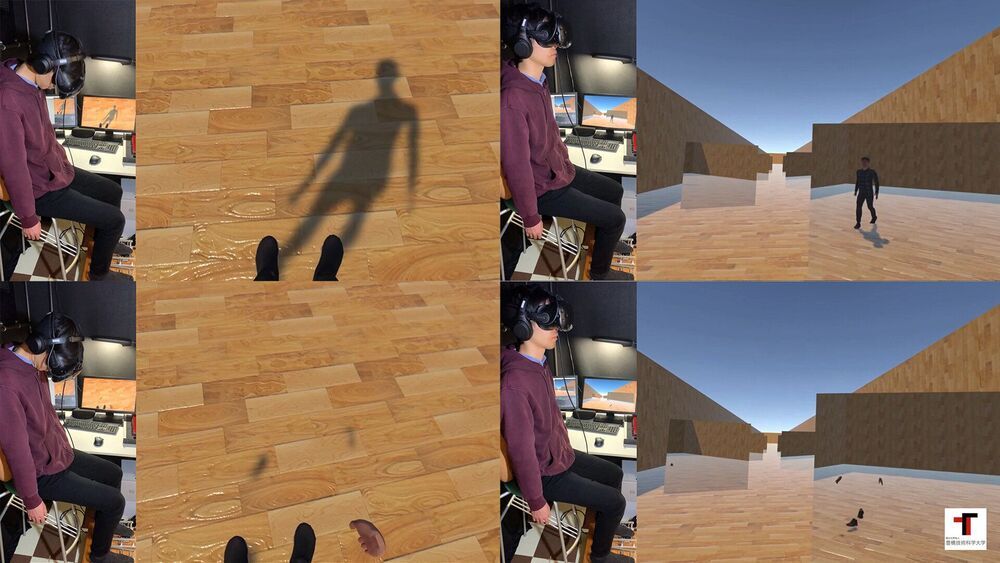
Now, researchers from the Toyohashi University of Technology and The University of Tokyo in Japan have published a paper to the journal Frontiers in Virtual Reality describing a custom-built platform that aims to replicate the sensation of walking in VR, all while sitting motionlessly in a chair.

“Walking is a fundamental and fun activity for human in everyday life. Therefore, it is very worthwhile to provide a high-quality walking experience in a VR space,” says Yusuke Matsuda.

New Theory Addresses Centuries-Old Physics Problem

Hebrew University Researcher Introduces New Approach to Three-Body Problem, Predicts its Outcome Statistics.

The “three-body problem,” the term coined for predicting the motion of three gravitating bodies in space, is essential for understanding a variety of astrophysical processes as well as a large class of mechanical problems, and has occupied some of the world’s best physicists, astronomers and mathematicians for over three centuries. Their attempts have led to the discovery of several important fields of science; yet its solution remained a mystery.

At the end of the 17th century, Sir Isaac Newton succeeded in explaining the motion of the planets around the sun through a law of universal gravitation. He also sought to explain the motion of the moon. Since both the earth and the sun determine the motion of the moon, Newton became interested in the problem of predicting the motion of three bodies moving in space under the influence of their mutual gravitational attraction (see illustration to the right), a problem that later became known as “the three-body problem.”

/* */