NASA is all set to fly a helicopter on mars in 2021.
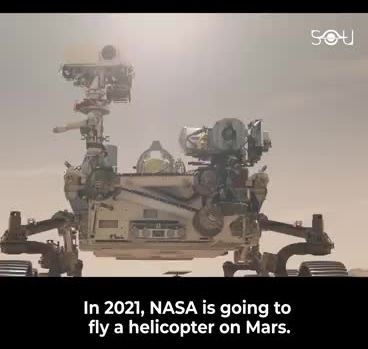
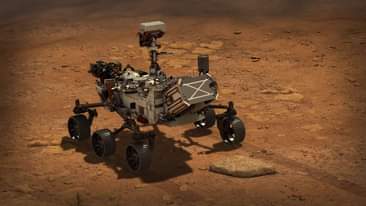
It’s never easy. It’s always exciting. Our next Mars landing happens on Feb. 18, and you’re invited to take part as NASA’s Perseverance Mars Rover begins its exploration of mysterious Jezero Crater. Here’s how to join in the # CountdownToMars : http://go.nasa.gov/3tVrB8T
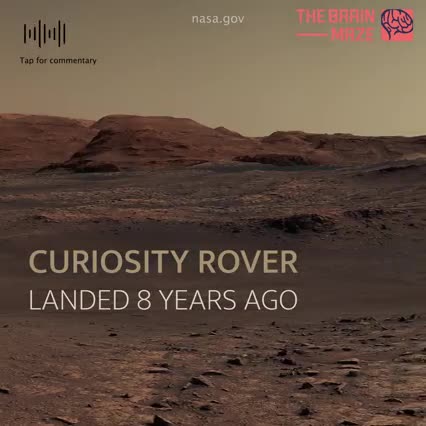
On the 12th of January 2021, NASA released the last panorama of Mars captured by the Curiosity Rover near Mount Sharp. This spectacular view presented on the highest quality is a combination of 122 photos.
Days ago, Insight Lander ended Its journey on Mars. In February Perseverance Rover will begin its trip!
Enjoy this mesmerizing view on Mars, with interesting details explained in this video!
Pluto, the dwarf planet, resides around 3.1 billion miles from the Sun, while Farfarout is an incredible 12.2 billion miles from the Sun.


About this partnership.
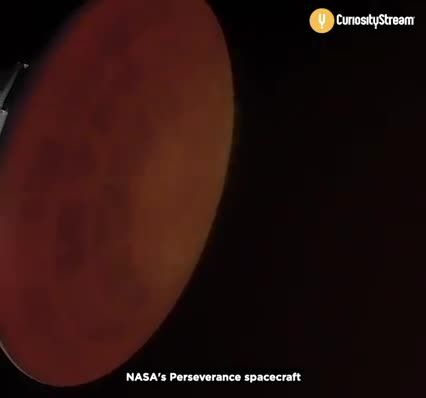
The Mars Perseverance Rover is in its final flight stages, heading for its historic rendezvous with the red planet. First up — a harrowing landing, scheduled for February 18th…Don’t miss it!
Learn more with Perseverance: Countdown to Impact now available on CuriosityStream.

A novel computer algorithm, or set of rules, that accurately predicts the orbits of planets in the solar system could be adapted to better predict and control the behavior of the plasma that fuels fusion facilities designed to harvest on Earth the fusion energy that powers the sun and stars.
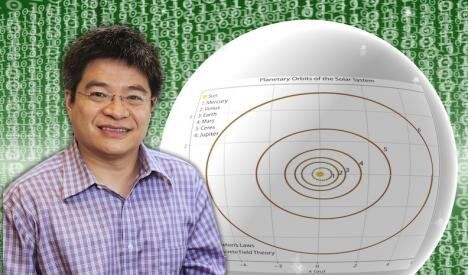
The algorithm, devised by a scientist at the U.S. Department of Energy’s (DOE) Princeton Plasma Physics Laboratory (PPPL), applies machine learning, the form of artificial intelligence (AI) that learns from experience, to develop the predictions. “Usually in physics, you make observations, create a theory based on those observations, and then use that theory to predict new observations,” said PPPL physicist Hong Qin, author of a paper detailing the concept in Scientific Reports. “What I’m doing is replacing this process with a type of black box that can produce accurate predictions without using a traditional theory or law.”
Qin (pronounced Chin) created a computer program into which he fed data from past observations of the orbits of Mercury, Venus, Earth, Mars, Jupiter, and the dwarf planet Ceres. This program, along with an additional program known as a “serving algorithm,” then made accurate predictions of the orbits of other planets in the solar system without using Newton’s laws of motion and gravitation. “Essentially, I bypassed all the fundamental ingredients of physics. I go directly from data to data,” Qin said. “There is no law of physics in the middle.”