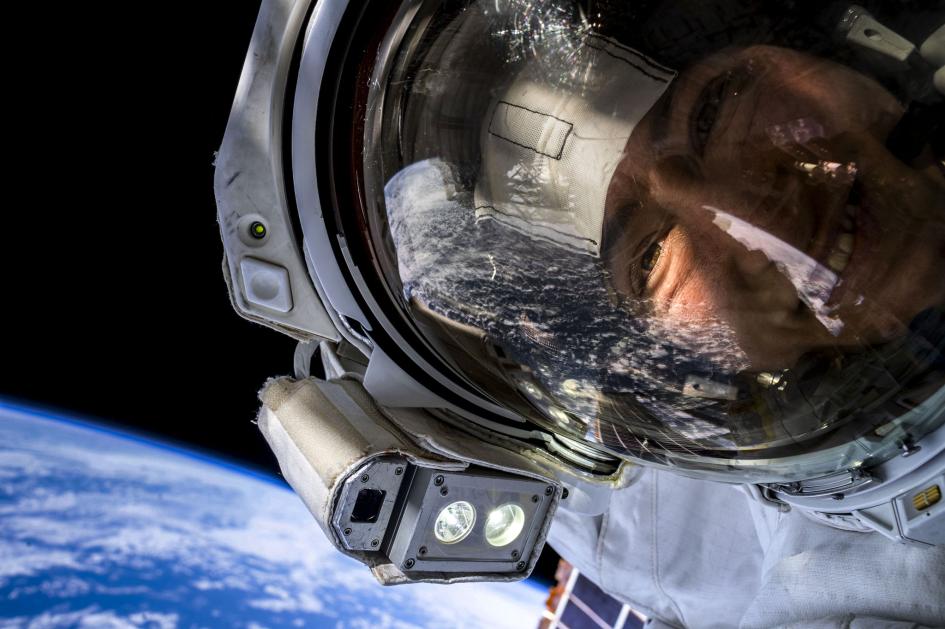
Eighteen U.S. astronauts have been chosen to train for the Artemis missions, which aim to return humans to the lunar surface.
There’s more than one way to rank future civilizations, you know! Regular viewers will know all about the Kardashev Scale, but now there’s a NEW theory in town! In this video, Unveiled journeys to the future of humanity to ask; What will we look like? What will we be like? And how much will we have changed?
This is Unveiled, giving you incredible answers to extraordinary questions!
Find more amazing videos for your curiosity here:
What If Humanity Was A Type VII Civilization? — https://youtu.be/pz-Z8AavJZY
What If the Universe is an Atom? — https://youtu.be/WYyu9h9JJfg.
Are you constantly curious? Then subscribe for more from Unveiled ► https://wmojo.com/unveiled-subscribe.
#WhatIf #Civilization #Future
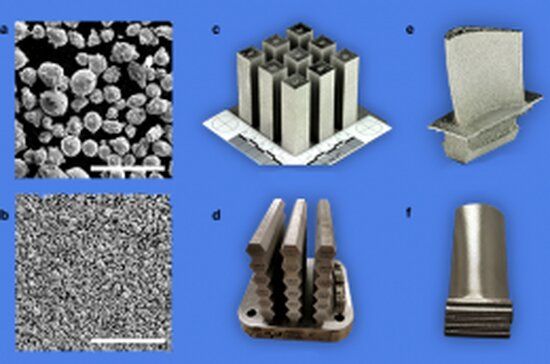
In recent years, it has become possible to use laser beams and electron beams to “print” engineering objects with complex shapes that could not be achieved by conventional manufacturing. The additive manufacturing (AM) process, or 3D printing, for metallic materials involves melting and fusing fine-scale powder particles—each about 10 times finer than a grain of beach sand—in sub-millimeter-scale “pools” created by focusing a laser or electron beam on the material.
“The highly focused beams provide exquisite control, enabling ‘tuning’ of properties in critical locations of the printed object,” said Tresa Pollock, a professor of materials and associate dean of the College of Engineering at UC Santa Barbara. “Unfortunately, many advanced metallic alloys used in extreme heat-intensive and chemically corrosive environments encountered in energy, space and nuclear applications are not compatible with the AM process.”
The challenge of discovering new AM-compatible materials was irresistible for Pollock, a world-renowned scientist who conducts research on advanced metallic materials and coatings. “This was interesting,” she said, “because a suite of highly compatible alloys could transform the production of metallic materials having high economic value—i.e. materials that are expensive because their constituents are relatively rare within the earth’s crust—by enabling the manufacture of geometrically complex designs with minimal material waste.

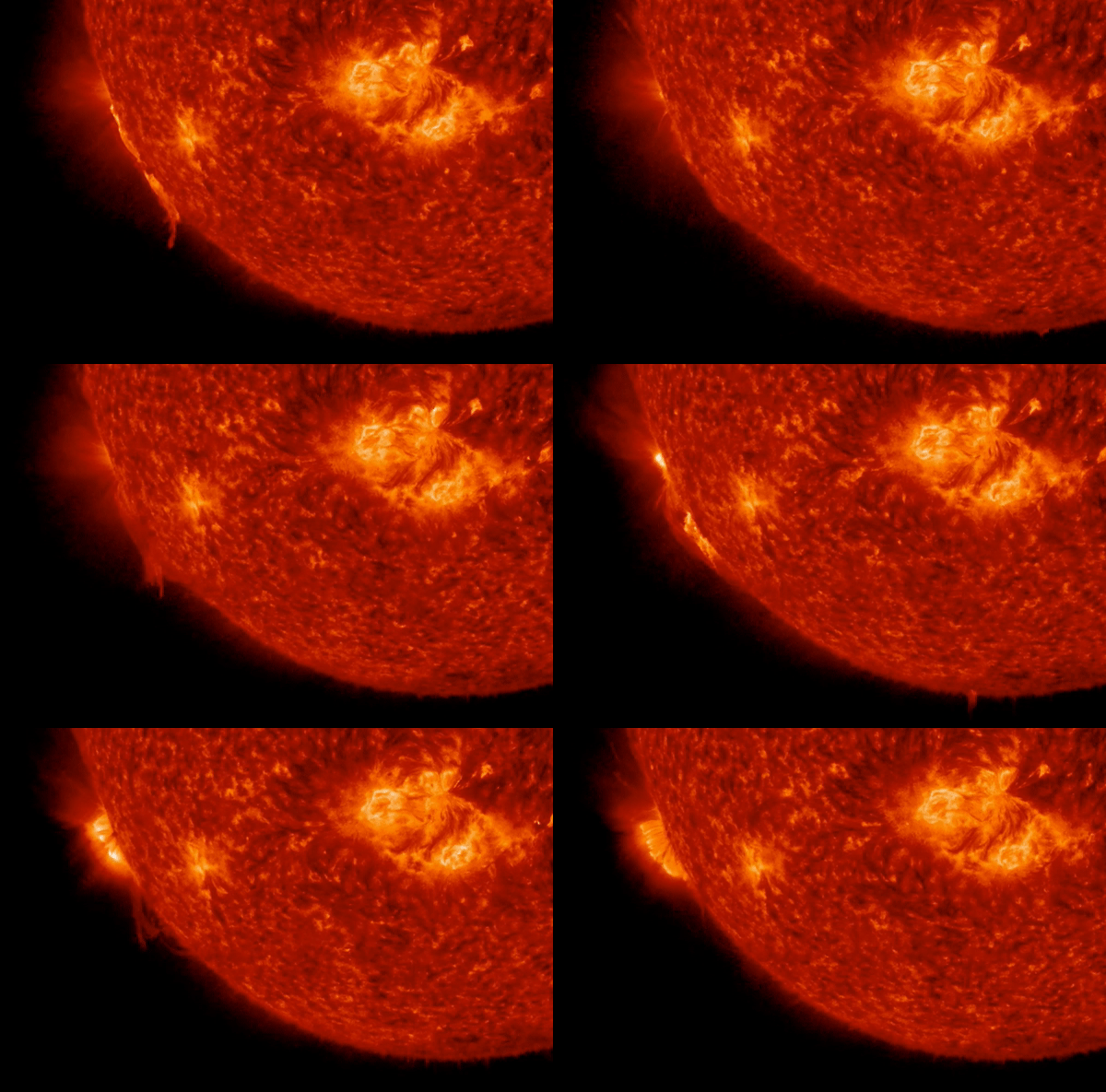
O,.0 based on my sources could bring minor earthquakes perhaps also satellite outages.
The sun unleashed its most powerful solar eruption in more than three years on Sunday (Nov. 29).
The solar flare, which is a sudden, bright explosion of electromagnetic energy, measured as an M4.4 on the scale astronomers use for sun storms. M-class flares are medium-sized eruptions (compared to small C-class flares and large X-class flares) and rank on a scale from 1 to 9, with larger numbers representing stronger flares.
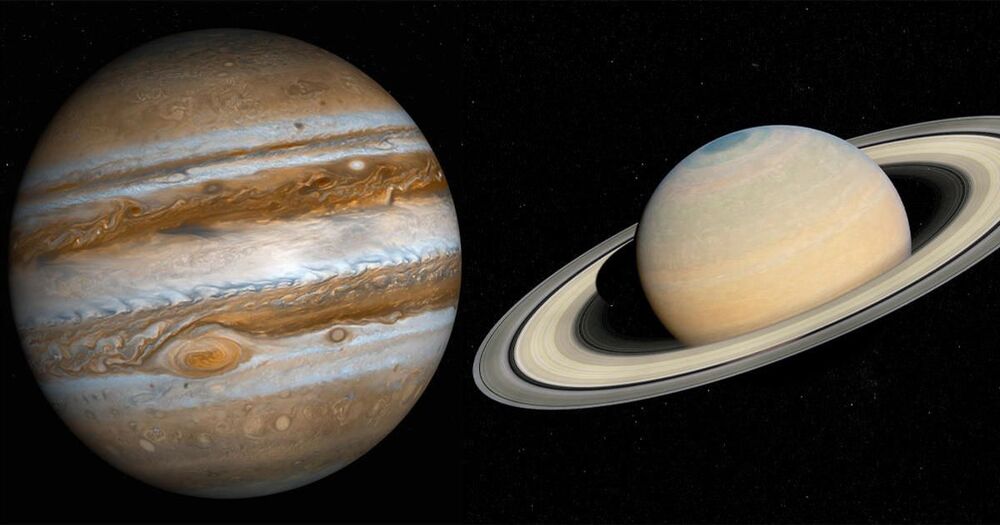
“Alignments between these two planets are rather rare, occurring once every 20 years or so, but this conjunction is exceptionally rare because of how close the planets will appear to one another,” Rice University astronomer Patrick Hartigan said in a statement. “You’d have to go all the way back to just before dawn on March 4, 1226, to see a closer alignment between these objects visible in the night sky.”
Aligning with the winter solstice on December 21, 2020, the two planets will be just 0.1 degrees apart — less than the diameter of a full moon, EarthSky says. The word “conjunction” is used by astronomers to describe the meeting of objects in our night sky, and the great conjunction occurs between the two largest planets in our solar system: Jupiter and Saturn.
The planets will be so close, they will appear, from some perspectives, to overlap completely, creating a rare “double planet” effect.

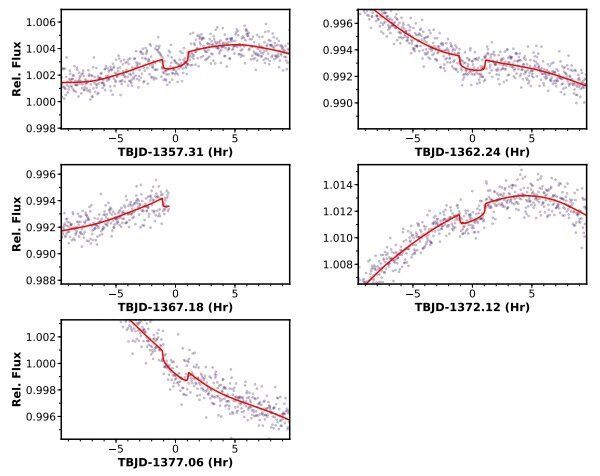
Using NASA’s Transiting Exoplanet Survey Satellite (TESS), astronomers have discovered two new young planetary systems. They found that two stars not older than 320 million years, namely TOI-251 and TOI-942, are orbited by a mini-Neptune planet and two Neptune-sized exoplanets. The finding is reported in a paper published November 26 on arXiv.org.
TESS is conducting a survey of about 200,000 of the brightest stars near the sun with the aim of searching for transiting exoplanets. So far, it has identified over 2,400 candidate exoplanets (TESS Objects of Interest, or TOI), of which 82 have been confirmed so far.
Recently, a team of astronomers led by George Zhou of the Harvard-Smithsonian Center for Astrophysics (CfA) in Cambridge, Massachusetts, confirmed another three planets. Between August and December 2018, TESS observed two stars: TIC 224225541 (TOI-251) and TIC 146520535 (TOI-942), which resulted in the detection of transit signals in the light curves of these objects. The planetary nature of these signals was confirmed by follow-up photometric and spectroscopic observations using ground-based facilities.