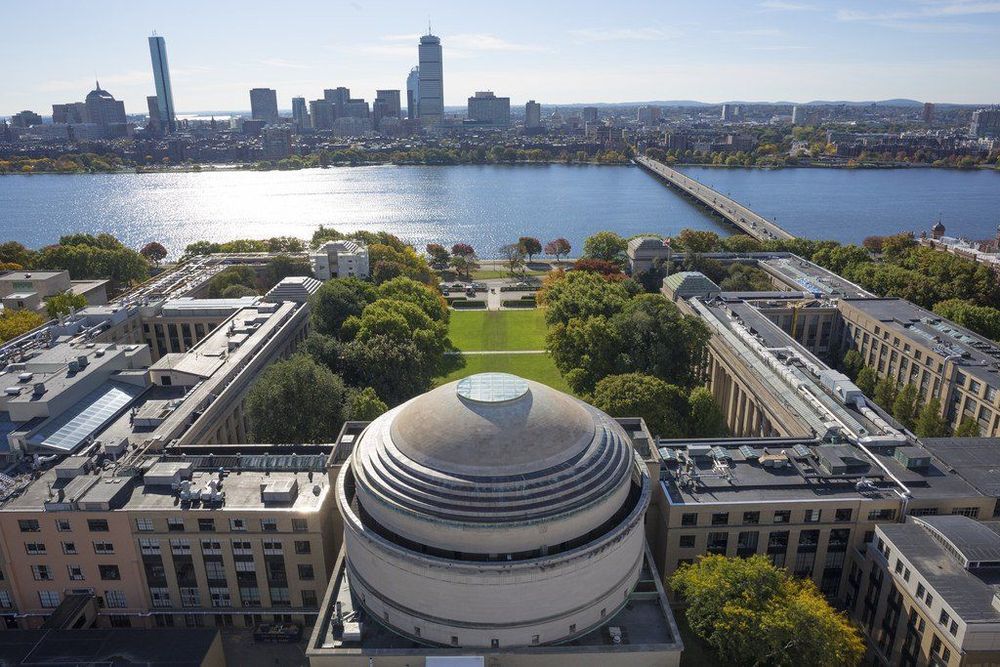
One of the birthplaces of artificial intelligence, MIT, has announced a bold plan to reshape its academic program around the technology. With $1 billion in funding, MIT will create a new college that combines AI, machine learning, and data science with other academic disciplines. It is the largest financial investment in AI by any US academic institution to date.
New school: The new college of computing is being built with $350 million in funding from Stephen A. Schwarzman, the CEO and cofounder of Blackstone, a private equity firm. Schwarzman has already donated billions to other institutions for studying issues related to AI. MIT’s new Stephen A. Schwarzman College of Computing will create 50 new faculty positions and numerous fellowships for graduate students. The school will open next September and will be housed in existing buildings at MIT before moving to its own space, expected in 2022.
Data everywhere: Data and computing are already having a major impact on disciplines like the humanities, and machine learning and AI may have an even bigger one. Rafael Reif, the president of MIT, said in an announcement that the new approach was necessary because of the way computing, data, and AI are “reshaping the world,” and he added that students and researchers will be taught to use AI in their disciplines from first principles, instead of dividing their time between computer science and other departments. “Computing is no longer the domain of the experts alone,” Reif said. “It’s everywhere, and it needs to be understood and mastered by almost everyone.”