Toggle light / dark theme

Net zero carbon in the concrete industry will require not just changes in manufacturing standards

The concrete industry is just one of many looking at new manufacturing methods to reduce its carbon footprint. These efforts are essential to fulfilling the Paris Agreement, which asks each of its signees to achieve a net-zero carbon economy by 2050. However, a new study from researchers in Japan and Belgium and focusing exclusively on Japan concludes that improved manufacturing technologies will only get the industry within 80% of its goal. Using a dynamic material flows analysis model, the study claim that the other 20% will have to come from changes in how concrete is consumed and managed, putting expectations on the buyer as well as the seller.

Electric cars, fluorescent lights, water-saving shower heads, these are all examples of efforts to lower our . However, the are made from the supply side, with companies developing new technologies that reduce the amount of energy consumed for the same amount of use. Notably, they put little demand on the user, who can use the product no differently than before.

The same holds true for concrete, the most consumed human-made material in the world. Many studies have shown the potential for making the concrete industry more energy efficient through esoteric efforts like “clinker-to-cement ratio reduction,” “cement substitution with alternative binders,” and “ capture and utilization.” The problem, explains Dr. Takuma Watari, a researcher at the Japan National Institute for Environmental Studies and lead of the new study, is that supply-side efforts are not enough if nations are serious about achieving net-zero carbon emissions.

Startup Makes EVs Truly Sustainable, Recycles 1000 Tonnes of Li-ion Batteries/Year

T he introduction of lithium-ion (Li-ion) batteries has revolutionised transport technology. We wouldn’t be witnessing the current electric vehicle (EV) revolution without them. However, with the production of these batteries, which contain lithium and cobalt, comes associated with environmental and social costs. In the Democratic Republic of Congo, which accounts for 60% of the world’s supply of cobalt, a large number of unregulated mines use children as miners.

Children as young as 7 “breathe in cobalt-laden dust that can cause fatal lung ailments while working tunnels that are liable to collapse,” notes this report in The Guardian. Meanwhile, lithium mining has resulted in significant loss of groundwater in South America, while toxic leaks resulting from the process have poisoned water bodies in Tibet.

To lessen the burden on the environment, while meeting the growing demand for EVs, one possible solution could be recycling these Li-ion batteries.

Prototype battery only needs seconds of sunlight to keep smart wearables charged

Thirty seconds of sunlight could boost the battery life of future smartwatches and other wearables by tens of minutes, thanks to a renewable and rechargeable battery prototype developed by the University of Surrey.

Surrey’s Advanced Technology Institute (ATI) has demonstrated how its new photo-rechargeable system, which merges zinc-ion batteries with , could allow wearables to spring back to life without the need to plug in.

Jinxin Bi, a Ph.D. candidate at ATI and the first author of the paper, says that “this technology provides a promising strategy for efficient use of clean energy and enables wearable electronics to be operated continuously without plug-in charging. Our prototype could represent a step forward to how we interact with wearables and other internet-of-things devices, such as remote real-time health monitors.”

World’s first wind turbine with recyclable blades is up and spinning

Separating the resin, fiberglass, and wood, among others, is achieved through using a mild acid solution. The materials can then go into the circular economy, creating new products like suitcases or flat-screen casings without the need to call on more raw resources.

The RecyclableBlade technology was developed in Aalborg, Denmark, and the blades were manufactured in Hull in the UK (pictured above). The nacelles were produced and installed in Cuxhaven, Germany. Siemens Gamesa has a plan to make all of its wind turbine blades fully recyclable by 2030 and all of its wind turbines fully recyclable by 2040.

Researchers propose affordable and sustainable alternative to lithium-ion batteries

Concerns regarding scarcity, high prices, and safety regarding the long-term use of lithium-ion batteries has prompted a team of researchers from Rensselaer Polytechnic Institute to propose a greener, more efficient, and less expensive energy storage alternative.

In research published recently in Proceedings of the National Academy of Science (PNAS), corresponding author Nikhil Koratkar, the John A. Clark and Edward T. Crossan Professor of Engineering at Rensselaer, and his team, assert that could be used as an alternative to lithium-ions in batteries because of its abundance and low cost.

“The vast majority of rechargeable battery products are based on lithium-ion technology, which is the gold standard in terms of performance,” said Dr. Koratkar. “However, the Achilles’ heel for lithium-ion technology is cost. Lithium is a limited resource on the planet, and its price has increased drastically in recent years. We are working on an inexpensive, abundant, safe, and sustainable battery chemistry that uses ions in an aqueous, water-based electrolyte.”

Red mud is piling up. Can scientists figure out what to do with it?

Practical and glamorous, aluminium is prized for making products from kitchen foil and beverage cans to Tesla Roadsters and aircraft. But the silvery metal—abundant, cheap, lightweight, and corrosion resistant—has a dark side: red mud. This brownish red slurry, a caustic mishmash of metal-and silicon-rich oxides, often with a dash of radioactive and rare earth elements, is what’s left after aluminum is extracted from ore. And it is piling up. Globally, some 3 billion tons of red mud are now stored in massive waste ponds or dried mounds, making it one of the most abundant industrial wastes on the planet. Aluminum plants generate an additional 150 million tons each year.

Red mud has become trouble looking for a place to happen. In 2010, an earthen dam at one waste pond in Hungary gave way, unleashing a 2-meter-high wall of red mud that buried the town of Ajka, killing 10 people and giving 150 severe chemical burns. (See more on the dangers posed by waste dams.) Even when red mud remains contained, its extreme alkalinity can leach out, poison groundwater, and contaminate nearby rivers and ecosystems. Such liabilities, as well as growing regulatory pressure on industry to develop sustainable practices, have catalyzed global efforts to find ways to recycle and reuse red mud. Some researchers are developing ways to extract the valuable rare earth metals, whereas others turn the mud into cement or bricks.

“There is hope here,” says Yiannis Pontikes, a mechanical engineer at KU Leuven. But economic and marketing hurdles remain, and “the clock is ticking” as regulators consider new controls, says Efthymios Balomenos, a metallurgical engineer at the National Technical University of Athens. “At some point we will not be able to produce waste. So, there is an urgent need to make changes.”

World could install 250 GW of solar this year, claims Bloomberg analyst

Rob Barnett, a senior clean energy analyst for Bloomberg, forecasts a 30% increase in global PV deployment this year, and double-digit growth through 2025.


Demand is pushing solar growth across the world to new heights, as Bloomberg senior analyst Rob Barnett forecasts deployment to increase by 30% this year. Total global solar deployment is closing in on 1 TW installed – an impressive milestone for the energy transition.

“The global solar picture is just staggering at this point,” Barnett told Yahoo Finance. “We are on track to install something like 250 GW of solar capacity this year.”

China is contributing the largest share to capacity growth this year, with about 108 GW of new operational PV. This is a near-doubling of the roughly 55 GW installed by China last year. The country has the world’s largest exposure to renewable energy, with 323 GW of solar and 338 GW of wind energy. President Xi Jinping aims for 1,200 GW combined by 2030, and the nation is currently ahead of schedule on that goal, said Bloomberg.

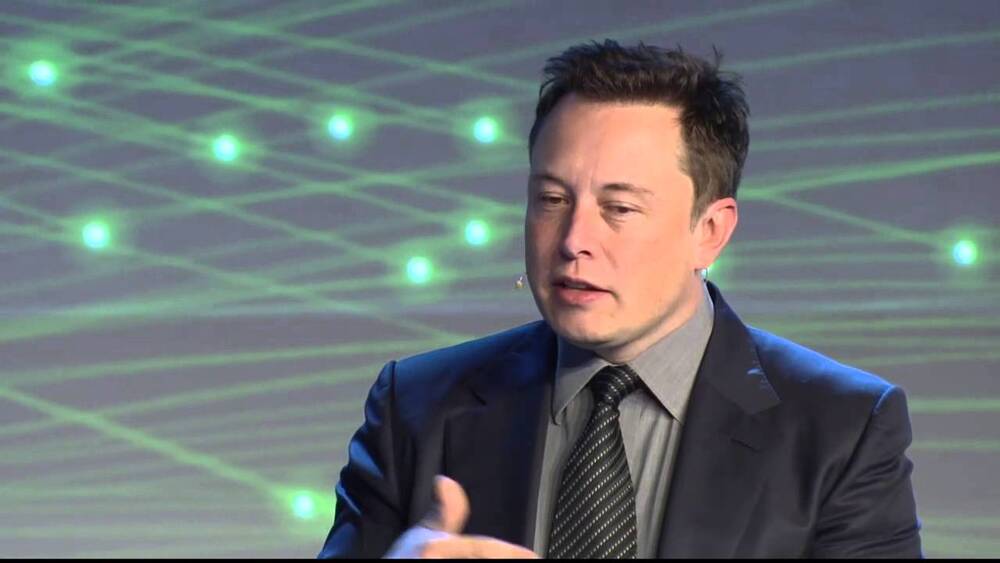
Already Did It’: Elon Musk Confirms He Copied His Brain to the Cloud and Talks to His Digital Version and All We Can Think is ‘What is This Guy Even…

Elon Musk, often known to break the Internet by his statements or acts recently tweeted what seemed like a futuristic invention. Being one of the wealthiest people on the planet was not enough for the CEO of Tesla as he thought two of his brains would be better. One would always wonder how a brain can be transferred into a man-made machine, but with his recent tweet, Elon Musk confirmed he copied his brain to the machine and talks to his digital version.

Read More, ‘I haven’t had sex in ages’: Elon Musk Defends Himself Against Affair Allegations With Google’s Sergey Brin’s Wife, Fans Say He’s a Snake For Forgetting Brin’s Loan To Build Tesla

A recent tweet by Shibetoshi Nakamoto, known as the creator of Dogecoin with an account named, @BillyM2k asked, “If you could upload your brain to the cloud, and talk to a virtual version of yourself, would you be buddies?”. In the second continuation of the tweet, the user posted, “would be cool to have a competitive game buddy of approximately the same skill level. Except he would be a computer and have infinite time so I would more just see him get better at everything while I am busy with dumb life things.

/* */