Climate change: fossil fuel burning will become a thing of the past for new homes.
My colleague Conor Sen recently made a bold prediction: Government will be the driver of the U.S. economy in coming decades. The era of Silicon Valley will end, supplanted by the imperatives of fighting climate change and competing with China.
This would be a momentous change. The biggest tech companies — Amazon.com, Apple Inc., Facebook Inc., Google (Alphabet Inc.) and (a bit surprisingly) Microsoft Corp. — have increasingly dominated both the headlines and the U.S. stock market:

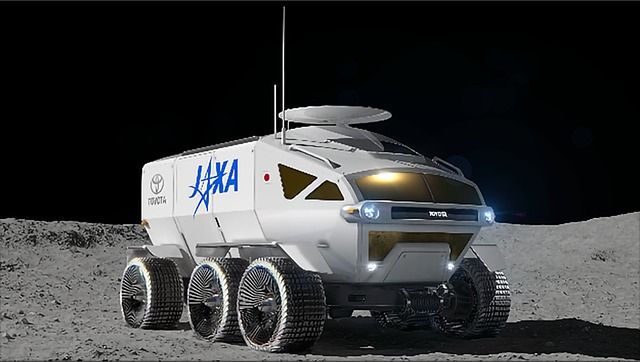
Japan, March 12, 2019—The Japan Aerospace Exploration Agency (JAXA) and Toyota Motor Corporation (Toyota) agreed today to study the possibility of collaborating on international space exploration. As a first step, JAXA and Toyota agreed to further cooperate on and accelerate their ongoing joint study*1 of a manned, pressurized rover*2 that employs fuel cell vehicle technologies. Such a form of mobility is deemed necessary for human exploration activities on the lunar surface. Even with the limited amount of energy that can be transported to the moon, the pressurized rover would have a total lunar-surface cruising range of more than 10,000 km.
International space exploration, aiming to achieve sustainable prosperity for all of humankind by expanding the domain of human activity and giving rise to intellectual properties, has its sights set on the moon and Mars. To achieve the goals of such exploration, coordination between unmanned missions, such as the recent successful touchdown by the asteroid probe Hayabusa2 on the asteroid Ryugu, and manned missions, such as those involving humans using pressurized rovers to conduct activities on the moon, is essential. When it comes to challenging missions such as lunar or Martian exploration, while various countries are competing in advancing their technologies, they are also advancing their cooperative efforts.
JAXA President Hiroshi Yamakawa had this to say today about the agreement between JAXA and Toyota: “At JAXA, we are pursuing international coordination and technological studies toward Japan’s participation in international space exploration. We aim to contribute through leading Japanese technologies that can potentially generate spin-off benefits. Having Toyota join us in the challenge of international space exploration greatly strengthens our confidence. Manned rovers with pressurized cabins are an element that will play an important role in full-fledged exploration and use of the lunar surface. For this, we would like to concentrate our country’s technological abilities and conduct technological studies. Through our joint studies going forward, we would like to put to use Toyota’s excellent technological abilities related to mobility, and we look forward to the acceleration of our technological studies for the realization of a manned, pressurized rover.”

One of the key misconceptions about solar geoengineering—putting aerosols into the atmosphere to reflect sunlight and reduce global warming—is that it could be used as a fix-all to reverse global warming trends and bring temperature back to pre-industrial levels.
It can’t. Applying huge doses of solar geoengineering to offset all warming from rising atmospheric C02 levels could worsen the climate problem—particularly rainfall patterns—in certain regions. But could smaller doses work in tandem with emission cuts to lower the risks of a changing climate?
New research from the Harvard John A. Paulson School of Engineering and Applied Sciences (SEAS), in collaboration with MIT and Princeton University, finds that if solar geoengineering is used to cut global temperature increases in half, there could be worldwide benefits without exacerbating change in any large geographic area.
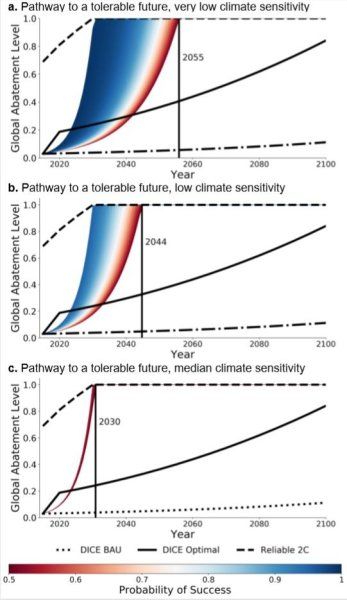
A new comprehensive study of climate change has painted over 5 million pictures of humanity’s potential future, and few foretell an Earth that has not severely warmed. But with immediate action and some luck, there are pathways to a tolerable climate future, according to a research team led by Tufts University.
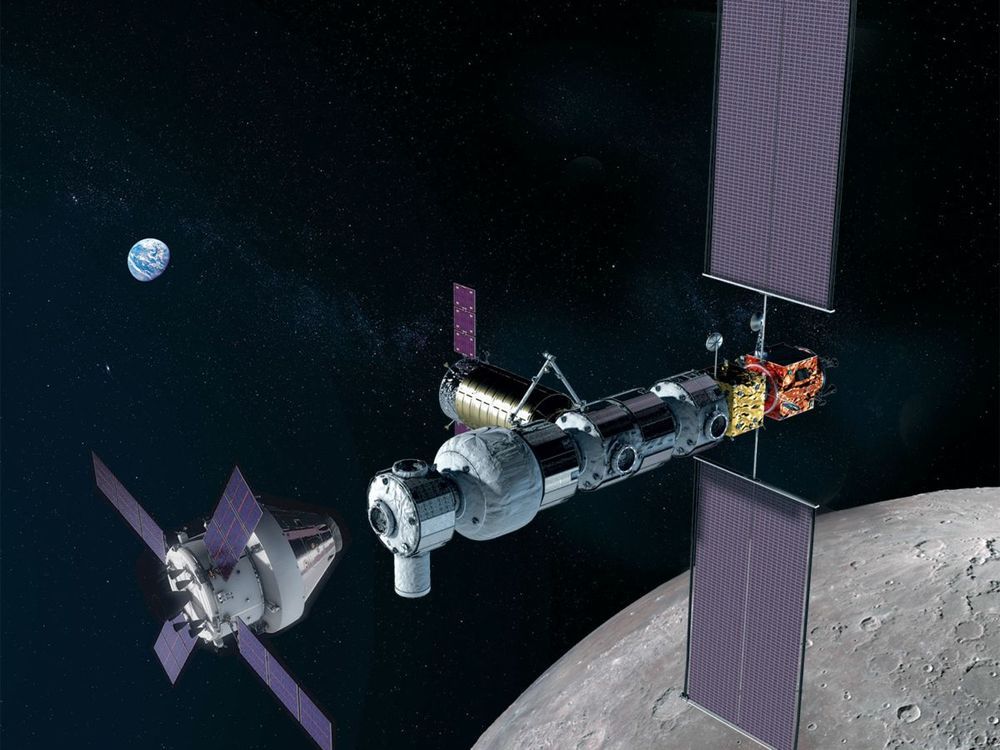
I know some people don’t like it but the Lunar Gateway is getting more traction.
The International Space Station partners have endorsed plans to continue the development of the Gateway, an outpost around the Moon that will act as a base to support both robots and astronauts exploring the lunar surface.
The Multilateral Coordination Board, which oversees the management of the Space Station, stressed its common hope for the Gateway to open up a cost-effective and sustainable path to the Moon and beyond.

These days, it seems anyone wanting to launch rockets will inevitably be compared to Elon Musk and Jeff Bezos, especially if rocket launching isn’t the only business interest on the agenda. Musk has Tesla plus SpaceX, and Bezos has Amazon plus Blue Origin. Now, meet Mark Russell, a disciple of Bezos and rocket engineer who founded HyperSciences, a drilling company that uses aerospace technology to both quickly extract underground geothermal energy and put payloads into orbit at low cost.
The idea of leveraging Earth’s geothermal energy is not a new concept, but the expense and time required to reach the depth needed have been prohibitively expensive. That’s where HyperSciences comes in.
Russell and his team have developed a low-cost, multi-purpose projectile called the HyperDrone that can accelerate to velocities over five times the speed of sound and pulverize hard rock via their HyperDrill. This will enable tunneling speeds that are 5–10 times quicker than conventional methods, and more importantly, it opens up significant market viability in other industries that could benefit, namely when that acceleration is pointed skyward. NASA has already recognized this potential and is a current investor and major partner of HyperSciences.
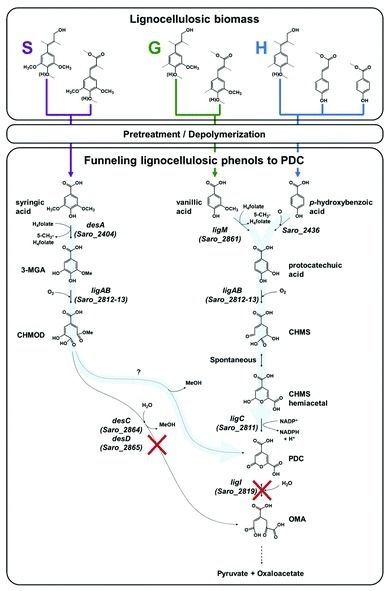
Learning to deal with lignin is important for recycling and space settlements. Unused biomass on space settlements and long-term voyages is something that just can’t be tolerated. The same problem exists in dealing with plant waste on earth. A new process helps convert it into a precursor for polyester, which can be used for all kinds of other materials.
Plant cells are composed of three main substances: cellulose, hemicellulose, and lignin. According to Yining Zeng, Michael E. Himmel, and Shi-You Ding in Biotechnology for Biofuels, the composition amounts to “40 to 50% of cellulose, 15 to 25% hemicelluloses, 20 to 25% lignin, and 5 to 10% other components.[1]” For the most part, the only truly useful part is the cellulose and the hemicellulose. The lignin is usually just thrown away. The most common use is fuel for heating units. That’s right. They just burn it.
We can’t keep doing it that way. However, there really isn’t an alternative. Until now. A recent article in Science Daily referenced a new journal article about the use of Novosphingobium aromaticivorans. This is “genus of Gram-negative bacteria that includes N. taihuense, which can degrade aromatic compounds such as phenol, aniline, nitrobenzene and phenanthrene.[2]” Using genetic engineering, they deleted certain genes which allowed the microbe to convert lignin into 2-pyrone-4–6-dicarboxylic acid, which can be converted into polyester. The detailed information is available for free download and was published under the title “Funneling aromatic products of chemically depolymerized lignin into 2-pyrone-4–6-dicarboxylic acid with Novosphingobium aromaticivorans.[3]”
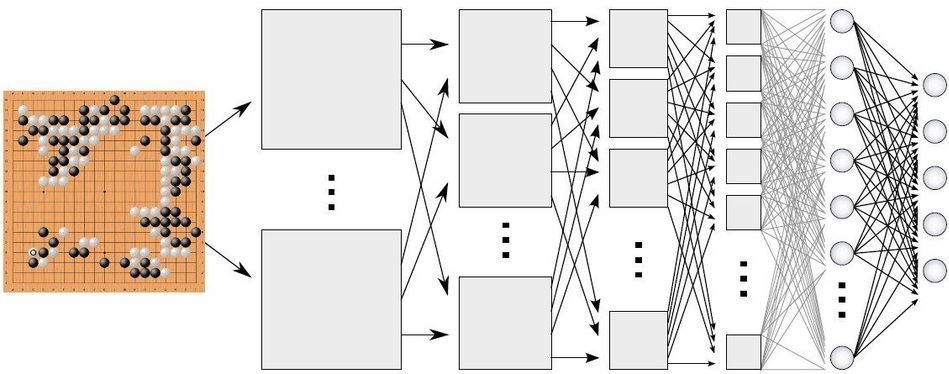
A startup called CogitAI has developed a platform that lets companies use reinforcement learning, the technique that gave AlphaGo mastery of the board game Go.
Gaining experience: AlphaGo, an AI program developed by DeepMind, taught itself to play Go by practicing. It’s practically impossible for a programmer to manually code in the best strategies for winning. Instead, reinforcement learning let the program figure out how to defeat the world’s best human players on its own.
Drug delivery: Reinforcement learning is still an experimental technology, but it is gaining a foothold in industry. DeepMind has talked of using it to optimize the performance of data centers and wind turbines. Amazon recently launched a reinforcement-learning platform, but it is aimed more at researchers and academics. CogitAI’s first commercial customers include those working in robotics for drug manufacturing. Its platform lets the robot figure out the optimal way to process drug orders.