Google, Facebook, Twitter and Microsoft formed the Global Internet Forum to Counter Terrorism last year to prevent terrorists from exploiting their services.
- By Stuart Macdonald, The Conversation US on June 26, 2018

Google, Facebook, Twitter and Microsoft formed the Global Internet Forum to Counter Terrorism last year to prevent terrorists from exploiting their services.
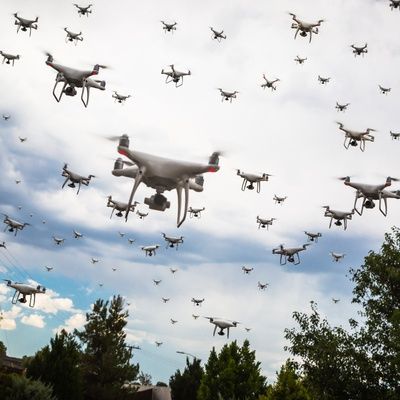
Machine-learning technology is growing ever more accessible. Let’s not have a 9/11-style ‘failure of imagination’ about it.
There is a general tendency among counterterrorism analysts to understate rather than hyperbolize terrorists’ technological adaptations. In 2011 and 2012, most believed that the “Arab Spring” revolutions would marginalize jihadist movements. But within four years, jihadists had attracted a record number of foreign fighters to the Syrian battlefield, in part by using the same social media mobilization techniques that protesters had employed to challenge dictators like Zine El Abidine Ben Ali, Hosni Mubarak, and Muammar Qaddafi.
Militant groups later combined easy accessibility to operatives via social media with new advances in encryption to create the “virtual planner” model of terrorism. This model allows online operatives to provide the same offerings that were once the domain of physical networks, including recruitment, coordinating the target and timing of attacks, and even providing technical assistance on topics like bomb-making.
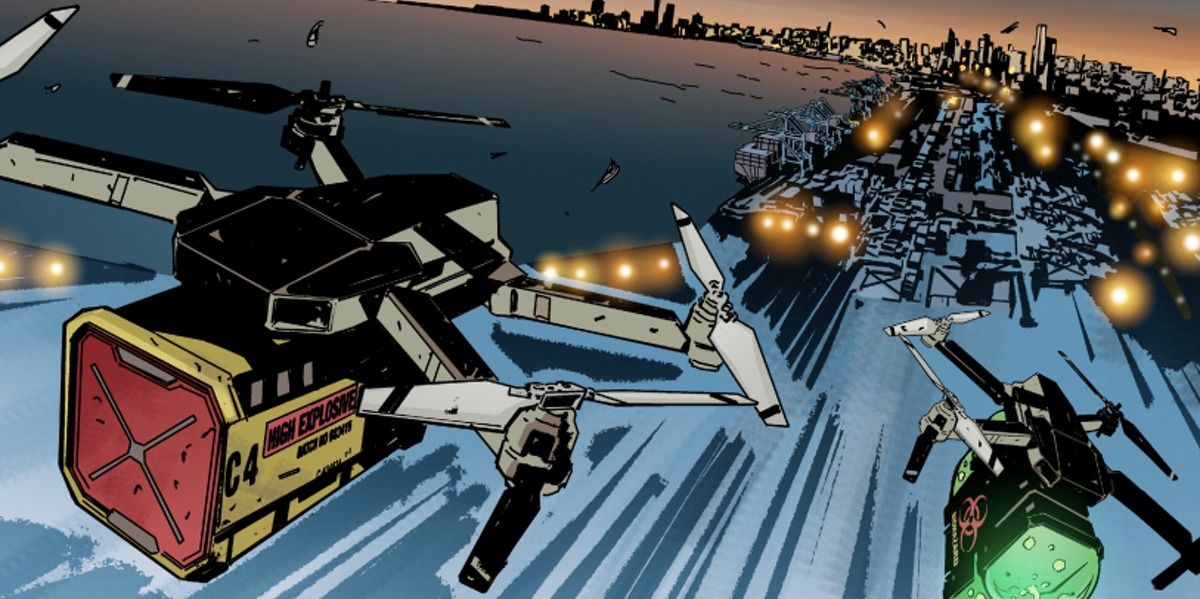
In “Engineering a Traiter,” the year is 2027, and a former military officer named Jay Roberts has just engineered a missile attack in downtown Houston — except he doesn’t know that it’s his fault.
This sombre graphic novel tells the story of Roberts, an army engineer working in Texas who’s been targeted by a militia eager to gain access to building codes in order to orchestrate a terrorist attack. With sophisticated A.I., the militia manipulate everything in Roberts’s life. The news he sees is curated to instil hopelessness and despair, and family members’ social media accounts are hijacked to distance Roberts from loved ones. Frustrated and alone, he eventually confesses security information to a “friend” he’s made online, allowing the militias the access they’ve been hoping for. Once they have what they want, Roberts’ social media is manipulated to make him look like a radicalized terrorist. When the attack occurs, he takes the fall.
The narrative may be science fiction, but it paints a realistic — if not paranoid — vision of the future. That bleakness is exactly what Brian David Johnson wanted when he began penning a series of graphic novels for the Army Cyber Institute at West Point.

Upcoming anti-viral medication for smallpox…
As bioterrorism fears grow, the first treatment for smallpox is nearing approval.
Called tecovirimat, the drug stops the variola virus, which causes smallpox, from sending out copies of itself and infecting other cells. “If the virus gets ahead of your immune system, you get sick,” says Dennis Hruby, the chief scientific officer of pharmaceutical company SIGA Technologies, which took part in developing the drug. “If you can slow the virus down, your immune system will get ahead.”
An advisory committee to the U.S. Food and Drug Administration unanimously recommended approval of tecovirimat, or TPOXX, on May 1. The FDA is expected to make its decision this summer.
High-tech warfare at knife-fight ranges: that’s the ugly future of urban combat. If you thought Baghdad was bad, with its roughly six million people, imagine a “megacity” of 10 or 20 million, where the slums have more inhabitants than some countries. Imagine a city of the very near future where suspicious locals post every US military movement on Twitter with digital photos and GPS-precise coordinates. Imagine roadside bombs that fly because the bad guys downloaded blueprints for a kamikaze mini-drone and built it with their 3D printer.
As the US pulls out of the mountains and deserts of Afghanistan, the Navy and Air Force may be looking to the wide-open Pacific, but the Army is increasingly concerned about the cramped alleyways of Third World cities. (The Marines, as usual, have a foot in both worlds). Chief of Staff Ray Odierno’s personal Strategic Studies Group — now led by hybrid warfare expert David Johnson — is working on the subject, as is the Army’s think tank and teaching institution, Training and Doctrine Command (TRADOC). This August, after months of seminars, simulations, and study, the Army War College will host a “deep future wargame” set in a megacity, probably a coastal one, circa 2035.
“We talk about the danger of failed states: Imagine a failed megacity,” offers Col. Kevin Felix of TRADOC’s Army Capability Integration Center (ARCIC), which plays a leading role in organizing the wargame. Even a partial breakdown of security and public services could put thousands of people in peril — or under the rule of drug gangs, as in Brazil’s infamous favelas; or of terrorist groups, like Hezbollah in parts of Lebanon. In those parts of the city, Felix told me, “there may be order, but I wouldn’t define it as law and order.”

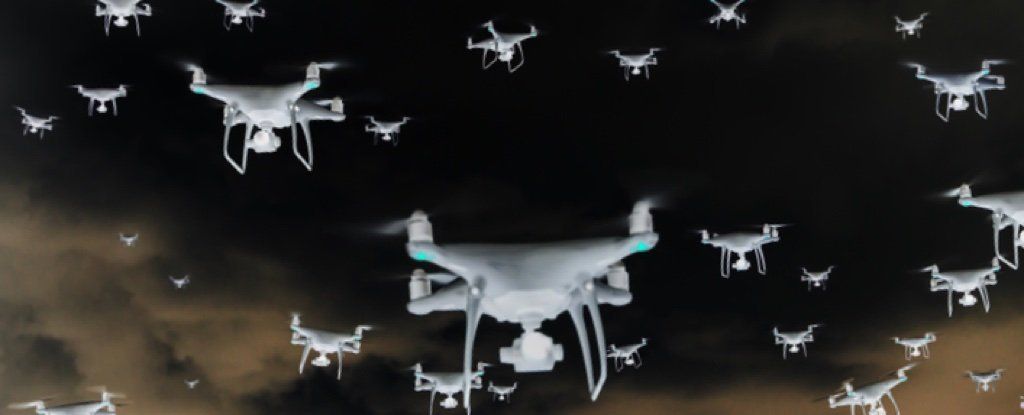
Ever since technological advancements made drones possible, people have warned of the potential dangers of weaponised UAVs (unmanned aerial vehicles), which could effectively become murderous slaughterbots we need to defend ourselves against.
Now, it looks like those fears have become a reality. The Russian Ministry of Defence claims its forces in Syria were attacked a week ago by a swarm of home-made drones – the first time such a coordinated assault has been reported in a military action.
According to the Ministry of Defence, Russian forces at the Khmeimim air base and Tartus naval facility “successfully warded off a terrorist attack with massive application of unmanned aerial vehicles (UAVs)” last Friday night.
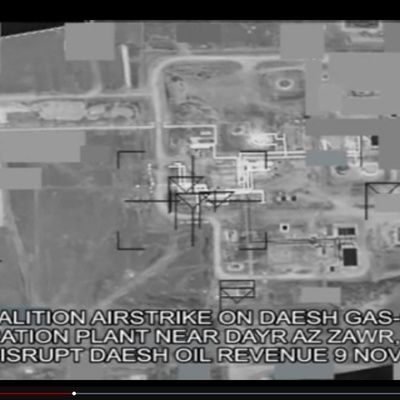
After less than eight months of development, the algorithms are helping intel analysts exploit drone video over the battlefield.
Earlier this month at an undisclosed location in the Middle East, computers using special algorithms helped intelligence analysts identify objects in a video feed from a small ScanEagle drone over the battlefield.
A few days into the trials, the computer identified objects — people, cars, types of building — correctly about 60 percent of the time. Just over a week on the job — and a handful of on-the-fly software updates later — the machine’s accuracy improved to around 80 percent. Next month, when its creators send the technology back to war with more software and hardware updates, they believe it will become even more accurate.
Run Hide Fight
◾ How to survive an Active Shooter Situation according to the Arizona Counter Terrorism Information Center.
◾ How many countries have this type of advice for their citizens? In how many is it not needed?
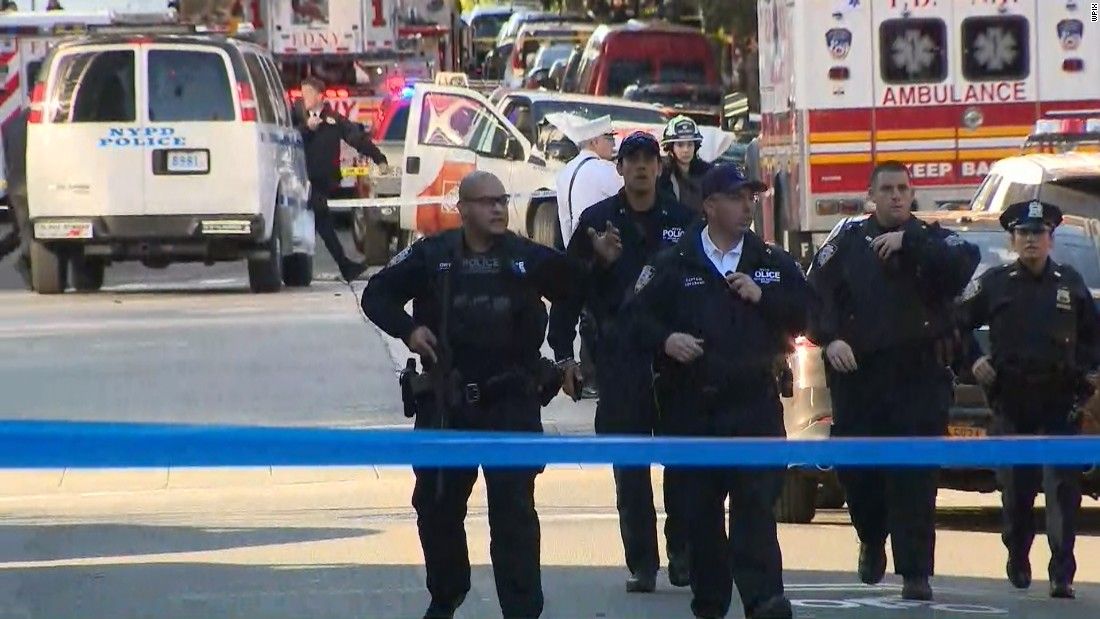
NYC attack kills 8, injures 9; suspect in custody.
“This was an act of terror, and a particularly cowardly act of terror,” he said.
[Previous story, posted at 5:19 p.m. ET]
The driver of a rental truck drove the wrong way down a busy bicycle path in Manhattan near the World Trade Center, killing up to six people and striking numerous others, a New York Police official said.