Toggle light / dark theme

Does the Unabomber Have a More Realistic Sense of Today’s Existential Risks?

A version of this piece appears on the Sociological Imagination website

Twenty years ago Theodore Kaczynski, a Harvard-trained maths prodigy obsessed with technology’s destruction of nature, was given eight consecutive life sentences for sending letter bombs in the US post which killed three people and injured 23 others. Generally known as the ‘Unabomber’, he remains in a supermax prison in Colorado to this day.

It is perhaps easy to forget the sway that the Unabomber held on American society in the mid-1990s. Kaczynski managed to get a 35,000 word manifesto called ‘Industrial Society and Its Future’ published in both The New York Times and The Washington Post. It is arguably the most famous and influential statement of neo-Luddite philosophy and politics to this day. Now he is back with a new book, Anti-Tech Revolution: Why and How.

The fairest thing that can be said about Kaczynski’s writings, both during his Unabomber period and his subsequent imprisonment, is that his comprehensive critique of modern technological society is recognizable to anyone who follows the more apocalyptic strand of ‘dark green’ philosophy and politics. It points to an almost inevitable self-destruction of the world as we know it through systemic abuses of nature, which no one currently in power is motivated to stop, let alone reverse. Instead of making a comfortable living as a radical academic, fiddling while Rome burns, Kaczynski took matters into his own hands, first with letter bombs and now – in this book – with a strategy for stopping the global system from collapsing.

Does Kaczynski advocate the violent overthrow of that system? No; he offers a subtler approach that draws on Trotskyite entryism and capitalizes on the opportunities afforded by disruptions that the system in its normal operation is bound to throw up over time.

Kaczynski believes that political do-gooders are pretty useless in themselves. But this is not due to the content of what they say and do – namely, an endless stream of critique and foreboding about a dystopic future. All of this helps to destabilize the system. The problem is that these people and organizations are themselves so heavily invested in the system that when the worst scenarios that they portray happen, they are in no position to capitalize on them. Their big mistake is to assume that the people in power will somehow listen to them before it is too late.

Nevertheless, people inspired by Kaczynski’s neo-Luddite politics are advised to infiltrate such organizations because they provide legal cover for their activities and offer privileged access to the information flows needed to judge when the opportunity is ripe for intervention. He is clear that such people need to wear two hats at once. They have got to gain the confidence of the organization through hard work, while at the same time be ready to strike at the appropriate moment.

Kaczynski’s model is Lenin’s staging of the October Revolution in Russia, which was less violent than both the Soviets and the West usually portrayed it, due to the high level of infiltration by Bolsheviks into key discretionary positions when the opportunity arose to overthrow the system. Kaczynski follows Lenin in thinking that when the moment strikes, ordinary people will simply try to save their skins and spontaneously gravitate toward those who seem to provide a safe haven, at which point any prior political loyalties will simply evaporate.

However, crucially lacking from Kaczynski’s vision is a clear sense of which positions should be infiltrated, aside from mainstream environmental movements. The fact that he has been in prison for virtually the entire history of the web and smartphones is evident from these pages, though he has kept up in his own way. Kaczynski cleverly counters transhumanist Ray Kurzweil by arguing that even if computational power accelerates indefinitely, that simply means it is more likely to spin out of control. Yet he fails to provide any specific discussion of computer hacking, which one might have expected to figure prominently in the skillset of a neo-Luddite revolutionary. This is perhaps in keeping with Kaczynski’s avowed aim to stay within the law.

My guess is that people reading this book who wish to follow in Kaczynski’s footsteps would try to get hired by either private or public organizations associated with the production, distribution or regulation of energy. The point here would not necessarily be to arrest the rise in energy demand and use. Rather, one would be prepared to spring into action on the occasion of a major disturbance to the flow of energy, however it arises. In any case, such ‘normal accidents’ are bound to happen over time. Since this book is just the latest – but most articulate – installment of Kaczynski’s strategy, such people may already exist.

(None of the above should be understood as condoning in any way the crimes that Kaczynski committed twenty years ago. It is only to say that a rational mind is on display in this book.)
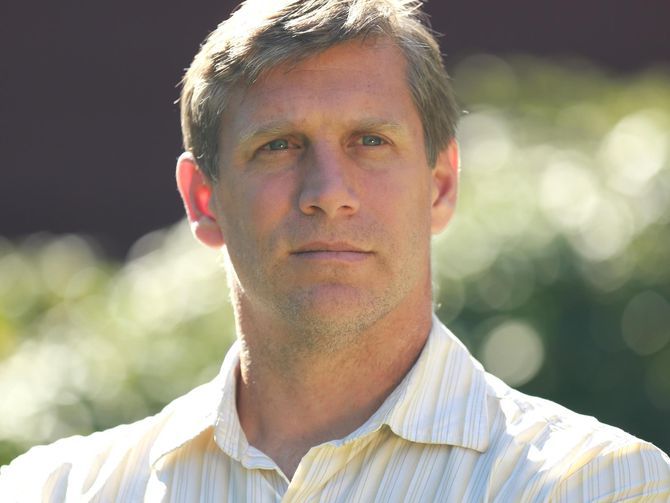
Presidential candidate suggests microchips for Syrian refugees

In light of the recent attacks in Europe, the search for terrorists, and the ongoing refugee/immigration issues, I still support considering this idea of implants. In fact, so long as the Middle East is in strife, and large amounts of refugees are created, and fundamental religiosity thrives, I’m certain some type of tracking technology implementation in the developed world is inevitable over the next 2–15 years for refugees and some immigrants. Such technology broadly remains the humanitarian thing to do (read the article!), while still protecting the public and national interests.

https://www.cnet.com/news/presidential-candidate-suggests-mi…-refugees/ #transhumanism #Germany #terrorism #immigration


The question of allowing Syrian refugees in to the United States has created a political firestorm in the wake of the terrorist attacks in Paris and one Presidential candidate proposes a novel, high-tech solution, but it’s also likely to make plenty of Americans uncomfortable.

Transhumanist Party candidate Zoltan Istvan suggests that small microchips could be implanted under the skin of Syrian refugees as part of the process of admitting them into the United States or other countries around the world.

“The procedure takes a minute and is harmless,” Istvan, who recently had a microchip implanted in his own hand to kick off his campaign bus tour, told CNET in an email. “The chip is the size of a grain of rice and could go in the hand and be useful for more than just tracking purposes.”

In an earlier interview with the Broward-Palm Beach New Times, Istvan said chipping refugees could be one way to track them and determine if any might be plotting acts of violence and also monitor who is “contributing to the system — whether they are working, paying taxes or causing strife.”

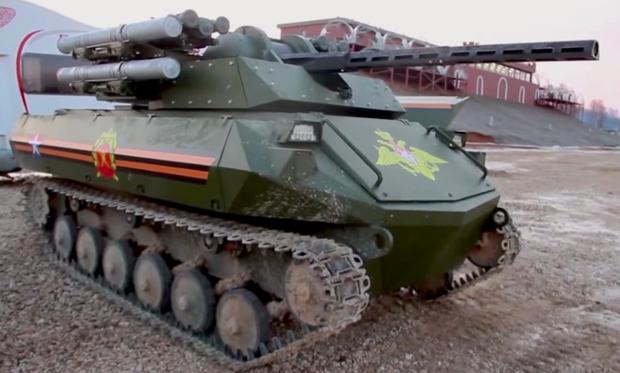
Why the United Nations Must Move Forward With a Killer Robots Ban

The reason I have been motivated to do this is simple. If we don’t get a ban in place, there will be an arms race. And the end point of this race will look much like the dystopian future painted by Hollywood movies like The Terminator.

Even before this end point, such weapons will likely fall into the hands of terrorists and rogue nations. These people will have no qualms about removing any safeguards. Or using them against us.

And it won’t simply be robots fighting robots. Conflicts today are asymmetric. It will mostly be robots against humans. So unlike what some robot experts might claim, many of those humans will be innocent civilians.

Advanced Radioactive Threat Detection System Completes First Large-Scale Citywide Test

The following press release was written and and published by the Defense Advanced Research Projects Agency (DARPA) and originally published on their website. Click here to see the original version of this post.

On a recent sunny fall day in the nation’s capital, several hundred volunteers—each toting a backpack containing smartphone-sized radiation detectors—walked for hours around the National Mall searching for clues in a “whodunit” scavenger hunt to locate a geneticist who’d been mysteriously abducted. The geneticist and his abduction were fictitious. But the challenge this scavenger hunt was designed to address is real: The need to detect even small quantities of radioactive material that terrorists might try to bring into an urban area with the intent of detonating a “dirty bomb,” or worse. By getting volunteers to walk all day looking for clues, the DARPA-sponsored exercise provided the largest test yet of DARPA’s SIGMA program, which is developing networked sensors that can provide dynamic, real-time radiation detection over large urban areas.

A key element of SIGMA, which began in 2014, has been to develop and test low-cost, high-efficiency, radiation sensors that detect gamma and neutron radiation. The detectors, which do not themselves emit radiation, are networked via smartphones to provide city, state, and federal officials real-time awareness of potential nuclear and radiological threats such as dirty bombs, which combine conventional explosives and radioactive material to increase their disruptive potential. Following a demonstration earlier this year with the Port Authority of New York and New Jersey involving more than 100 SIGMA sensors, the 1,000-detector deployment in Washington, D.C., marked the largest number of SIGMA mobile detectors ever tested at one time and was a demonstration of the program’s ability to fuse the data provided by all those sensors to create minute-to-minute situational awareness of nuclear threats.

The Future of Extremism: Artificial Intelligence and Synthetic Biology Will Transform Terrorism

There weren’t many people who had heard of bioterrorism before 9/11. But shortly after the September 11th terrorist attacks, a wave of anthrax mailings diverted the attention of the public towards a new weapon in the arsenal of terrorists—bioterrorism. A US federal prosecutor found that an army biological researcher was responsible for mailing the anthrax-laced letters, which killed 5 and sickened 15 people in 2001. The cases generated huge media attention, and the fear of a new kind of terrorist warfare was arising.

However, as with every media hype, the one about bioterrorism disappeared quickly.

But looking toward the future, I believe that we may not be paying as much attention to it as we should. Although it may be scary, we have to prepare ourselves for the worst. It is the only way we can be prepared to mitigate the damages of any harmful abuses if (and when) they arise.

Pentagon Video Warns of “Unavoidable” Dystopian Future for World’s Biggest Cities

Unfortunately I think the Pentagon is right. We are quickly heading into a dystopian future.


“Megacities: Urban Future, the Emerging Complexity,” a video created by the Army and used at the Pentagon’s Joint Special Operations University.

The video is nothing if not an instant dystopian classic: melancholy music, an ominous voiceover, and cascading images of sprawling slums and urban conflict. “Megacities are complex systems where people and structures are compressed together in ways that defy both our understanding of city planning and military doctrine,” says a disembodied voice. “These are the future breeding grounds, incubators, and launching pads for adversaries and hybrid threats.”

The video was used as part of an “Advanced Special Operations Combating Terrorism” course offered at JSOU earlier this year, for a lesson on “The Emerging Terrorism Threat.” JSOU is operated by U.S. Special Operations Command, the umbrella organization for America’s most elite troops. JSOU describes itself as geared toward preparing special operations forces “to shape the future strategic environment by providing specialized joint professional military education, developing SOF specific undergraduate and graduate level academic programs and by fostering special operations research.”

Terrorist in the machine: U.S. DOJ fears IoT for security

The huge wave of Internet of Things (IoT) enabled devices has the U.S. government worried that the technology harbors lurking security threats.

According to a Defense One article, the U.S. Department of Justice has joined other agencies in evaluating IoT technology for national security risks.

And with up to 50 billion connected devices coming online by 2020, the government is scrambling to assess threats from the fast evolving technology.

Technology Looks to Stop a Dirty Bomb Before It Happens

Using tech to stop terrorists dirty bombs.


DARPA’s SIGMA program undergoes real-world testing with state, federal and international partners to defend against radiological threats.

A DARPA program aimed at preventing attacks involving radiological “dirty bombs” and other nuclear threats has successfully developed and demonstrated a network of smartphone-sized mobile devices that can detect the tiniest traces of radioactive materials. Combined with larger detectors along major roadways, bridges, other fixed infrastructure, and in vehicles, the new networked devices promise significantly enhanced awareness of radiation sources and greater advance warning of possible threats.

The demonstration of efficacy earlier this year was part of DARPA’s SIGMA program, launched in 2014 with the goal of creating a cost-effective, continuous radiation-monitoring network able to cover a large city or region. Although radiation detectors have in recent years been installed in a number of key locations in the United States and around the world, the SIGMA program has sought to increase capabilities while lowering their costs, in order to network an unprecedented number of advanced detectors and provide a comprehensive, dynamic, and automated overview of the radiological environment.

Ban Ki-moon: ‘digital technologies like 3D printing have the potential for massive destruction’

More on the UN’s concern on the next gen technologies.


UN Photo/Rick Bajornas

Of all the initiatives and developments in the 3D printing world, none have caused as much headaches as 3D printed guns. And regardless of where you stand on the issue of gun rights in America, it’s no secret that completely untraceable plastic guns are bringing security issues to the table. Especially law makers in the US have been scratching their heads about what to do with them. Among others, the US State Department has been trying to limit the spread of 3D printable gun designs, while a new law passed in California last month requires 3D printed guns to be registered.

But the issue of 3D printed guns transcends second amendment debates, according to UN Secretary-General Ban Ki-moon. During a speech on the global proliferation of weapons, he listed 3D printing alongside a number of technologies that can be used by terrorists and that facilitate the production of weapons of mass destruction (WMDs) and other biological and technological threats.

/* */