Toggle light / dark theme

Boeing hit with worldwide safety alert after flaw discovered in take-off and landing app

Boeing received a worldwide safety alert after British safety experts said they discovered a possible vulnerability in its software used by pilots during takeoff and landing.

Earlier this month, the US Federal Aviation Administration issued a global “safety alert for operators” after researchers discovered a problem with Boeing’s Onboard Performance Tool (OPT), a mobile app that pilots can use to calculate safety before takeoff and landing…

The tool uses data on metrics such as weather and weight to help with calculations for aircraft leaving and returning to the runway.

Nile waterscapes facilitated the construction of the Giza pyramids during the 3rd millennium BCE

Ancient engineers might have built a canal on the Nile.

No one has solved the mystery of the Giza pyramids for centuries. Although archaeologists and scientists have tried to reveal how they were made over the years, it is difficult to say the “exact method” for sure. However, very recently, an idea has been put forward by researchers about how the pyramids were built.

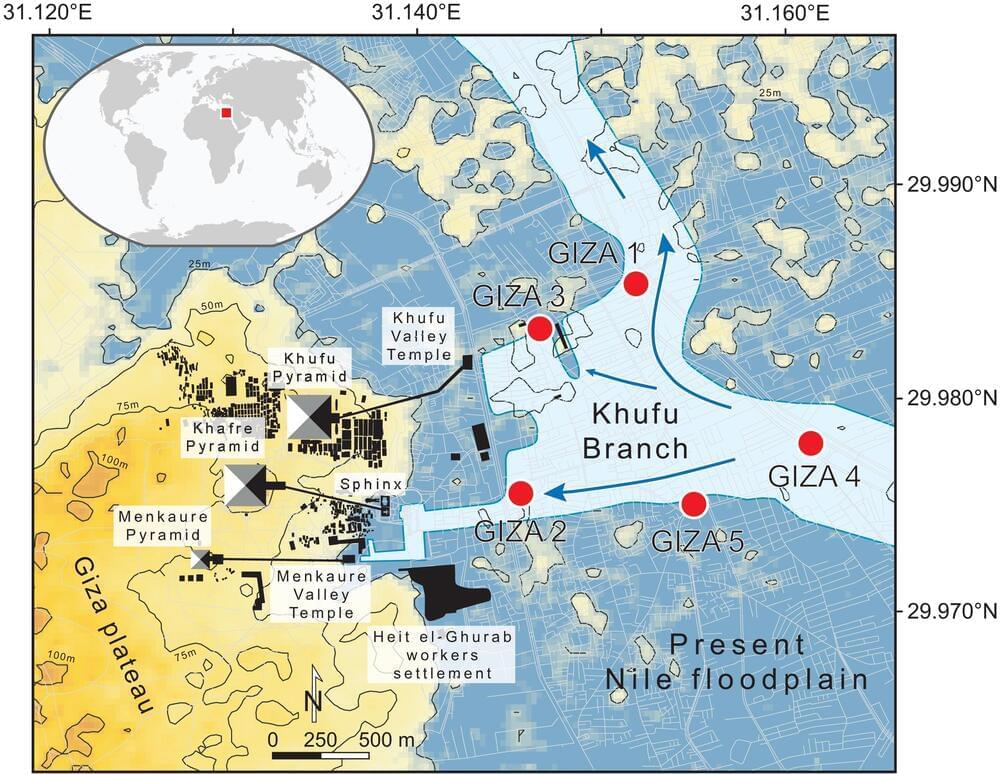
According to a recent study — published in PNAS in August. 29 —the pyramids of Giza may have been built using a former arm of the Nile River. This river branch would have served as a navigable route for the transportation of goods not previously known.


The pyramids of Giza constitute one of the world’s most iconic cultural landscapes and have fascinated humanity for thousands of years. Indeed, the Great Pyramid of Giza (Khufu Pyramid) was one of the Seven Wonders of the Ancient World. It is now accepted that ancient Egyptian engineers exploited a former channel of the Nile to transport building materials and provisions to the Giza plateau. However, there is a paucity of environmental evidence regarding when, where, and how these ancient landscapes evolved. New palaeoecological analyses have helped to reconstruct an 8,000-year fluvial history of the Nile in this area, showing that the former waterscapes and higher river levels around 4,500 years ago facilitated the construction of the Giza Pyramid Complex.

REALLY Fast EV Charging: Korean Tech Charges Battery in 60 sec

The Korea Advanced Institute of Science and Technology (KAIST) recently did some things to advance EV charging tech that are way over my head to make a battery that could theoretically charge an electric car in only one minute.

That might seem silly to people with a decent EV, but I recently found something that could eventually make EV charging so fast that even the owner of a Porsche Taycan might be shocked and amazed— and, as the owner of a Nissan LEAF, I’m lucky to get a 50 kW charge rate, but that’s only on the first charge. If I try to go anywhere on the highway, I quickly find that the second and third charges are a lot slower. If I keep going, I can expect to get charging rates as low as 14 kW on the second or third session, which is more like DC slow charging than DC fast charging. When I get a chance to test and review better EVs, it seems like witchcraft when getting charging over 100 kW, and faster 250 and 350 kW charging sessions look like alien technology.

“The hybrid lithium-ion battery, which has a high energy density (285 Wh/kg) and can be rapidly charged with a high-power density (22,600 W/kg), is overcoming the limitations of the current energy storage system,” Professor Jung-Goo Kang of the Department of Materials Science and Engineering said. “It will be a breakthrough.”

First 3D-Printed High-Performance Nanostructured Alloy That’s Both Ultrastrong and Ductile

Alloy that exceeds the strength and ductility of other state-of-the-art additively manufactured materials. This breakthrough could lead to higher-performance components for applications in aerospace, medicine, energy, and transportation. The work was done by researchers from the University of Massachusetts Amherst and the Georgia Institute of Technology. It was led by Wen Chen, assistant professor of mechanical and industrial engineering at UMass, and Ting Zhu, professor of mechanical engineering at Georgia Tech, will be published today (August 3, 2022) in the journal Nature.

High entropy alloys (HEAs) have become increasingly popular as a new paradigm in materials science over the past 15 years. They are comprised of five or more elements in near-equal proportions and offer the ability to create a near-infinite number of unique combinations for alloy design. Traditional alloys, such as brass, stainless steel, carbon steel, and bronze, contain a primary element combined with one or more trace elements.

Elon Musk Says World Needs More Oil and Gas as Bridge to Renewables

The world needs a bridge to the renewable energy future.

The world needs more oil and gas to deal with the energy shortages it is currently facing, Tesla CEO Elon Musk said at an energy conference in Norway on Monday, Bloomberg.

The comment might seem strange coming from a person who sells electric vehicles, battery packs, and solar roofing products. However, this isn’t the first time Elon Musk has made such a comment.


The world needs more oil and gas now to deal with an energy shortage while pushing to transition to renewable supplies, Tesla Inc. Chief Executive Officer Elon Musk said.

Maersk Earmarks $2.1 Billion for Ships That Will Run on Methanol

You are looking at a methanol-fed hydrogen fuel cell that may soon be powering marine shipping around the world.


For Maersk, the 12 new ships will help it reduce CO2 emissions by 1.5 million tons annually or 4% of what the company produced in total in 2021. Maersk’s announced commitment is for all future new builds to only burn carbon-neutral fuels. That’s why fuel cells are high on its list of technologies to make that achievement possible.

Methanol Fuel Cells Are a Step Better Than Burning Methanol

A Bill Gates-backed investment group, Breakthrough Energy Ventures, is bankrolling a new Danish company, Blue World Technologies, with plans to produce methanol and high-temperature fuel cells. It has plans to produce enough of the fuel and the fuel cells to power five container ships this year, and ten times that number by 2024.

High-capacity Li-metal battery with improved rate-performance and stability

A study of Li-metal batteries by the research team led by Dr. Byung Gon Kim at Next-Generation Battery Research Center of Korea Electrotechnology Research Institute (KERI) was published as a cover paper in the international journal ACS Nano.

While the current Li-ion batteries generate energy by taking Li-ions in and out of the based on the intercalation mechanism, the Li-metal battery does not rely on this bulky and heavy graphite but uses metallic Li itself as the anode. As the Li-metal shows 10 times higher theoretical capacity (3,860 mAh/g) than graphite (372 mAh/g), it has steadily gained much attention from areas that need high-capacity batteries, such as and energy storage systems.

Despite this advantage, Li can grow in the shape of a tree branch, called a Li dendrite, if it is not uniformly and effectively stored when cycling process, leading to large volume expansion of the electrode, which in turn may shorten the battery’s cycle life and cause safety issue such as fire and explosion triggered by internal short-circuits.

New highly efficient lead-bin binary perovskite photodetectors with fast response times

Researchers at the University of Toronto and the Barcelona Institute of Science and Technology have recently created new solution-processed perovskite photodetectors that exhibit remarkable efficiencies and response times. These photodetectors, introduced in a paper published in Nature Electronics, have a unique design that prevents the formation of defects between its different layers.

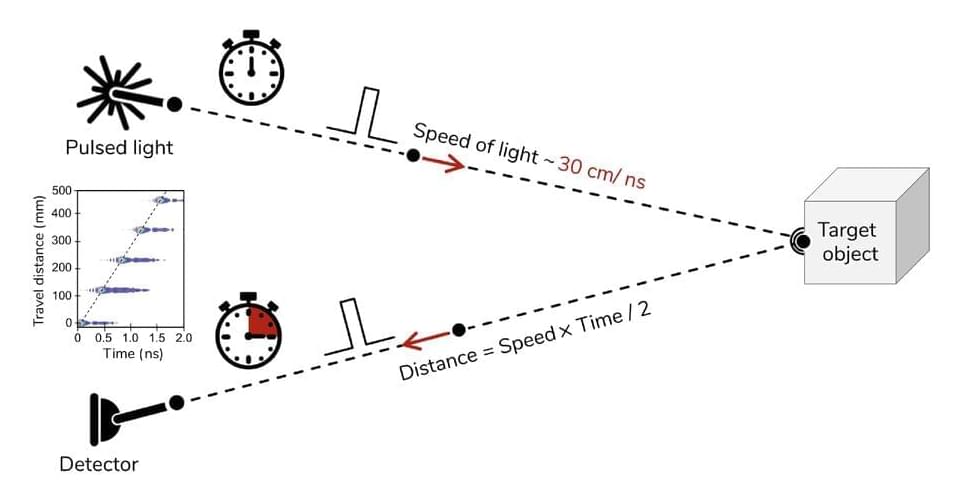
“There is growing interest in 3D range imaging for autonomous driving and consumer electronics,” Edward H. Sargent told TechXplore. “We have worked as a team for years on finding new materials that enable light sensing technologies such as next-generation image sensors and striving to take these in a direction that could have a commercial and societal impact.”

Photodetectors, sensing devices that detect or respond to light, can have numerous highly valuable applications. For instance, they can be integrated in robotic systems, autonomous vehicles, , environmental sensing technology, fiber optic communication systems and security systems.

Media goes nuts over Elon Musk calling for more oil and gas, but here’s the full quote

The media is going nuts over Elon Musk calling for more oil and gas at an energy conference in Norway, but the full quote is not being widely reported and brings some important context.

Earlier this year, Elon Musk called to drill for more oil, which raised a few eyebrows, but it was in the context of the Russian invasion of Ukraine and how it sent gas prices skyrocketing:

Hate to say it, but we need to increase oil and gas output immediately. Extraordinary times demand extraordinary measures. Obviously, this would negatively affect Tesla, but sustainable energy solutions simply cannot react instantaneously to make up for Russian oil and gas exports.

Discovering materials for gas turbine engines through efficient predictive frameworks

Gas turbines are widely used for power generation and aircraft propulsion. According to the laws of thermodynamics, the higher the temperature of an engine, the higher the efficiency. Because of these laws, there is an emerging interest in increasing turbines’ operating temperature.

A team of researchers from the Department of Materials Science and Engineering at Texas A&M University, in conjunction with researchers from Ames National Laboratory, have developed an artificial intelligence framework capable of predicting (HEAs) that can withstand extremely high temperature, oxidizing environments. This method could significantly reduce the time and costs of finding alloys by decreasing the number of experimental analyses required.

This research was recently published in Material Horizons.

/* */