Toggle light / dark theme

High-speed, efficient and compact electro-optic modulators for free space

Electro-optic modulators, which control aspects of light in response to electrical signals, are essential for everything from sensing to metrology and telecommunications. Today, most research into these modulators is focused on applications that take place on chips or within fiber optic systems. But what about optical applications outside the wire and off the chip, like distance sensing in vehicles?

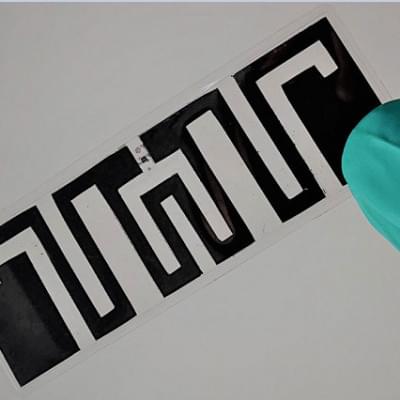
Current technologies to modulate light in are bulky, slow, static, or inefficient. Now, researchers at the Harvard John A. Paulson School of Engineering and Applied Sciences (SEAS), in collaboration with researchers at the department of Chemistry at the University of Washington, have developed a compact and tunable electro-optic for free space applications that can modulate light at gigahertz speed.

“Our work is the first step toward a class of free-space electro-optic modulators that provide compact and efficient intensity modulation at gigahertz speed of free-space beams at telecom wavelengths,” said Federico Capasso, Robert L. Wallace Professor of Applied Physics and Vinton Hayes Senior Research Fellow in Electrical Engineering, senior author of the paper.

SR-71 Pilot explains how he Survived to his Blackbird Disintegration at a Speed of Mach 3.2

During the Cold War, there was a need for a new reconnaissance aircraft that could evade enemy radar, and the customer needed it fast. At Lockheed Martin’s advanced development group, the Skunk Works, work had already begun on an innovative aircraft to improve intelligence-gathering, one that would fly faster than any aircraft before or since, at greater altitude, and with a minimal radar cross section. The team rose to the nearly impossible challenge, and the aircraft took its first flight on Dec. 22, 1964. The legendary SR-71 Blackbird was born.

The first Blackbird accident that occurred that required the Pilot and the RSO to eject happened before the SR-71 was turned over to the Air Force. On Jan. 25, 1966 Lockheed test pilots Bill Weaver and Jim Zwayer were flying SR-71 Blackbird #952 at Mach 3.2, at 78,800 feet when a serious engine unstart and the subsequent “instantaneous loss of engine thrust” occurred.

The following story told by Weaver (available in Col. Richard H. Graham’s book SR-71 The Complete Illustrated History of THE BLACKBIRD The World’s Highest 0, Fastest Plane) is priceless in conveying the experience of departing a Blackbird at an altitude of fifteen miles and speed of Mach 3.2.

This new Lamborghini concept can tackle sands, soil, and even rocks

Lamborghinis are already marvels of engineering but they become even more so when people decide to upgrade them. This is what designer Michael Hritzkrieg did with this new model called the Lamborghini LMXX2.

You can see from the pictures that it’s got some impressive treads that run all around the car making it clear that it can tackle even the most difficult terrains such as sands, rocks and soil. IE spoke to Hritzkrieg about his innovative design and he surprisingly described it as “a rush job to meet an Instagram competition deadline.”

The competition he is referring to is the AGP Contest on Instagram which asked participants to conceive of a design using the keywords “Desert + Lamborghini + Future”.

Ksh7.8M Electric Car From Jeff Bezos Company Attracts Attention in Kenya

John ClaytonVirtual children, Virtual marriages, Virtual relationships. That’ll keep the human race going and in a great direction as well. Nothing like staying away from reality.

2 Replies.

Adrian ScottConstructing arguments from bad assumptions; there’s no overpopulation now or any time soon amid declining birth rates…

View 4 more comments.

Omuterema Akhahenda shared a link.

The electric-car revolution has continued to take root in Kenya with the entry of the revered Rivian R-1T pick-up valued at Ksh7.8 million (USD67,000).


Elon Musk Says Tesla’s Total Headcount Will Rise Despite Cuts

Chief Executive Officer Elon Musk said Tesla Inc.’s total headcount will increase, a day after telling employees he plans to reduce salaried staff by 10%.

The number of salaried employees will be “fairly flat” even as overall headcount rises, the billionaire said in a tweet Saturday. Musk had previously told staff that the job cuts won’t apply to those who build cars or battery packs, according to people who received an internal memo Friday.

/* */