Toggle light / dark theme

Engineering 2D semiconductors with built-in memory functions

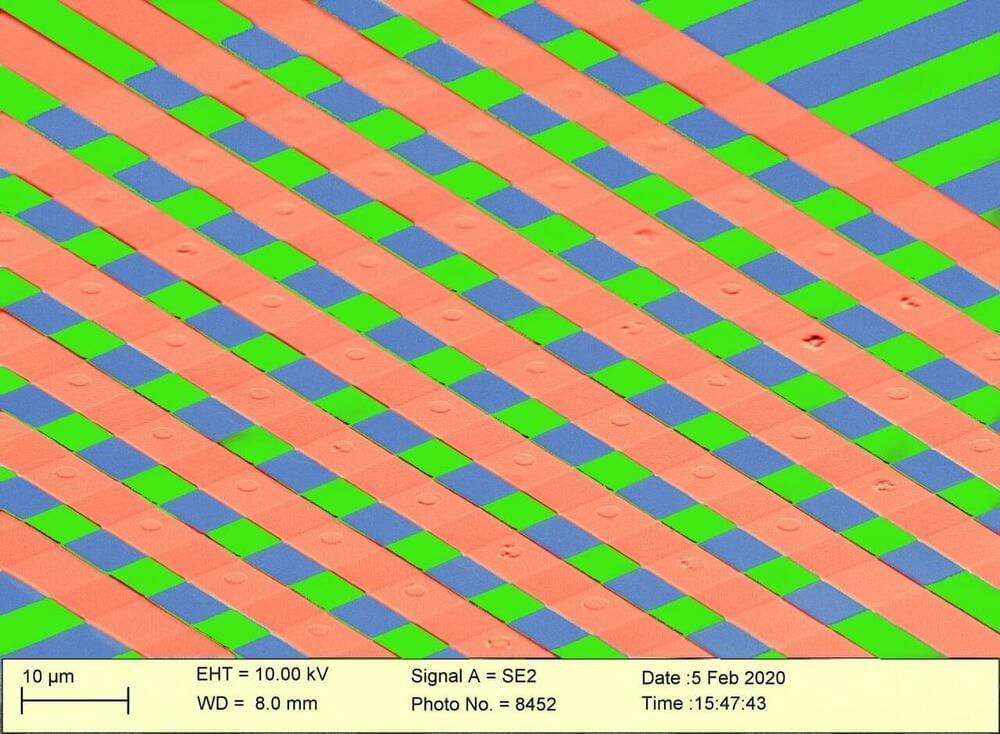
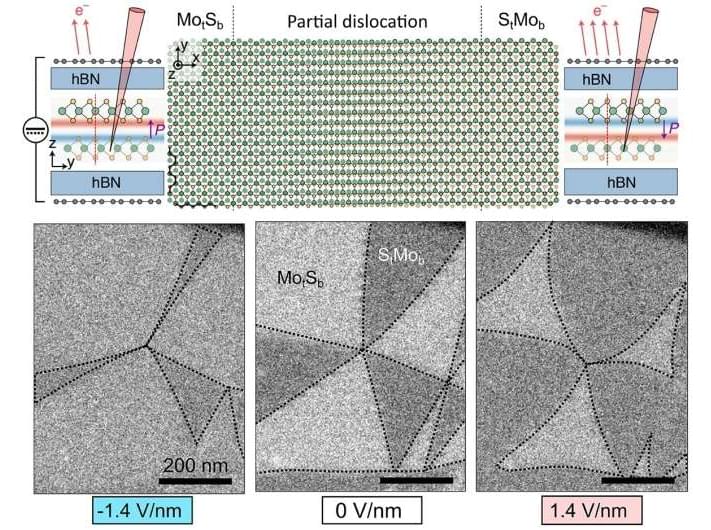
A team of researchers at The University of Manchester’s National Graphene Institute (NGI) and the National Physical Laboratory (NPL) has demonstrated that slightly twisted 2D transition metal dichalcogenides (TMDs) display room-temperature ferroelectricity.

This characteristic, combined with TMDs’ outstanding optical properties, can be used to build multi-functional optoelectronic devices such as transistors and LEDs with built-in memory functions on nanometre length scale.

Ferroelectrics are materials with two or more electrically polarisable states that can be reversibly switched with the application of an external electric field. This material property is ideal for applications such as non-volatile memory, microwave devices, sensors and transistors. Until recently, out-of-plane switchable ferroelectricity at room temperature had been achieved only in films thicker than 3 nanometres.

Ingenious Electric Train Fully Charges Itself

Australian mining company Fortescue is looking to reduce the carbon footprint of its operations by allowing a specially designed electric “Infinity Train” to roll down a hill to recharge its massive batteries — without ever relying on an external charging system.

“The Infinity Train has the capacity to be the world’s most efficient battery electric locomotive,” Fortescue CEO Elizabeth Gaines said in a statement. “The regeneration of electricity on the downhill loaded sections will remove the need for the installation of renewable energy generation and recharging infrastructure, making it a capital efficient solution for eliminating diesel and emissions from our rail operations.”

It’s a cleverly designed system: since the train is far lighter on the way up, it will generate enough energy fully loaded with iron ore on the way down to make it back up to the mine. In other words, it might sound like a perpetual motion machine — which is impossible, of course — but in reality it’s just an ingenious exploit of conventional physics.

Ultra-light liquid hydrogen tanks promise to make jet fuel obsolete

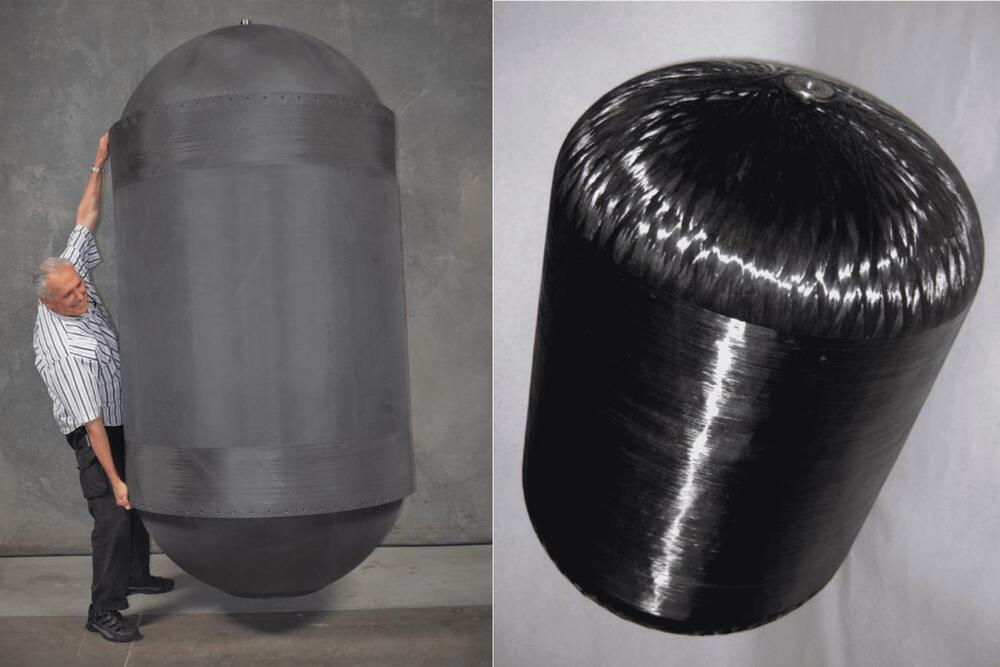
A revolutionary cryogenic tank design promises to radically boost the range of hydrogen-powered aircraft – to the point where clean, fuel-cell airliners could fly up to four times farther than comparable planes running on today’s dirty jet fuel.

Weight is the enemy of all things aerospace – indeed, hydrogen’s superior energy storage per weight is what makes it such an attractive alternative to lithium batteries in the aviation world. We’ve written before about HyPoint’s turbo air-cooled fuel cell technology, but its key differentiator in the aviation market is its enormous power density compared with traditional fuel cells. For its high power output, it’s extremely lightweight.

Now, it seems HyPoint has found a similarly-minded partner that’s making similar claims on the fuel storage side. Tennessee company Gloyer-Taylor Laboratories (GTL) has been working for many years now on developing ultra-lightweight cryogenic tanks made from graphite fiber composites, among other materials.

Teslas are susceptible to hacking due to bluetooth locks, cybersecurity firm says

Teslas are among the most susceptible vehicles to be hacked due to their Bluetooth locks, cybersecurity firm NCC Group said. The cars can be remotely unlocked and controlled by hackers that can exploit a vulnerability in the Bluetooth system’s security, the group said.

NCC Group researcher Sultan Qasim Khan was shown in a video opening, then driving a Tesla using a small relay device attached to a laptop. The device bridged a large gap between the Tesla and the Tesla owner’s phone, Reuters said.

“This proves that any product relying on a trusted BLE connection is vulnerable to attacks even from the other side of the world,” NCC said in a statement. BLE means Bluetooth Low Energy, and is a technology utilized in vehicles and Bluetooth locks that will automatically unlock or unlatch when an authorized device is nearby. While it is a convenience feature, it is not immune to attacks, which was the point of NCC’s experiment.

On the road to cleaner, greener, and faster driving

No one likes sitting at a red light. But signalized intersections aren’t just a minor nuisance for drivers; vehicles consume fuel and emit greenhouse gases while waiting for the light to change.

What if motorists could time their trips so they arrive at the intersection when the light is green? While that might be just a lucky break for a human driver, it could be achieved more consistently by an autonomous vehicle that uses artificial intelligence to control its speed.

In a new study, MIT researchers demonstrate a machine-learning approach that can learn to control a fleet of autonomous vehicles as they approach and travel through a signalized intersection in a way that keeps traffic flowing smoothly.

Tesla is rumored to be near a deal for battery venture in Indonesia after new round of talks, Musk meeting the president

Tesla is again rumored to be near a deal for a major new battery venture in Indonesia after a new round of talks with officials and even CEO Elon Musk meeting with the Indonesian President Joko “Jokowi” Widodo.

It’s not the first time that talks of Tesla making a major investment in Indonesia have emerged.

In 2020, we reported on Tesla allegedly being in talks with the Indonesian government to build a new nickel venture in the country, which has a strong nickel reserve.

Artificial intelligence is becoming sustainable

A research group from Politecnico di Milano has developed a new computing circuit that can execute advanced operations, typical of neural networks for artificial intelligence, in one single operation.

The circuit performance in terms of speed and paves the way for a new generation of computing accelerators that are more energy efficient and more sustainable on a global scale. The study has been recently published in the prestigious Science Advances.

Recognizing a face or an object, or correctly interpreting a word or a musical tune are operations that are today possible on the most common electronic gadgets, such as smartphones and tablets, thanks to artificial intelligence. For this to happen, complicated neural networks needs to be appropriately trained, which is so energetically demanding that, according to some studies, the that derives from the training of a complex can equal the emission of 5 cars throughout their whole life cycle.

/* */