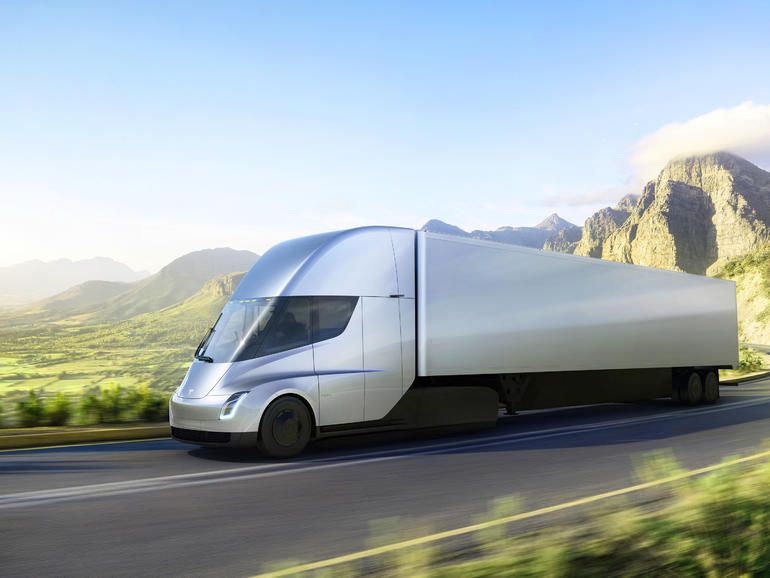
Soon I mean very soon he will beat Apple.
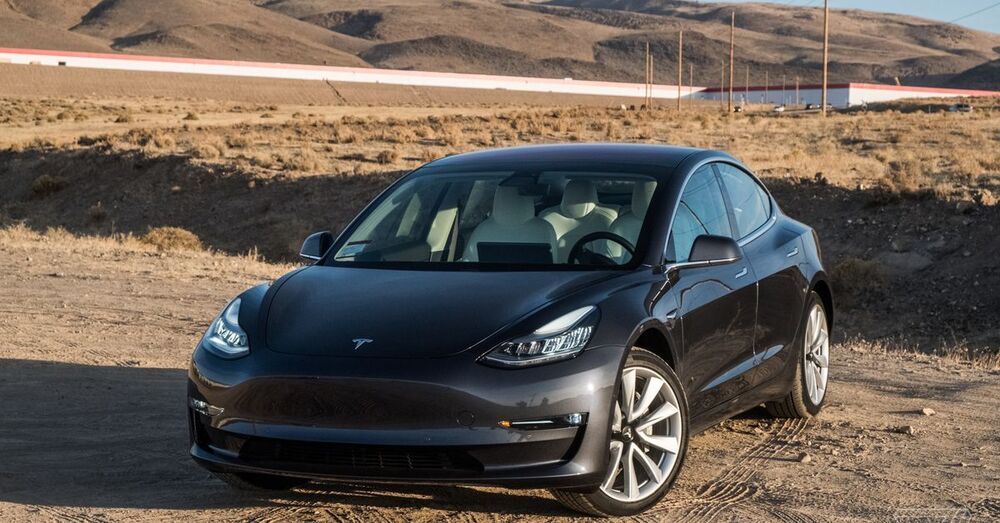
The earnings make Elon Musk’s electric car maker eligible to be included in the S&P 500 index and come a day after he qualified for a $US2.1 billion payout.
Ford Motor has developed a racing version of its upcoming all-electric Mustang Mach-E crossover with 1,400 horsepower and a top speed that’s not street legal.
The company plans to use the prototype vehicle, which it’s calling the Mustang Mach-E 1400, to show off the potential performance of all-electric vehicles as the new crossover begins arriving in dealerships later this year.
“It’s an all-around athlete,” Mark Rushbrook, motorsports director of Ford Performance, told CNBC. He called the vehicle a “learning platform” for the company to utilize aspects of for its future all-electric vehicles.
Researchers from the UK’s Durham University and Germany’s Fraunhofer Institute claim they’ve come up with the world’s first manufactured non-cuttable material, just 15 percent the density of steel, which they say could make for indestructible bike locks and lightweight armor.
The material, named Proteus, uses ceramic spheres in a cellular aluminum structure to foil angle grinders, drills and the like by creating destructive vibrations that blunt any cutting tools used against it. The researchers took inspiration from the tough, cellular skin of grapefruit and the hard, fracture-resistant aragonite shells of molluscs in their creation of the Proteus design.
An angle grinder or drill bit will cut through the outer layer of a Proteus plate, but once it reaches the embedded ceramic spheres, the fun begins with vibrations that blunt the tool’s sharp edges, and then fine particles of ceramic dust begin filling up gaps in the matrix-like structure of the metal. These cause it to become even harder the faster you grind or drill “due to interatomic forces between the ceramic grains,” and “the force and energy of the disc or the drill is turned back on itself, and it is weakened and destroyed by its own attack.”
In the pursuit of a rechargeable battery that can power electric vehicles (EVs) for hundreds of miles on a single charge, scientists have endeavored to replace the graphite anodes currently used in EV batteries with lithium metal anodes.
But while lithium metal extends an EV’s driving range by 30–50%, it also shortens the battery’s useful life due to lithium dendrites, tiny treelike defects that form on the lithium anode over the course of many charge and discharge cycles. What’s worse, dendrites short-circuit the cells in the battery if they make contact with the cathode.
For decades, researchers assumed that hard, solid electrolytes, such as those made from ceramics, would work best to prevent dendrites from working their way through the cell. But the problem with that approach, many found, is that it didn’t stop dendrites from forming or “nucleating” in the first place, like tiny cracks in a car windshield that eventually spread.
Omg levitating cars o,.o!
In this vehicle, the diamagnetic fields principles are applied to obtain a hovering and propulsion effect which makes low cost, friction free and zero pollutant emissions transport media. This is done using a special combination of electromagnetic and the natural diamagnetic susceptibility in all The physical effect of this is an air gap between the surface and the vehicle. The height of levitation has a direct relationship with the material used as floor surface; since all materials have diamagnetic susceptibility factors. Also, the power on the diamagnetic field is a key for the levitation and propulsion effect. All these factors make this prototype vehicle an easy maneuverable one, since there are almost no inertial forces in the system.
New battery technology developed at Berkeley Lab could give flight to electric aircraft and supercharge safe, long-range electric cars.
In the pursuit of a rechargeable battery that can power electric vehicles (EVs) for hundreds of miles on a single charge, scientists have endeavored to replace the graphite anodes currently used in EV batteries with lithium metal anodes.
But while lithium metal extends an EV’s driving range by 30–50%, it also shortens the battery’s useful life due to lithium dendrites, tiny treelike defects that form on the lithium anode over the course of many charge and discharge cycles. What’s worse, dendrites short-circuit the cells in the battery if they make contact with the cathode.
An AI algorithm is capable of automatically generating realistic-looking images from bits of pixels.
Why it matters: The achievement is the latest evidence that AI is increasingly able to learn from and copy the real world in ways that may eventually allow algorithms to create fictional images that are indistinguishable from reality.
What’s new: In a paper presented at this week’s International Conference on Machine Learning, researchers from OpenAI showed they could train the organization’s GPT-2 algorithm on images.
While the ID Buzz, aka the electric Microbus, isn’t quite production-ready, it may not be the only iconic vehicle Volkswagen’s rebooting into an EV. 2019 saw the release of the final Volkswagen Beetle. Despite its styling and long history, consumer interest lagged, and VW discontinued it. But now, there’s rumors of a new Volkswagen Beetle—an electric one.
RELATED: Why Is This 1964 Volkswagen Selling For $290,000?
This news comes courtesy of the electric Volkswagen forum VW ID Talk, Autoblog reports. Forum users discovered several VW trademark applications submitted to the EU Intellectual Property Office.