Toggle light / dark theme

Tesla’s next vehicles have the potential to usher in the extinction of gas cars

Goodbye gas stations.


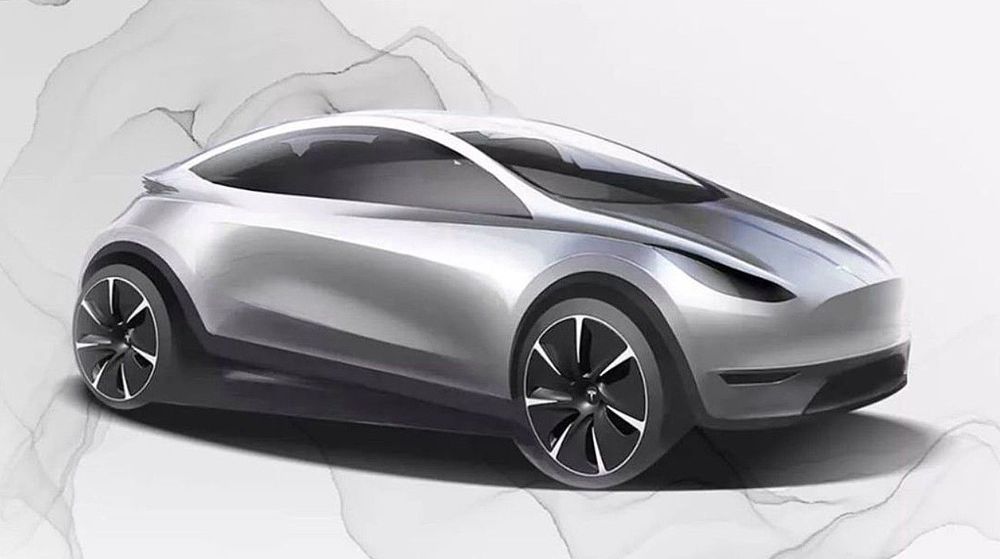
During the second quarter earnings call, Elon Musk tentatively confirmed that Tesla would be making a compact car and a vehicle with high capacity. Granted, it would probably take a few more years before such vehicles are produced, but one thing seems certain. Considering Tesla’s speed and pace, it would not be surprising if Tesla’s compact car and high capacity EV causes the extinction of the internal combustion engine.

Tesla’s current lineup of vehicles, which comprise the Model S, Model 3, Model X, and Model Y, are great EVs, but they are still fairly large for their class. This includes the Model 3 and the Model Y, Tesla’s “smaller” vehicles in its lineup. This, together with the vehicles’ premium price, end up blocking the company from reaching its full potential in the auto market. With a compact car and a high capacity vehicle, however, things could drastically change for Tesla.

Compact and High Capacity EVs

Tesla has mentioned the creation of a smaller car in the past, and more recently, the company has tapped into China’s creative minds for help in designing its compact car. This vehicle is expected to be designed and manufactured in China, but the opportunities for such a car go far beyond the country. Compact cars have a dedicated following, after all, and for good reason.

Audi is testing out bidirectional charging technology for electric vehicles

Interesting.


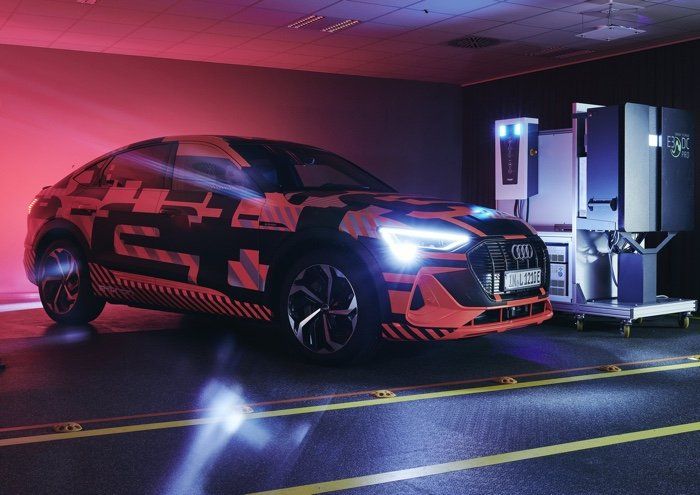
Audi has announced that it is testing out bidirectional charging technology for electric cars, this would incorporate the electric car into the domestic power grid and could provide additional power to the grid when not in use.

What this would do is make electric vehicles a storage unit for energy to be drawn on by the grid or the owners house when needed, for example when a vehicle was parked overnight or not in use.

Charging hundreds of EVs parked at a condo is a solvable problem, here’s how

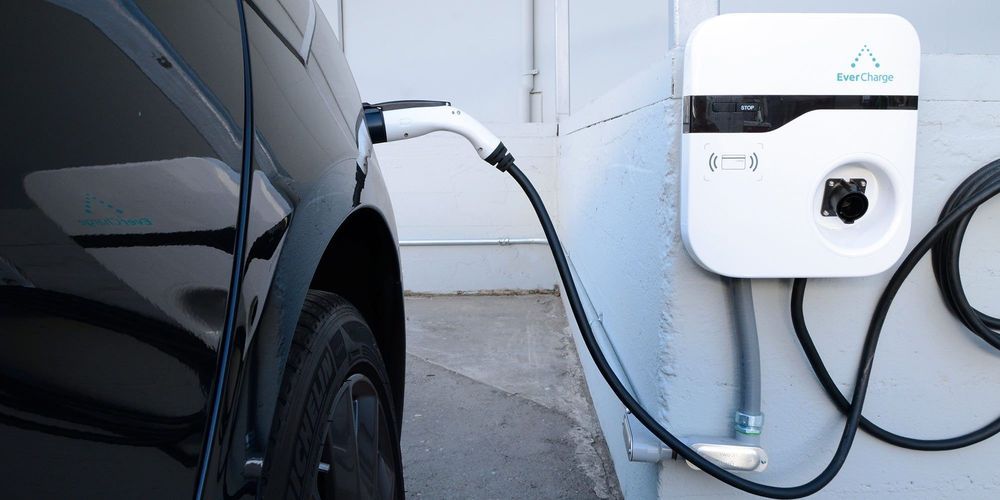
Skeptics like to point out that most EV drivers live in single-family homes that make charging easy. And they point to the current lack of charging stations at condos as an impenetrable obstacle to EV adoption. But this viewpoint reflects a lack of understanding of how daily EV charging works. I recently chatted with Jason Appelbaum, chief executive of EverCharge — the biggest EV charging network you never heard of.


Several hundred electric cars, all parked in the same condo garage, can easily get their daily dose of electricity. It requires a smart load-balancing system.

Ford unveils electric Mustang Mach-E race car with 1,400 horsepower

Ford Motor has developed a racing version of its upcoming all-electric Mustang Mach-E crossover with 1,400 horsepower and a top speed that’s not street legal.

The company plans to use the prototype vehicle, which it’s calling the Mustang Mach-E 1400, to show off the potential performance of all-electric vehicles as the new crossover begins arriving in dealerships later this year.

“It’s an all-around athlete,” Mark Rushbrook, motorsports director of Ford Performance, told CNBC. He called the vehicle a “learning platform” for the company to utilize aspects of for its future all-electric vehicles.

Proteus becomes the world’s first manufactured non-cuttable material

Researchers from the UK’s Durham University and Germany’s Fraunhofer Institute claim they’ve come up with the world’s first manufactured non-cuttable material, just 15 percent the density of steel, which they say could make for indestructible bike locks and lightweight armor.

The material, named Proteus, uses ceramic spheres in a cellular aluminum structure to foil angle grinders, drills and the like by creating destructive vibrations that blunt any cutting tools used against it. The researchers took inspiration from the tough, cellular skin of grapefruit and the hard, fracture-resistant aragonite shells of molluscs in their creation of the Proteus design.

An angle grinder or drill bit will cut through the outer layer of a Proteus plate, but once it reaches the embedded ceramic spheres, the fun begins with vibrations that blunt the tool’s sharp edges, and then fine particles of ceramic dust begin filling up gaps in the matrix-like structure of the metal. These cause it to become even harder the faster you grind or drill “due to interatomic forces between the ceramic grains,” and “the force and energy of the disc or the drill is turned back on itself, and it is weakened and destroyed by its own attack.”

Battery breakthrough gives boost to electric flight and long-range electric cars

In the pursuit of a rechargeable battery that can power electric vehicles (EVs) for hundreds of miles on a single charge, scientists have endeavored to replace the graphite anodes currently used in EV batteries with lithium metal anodes.

But while metal extends an EV’s driving range by 30–50%, it also shortens the battery’s useful life due to lithium dendrites, tiny treelike defects that form on the lithium anode over the course of many charge and discharge cycles. What’s worse, dendrites short-circuit the cells in the battery if they make contact with the cathode.

For decades, researchers assumed that hard, solid electrolytes, such as those made from ceramics, would work best to prevent dendrites from working their way through the cell. But the problem with that approach, many found, is that it didn’t stop dendrites from forming or “nucleating” in the first place, like tiny cracks in a car windshield that eventually spread.

/* */