Toggle light / dark theme

NASA reveals its plan for ‘Artemis Base Camp’ on the moon

NASA has released a detailed plan for an ‘Artemis Base Camp’ that will be home to first woman and next man on the moon in 2024.

The 13-page document highlights elements such as a terrain vehicle for transporting the astronauts around the landing zone, a permanent habit and a mobility platform to travel across the lunar surface.

The plans suggest a crew of four astronauts would call the moon home for a week at a time, but also describes accommodations with water, waste disposal systems and radiation shields if their time is extended.

The Future is Now | Life after Artificial Intelligence

These days, neural networks, deep learning and all types of sensors allow AI to be used in healthcare, to operate self-driving cars and to tweak our photos on Instagram.

In the #future, the ability to learn, to emulate the creative process and to self-organize may give rise to previously unimagined opportunities and unprecedented threats.


When 20 years ago, a computer beat a human at chess, it marked the dawn of Artificial Intelligence, as we know it.
These days, neural networks, deep learning and all types of sensors allow AI to be used in healthcare, to operate self-driving cars and to tweak our photos on Instagram.
In the #future, the ability to learn, to emulate the creative process and to self-organize may give rise to previously unimagined opportunities and unprecedented threats.

SUBSCRIBE TO RTD Channel to get documentaries firsthand! http://bit.ly/1MgFbVy
FOLLOW US
RTD WEBSITE: https://RTD.rt.com/
#RTD ON TWITTER: http://twitter.com/RT_DOC
RTD ON FACEBOOK: http://www.facebook.com/RTDocumentary
RTD ON INSTAGRAM https://www.instagram.com/rtdocumentaries/
RTD LIVE https://rtd.rt.com/on-air/

#Documentary

AI techniques used to improve battery health and safety

Researchers have designed a machine learning method that can predict battery health with 10x higher accuracy than current industry standard, which could aid in the development of safer and more reliable batteries for electric vehicles and consumer electronics.

The researchers, from Cambridge and Newcastle Universities, have designed a new way to monitor batteries by sending electrical pulses into them and measuring the response. The measurements are then processed by a to predict the ’s health and useful lifespan. Their method is non-invasive and is a simple add-on to any existing battery system. The results are reported in the journal Nature Communications.

Predicting the state of health and the remaining useful lifespan of lithium-ion batteries is one of the big problems limiting widespread adoption of : it’s also a familiar annoyance to mobile phone users. Over time, battery performance degrades via a complex network of subtle chemical processes. Individually, each of these processes doesn’t have much of an effect on battery performance, but collectively they can severely shorten a battery’s performance and lifespan.

Three Questions that Keep Me Up at Night

A Google interview candidate recently asked me: “What are three big science questions that keep you up at night?” This was a great question because one’s answer reveals so much about one’s intellectual interests — here are mine:

Q1: Can we imitate “thinking” from only observing behavior?

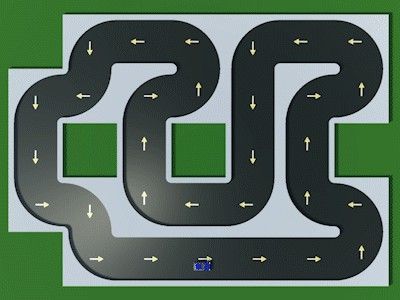
Suppose you have a large fleet of autonomous vehicles with human operators driving them around diverse road conditions. We can observe the decisions made by the human, and attempt to use imitation learning algorithms to map robot observations to the steering decisions that the human would take.

Mayo Clinic starts using autonomous vehicles to deliver coronavirus tests and medical supplies

The Mayo Clinic today announced a partnership with Bestmile and the Jacksonville Transportation Authority (JTA) to deploy autonomous shuttles that transport medical equipment and COVID-19 tests collected at the hospital’s drive-thru testing site. The hope is that they’ll expedite the delivery of much-needed supplies while reducing the risk of human exposure to the coronavirus.

On March 30, the Mayo Clinic says its branch in Florida began using four shuttles from suppliers Beep and Navya to transport COVID-19 tests from the testing site to a processing laboratory on the hospital’s campus. (Beep transported three shuttles from Lake Nona, outside of Orlando, which JTA supplemented with an additional shuttle from an ongoing autonomous vehicle program.) COVID-19 test samples are stored in secure containers prior to Mayo Clinic staff loading the contents onto the shuttle, which then takes routes isolated from pedestrians and traffic while Mayo Clinic, Beep, and JTA personnel monitor them from a mobile command center.

We aren’t just stopping coronavirus. We’re building a new world

Can we build a better world with the lessons learned around this pandemic?

There is discussion that globalism will give way to community resilience and local digital manufacture, storage and transportation to provide abundant resources for normal and unanticipated needs.

#CommunityResilience #CommunityResourceCentres


We must pressure our leaders to take the long view in any coronavirus economic recovery package, even if this feels like a short-term emergency.

Tesla’s next killer app: solar power on its electric cars — starting with Cybertruck

Solar power on electric cars has yet to become a common feature, but Tesla is about to change that — starting with the Cybertruck electric pickup.

We’ve discussed solar roofs on electric vehicles before, most recently with the one on the latest Prius Prime, but the recurring problem is that they rarely generate enough power to be worth it.

For example, we estimated that the solar cells on the Prius Prime’s roof could generate enough power to add about 2 miles of range during the day. And of course, that’s highly dependent on where you are in the world and where you park your car.

The world could soon run out of space to store oil. That may plunge prices below zero

The world’s thirst for oil has evaporated.

Highways are empty. Planes are grounded. Factories are dark. The unprecedented collapse in oil demand has sent crude crashing to 18-year lows.

Supply, on the other hand, remains largely resilient amid a price war between Saudi Arabia and Russia. US producers don’t want to be the first to blink by turning off production.

/* */