Toggle light / dark theme

Get the latest international news and world events from around the world.

Log in for authorized contributors

The Nervous System and Behavior

Many central issues with which neurosciences is concerned, such as how we perceive the world around us, how we learn from experience, how we remember, how we direct our movements, and how we communicate with each other, have commanded the attention of thoughtful men and women for centuries. But it was not until after World War II that neuroscience began to emerge as a separate and increasingly vigorous scientific discipline that has as its ultimate objective providing a satisfactory account of animal (including human) behavior in biological terms. This ambitious goal has as its basis the central realization that all behavior is, in the last analysis, a reflection of the function of the nervous system. It is the organized and coordinated activity of the nervous system that ultimately manifests itself in the behavior of the organism. The challenge to neuroscience then, is to explain, in physical and chemical terms, how the nervous system marshalls its signaling units to direct behavior.

The real magnitude of this challenge can perhaps be best judged by considering the structural and functional complexity of the human brain and the bewildering complexity of human behavior. The human brain is thought to be composed of about a hundred billion (1011) nerve cells and about 10 to 50 times that number of supporting elements or glial cells. Some nerve cells have relatively few connections with other neurons or with such effector organs as muscles or glands, but the great majority receive connections from thousands of other cells and may themselves connect with several hundred other neurons. This means that at a fairly conservative estimate the total number of functional connections (known as synapses) within the human brain is on the order of a hundred trillion (1014). But what is most important is that these connections are not random or indiscriminate:

They constitute the essential “wiring” of the nervous system on which the extraordinarily precise functioning of the brain depends. We owe to the great neuroanatomists of the last century, and especially to Ramón y Cajal, the brilliant insight that cells with basically similar properties are able to produce very different actions because they are connected to each other and to the sensory receptors and effector organs of the body in different ways. One major objective of modern neuroscience is therefore to unravel the patterns of connections within the nervous system—in a word, to map the brain.
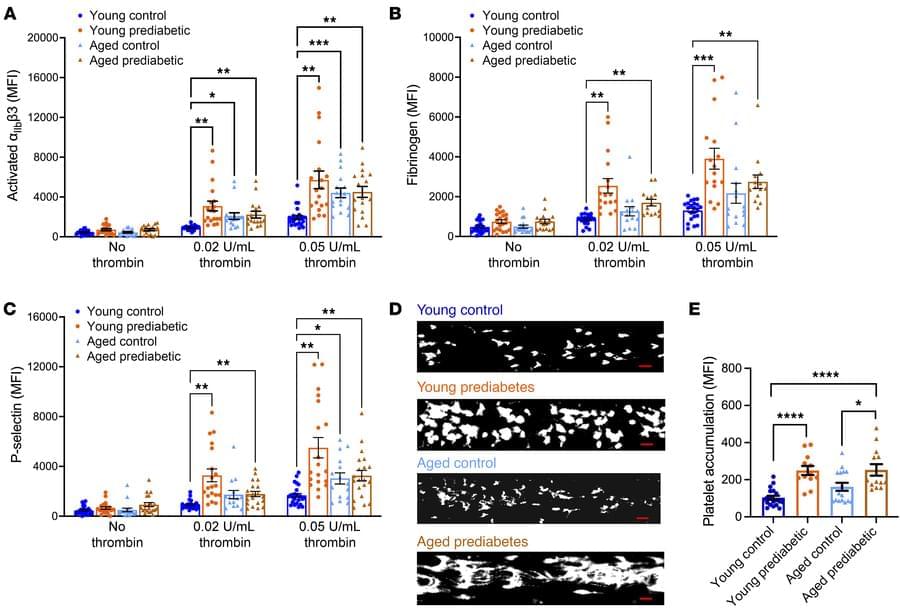
Abstract: Can we lower cardiovascular disease in prediabetes using antioxidants that target mitochondrial oxidative stress?

In this Research Article, Sanjana Dayal report on a link between prediabetes, platelet activation, and thrombosis:

The images show platelet accumulation after 5 minutes of continuous flow on a collagen-coated chamber.


Address correspondence to: Sanjana Dayal, Department of Internal Medicine, Carver College of Medicine, University of Iowa, 100D EMRB, 500 Newton Road, Iowa City, Iowa, 52,242, USA. Phone: 319.335.7712; Email: [email protected].

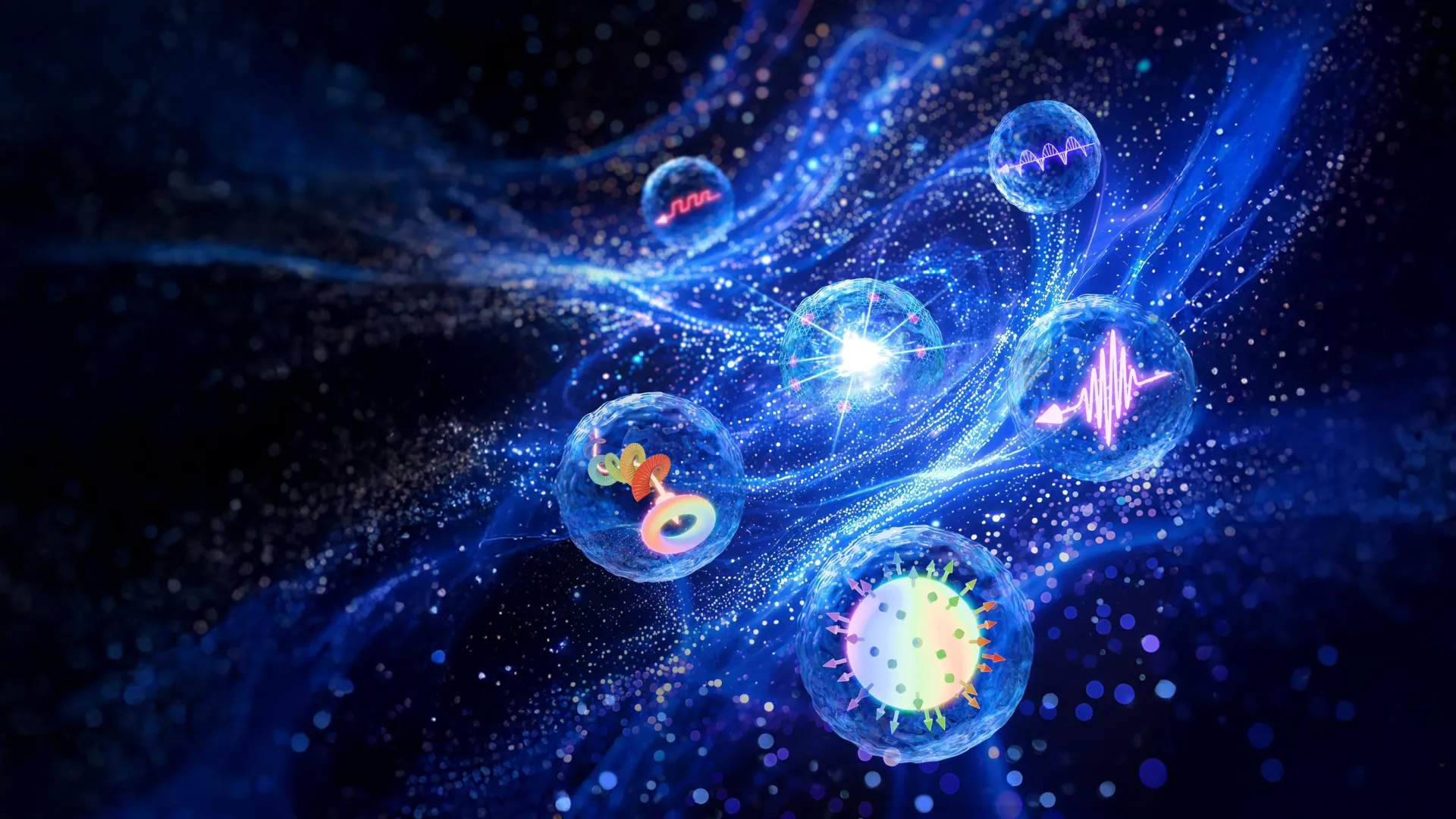
Researchers unlock hidden dimensions inside a single photon

Researchers have discovered new ways to shape quantum light, creating high-dimensional states that can carry much more information per photon. Using advanced tools like on-chip photonics and ultrafast light structuring, they’re pushing quantum communication and imaging into exciting new territory. Although long-distance transmission remains tricky, innovative approaches—such as topological quantum states—could make these fragile signals far more resilient. The momentum suggests quantum optics is entering a bold new phase.

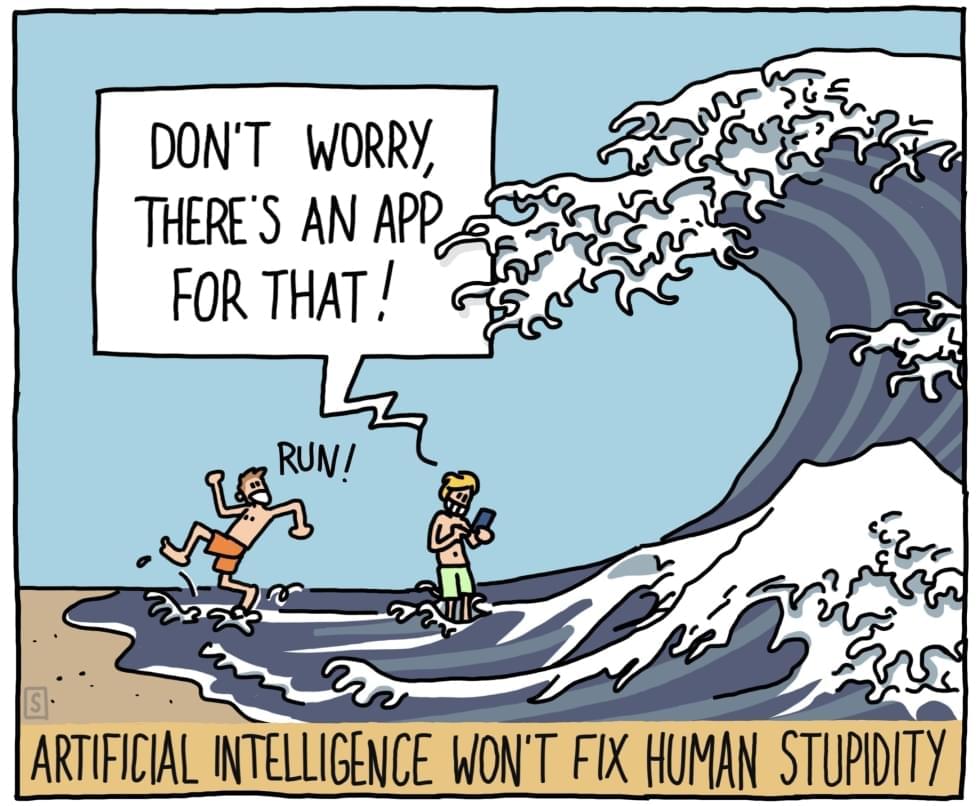
Technology is NOT Enough!

Fifteen years ago, I wrote something that annoyed many techno-optimists.

Ten years ago, I filmed it as a podcast.

Today it feels less controversial — and more urgent.

Technology is NOT Enough.

We have the science to feed everyone. We have the tech to provide clean water. We understand climate change. We know how to reduce suffering.

And yet we don’t act.

Comments on the Hartle-Hawking state and observers — Ying Zhao

Workshop on quantum aspects of black holes and spacetime.

Topic: Comments on the Hartle-Hawking state and observers.
Speaker: Ying Zhao.
Affiliation: Massachusetts Institute of Technology.
Date: December 3, 2025
Wolfensohn Hall.

It was argued that any fixed holographic theory contains only one closed universe state and hence fails to give semi-classical physics. It was proposed that this problem can be resolved by including a classical observer living inside the universe. Earlier works focused on closed universes connected with asymptotic Euclidean boundaries. In this talk we examine the case of Hartle-Hawking state where the dominant Euclidean topology is a sphere. We show that different features emerge. We comment on the potential implications for the understanding of de Sitter space. Based on work with Daniel Harlow.

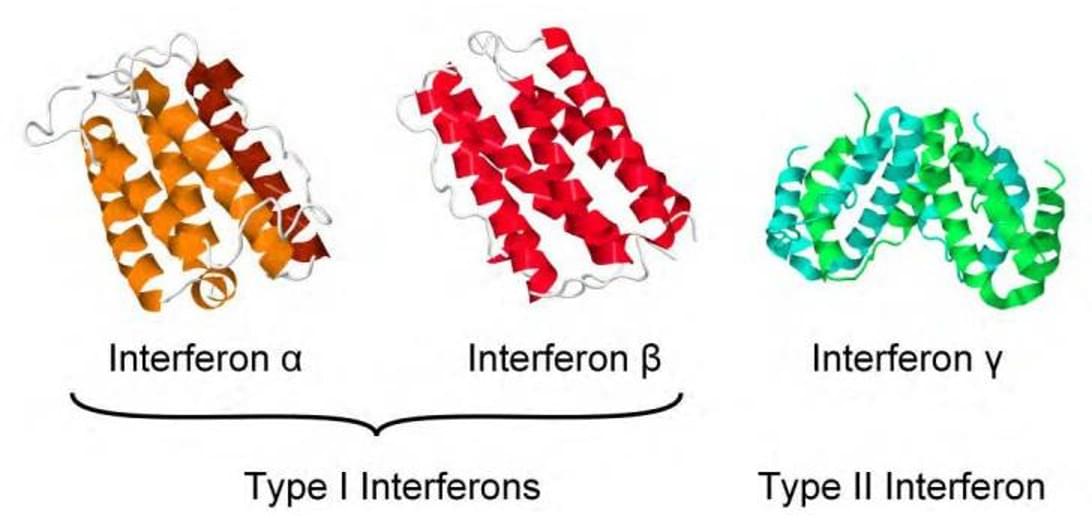
Interferons: Interferons (IFNs) are a family of antiviral and immunomodulatory signaling proteins produced by host cells to fight pathogens like viruses, bacteria, and tumors

(IFNs) are a family of antiviral and immunomodulatory signaling proteins produced by host cells to fight pathogens like viruses, bacteria, and tumors.

As cytokines, they alert neighboring cells to activate defenses, inhibit viral replication, and regulate immune responses.

Common uses include treating hepatitis B and C, multiple sclerosis, and certain cancers like melanoma and lymphoma.

For more information click on the link below: sciencenewshighlights ScienceMission.

From theory to safety: New model predicts how combustion scenarios unfold

Researchers from Skoltech have published a paper in the journal Physica D: Nonlinear Phenomena presenting an analysis of steady propagating combustion waves—from slow flames to supersonic detonation waves. The study relies on the authors’ mathematical model, which captures the key physical properties of complex combustion processes and yields accurate analytical and numerical solutions. The findings are important for understanding the physical mechanisms behind the transition from deflagration to detonation, as well as for developing safer engines, fuel combustion systems, and protection against unwanted explosions in industrial settings.

The scientists identified several main types of combustion waves. The most powerful is strong detonation —a supersonic shock wave that sharply compresses and heats the mixture, triggering a chemical reaction. This type of wave is highly stable. In weak detonations and weak deflagration waves, there is no abrupt shock front.

The chemical reaction only begins if the mixture has been preheated to a temperature where it can ignite. These regimes occur rarely, under specific conditions, and can easily break down or transition into another wave type.

Using high-energy sparks to degrade pollutants without generating waste

A study published in the Chemical Engineering Journal proposes a new approach to environmental remediation of pharmaceutical pollutants in water flows. This approach is based on a phenomenon known as “sparks,” which refers to the sparks that appear on the surface of a metal when it is subjected to plasma electrolytic oxidation (PEO).

During PEO, a metal part (in this case, aluminum) is immersed in a liquid to which an electrical voltage is applied. This results in the growth of an oxide coating. During the process, micro-electrical discharges, or sparks, appear. These sparks last for fractions of a second and cover a small area. However, they lead to very high temperatures, which is why they are nicknamed the “second sun.” This treatment is used on aluminum, magnesium, titanium, and other metal parts in the aerospace, automotive, medical, and electronics industries to create an oxide coating that improves the resistance of the material to corrosion and heat.

/* */