Toggle light / dark theme

Get the latest international news and world events from around the world.

Log in for authorized contributors

BaSi₂-supported nickel catalyst boosts low-temperature hydrogen production

A new catalyst strategy developed at Institute of Science Tokyo uses BaSi2 as a support for nickel and cobalt to decompose ammonia at lower temperatures. By forming unique ternary transition metal–nitrogen–barium intermediates that facilitate nitrogen coupling, the system lowers the energy barrier for ammonia decomposition. This enables nickel-and cobalt-based catalysts to achieve high hydrogen-production activity at reduced temperatures, matching the performance of ruthenium while relying on Earth-abundant metals for cleaner hydrogen generation.

As the world turns toward cleaner energy sources, hydrogen has emerged as a promising alternative to fossil fuels. Hydrogen can be obtained from various sources such as natural gas, water, biomass, and hydrogen-rich carriers. Ammonia is one such source attracting growing attention as an efficient hydrogen carrier because it stores large amounts of hydrogen and is easier to transport. However, releasing hydrogen from ammonia is typically challenging, as it either requires precious metal catalysts such as ruthenium or non-precious metal catalysts operating at very high temperatures.

Addressing this challenge, a team of researchers led by Dr. Qing Guo and Dr. Shiyao Wang, together with Professor Masaaki Kitano and Specially Appointed Professor Hideo Hosono from the MDX Research Center for Element Strategy, Institute of Integrated Research, Institute of Science Tokyo, Japan, developed a new catalyst design strategy for ammonia decomposition. Instead of solely relying on the catalyst metal, this strategy focuses on using barium silicide (BaSi2) as an active support that directly participates in the catalytic process. The study was published in the Journal of the American Chemical Society on February 19, 2026.
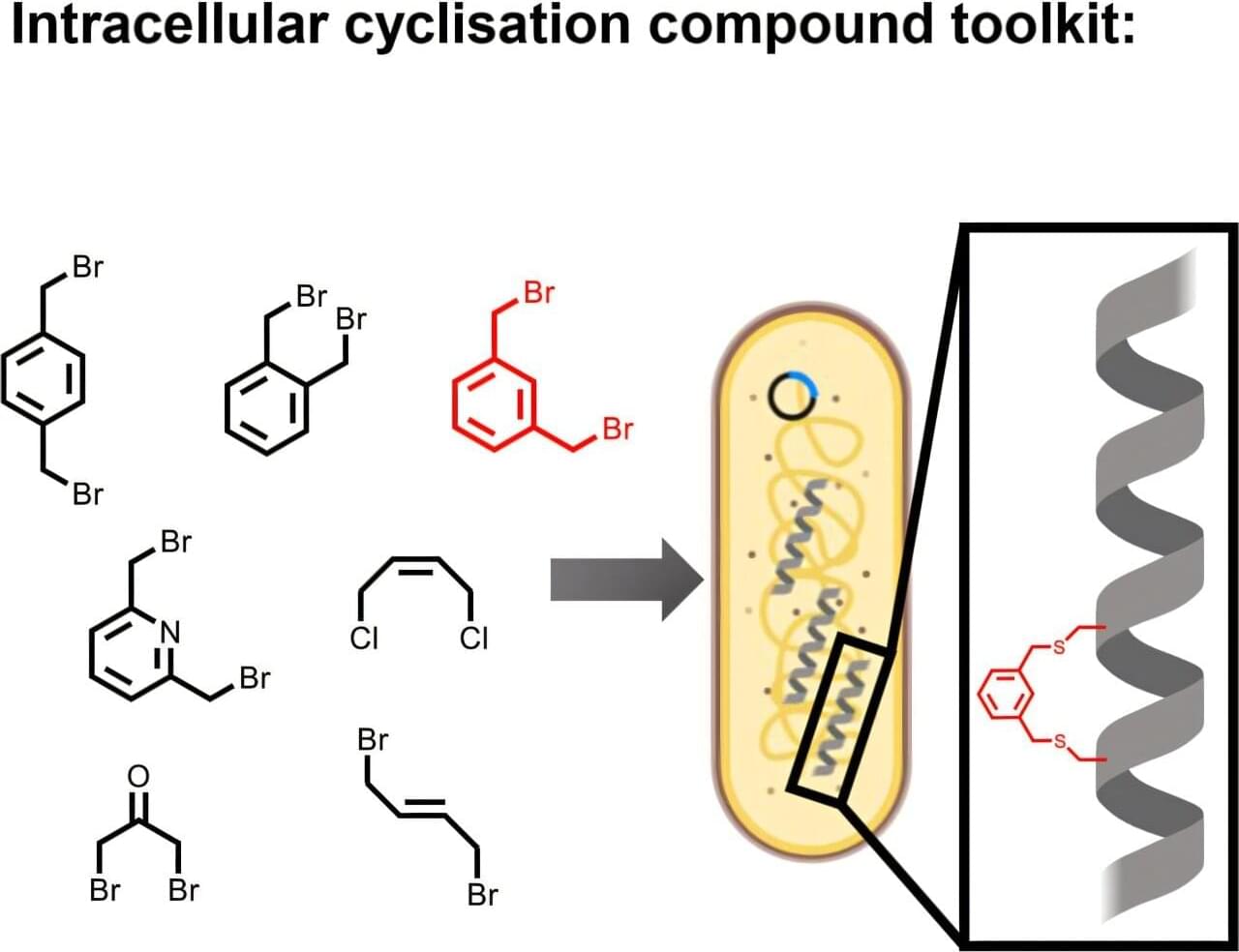

Chemically ‘stapled’ peptides used to target difficult-to-treat cancers

Researchers at the University of Bath have developed a new technology that uses bacteria to build, chemically stabilize, and test millions of potential drug molecules inside living cells, making it much quicker and easier to discover new treatments for difficult-to-treat cancers.

Scientists based at the University’s Department of Life Sciences are investigating peptides—short chains of amino acids, the building blocks of proteins—as potential drugs for a family of notoriously “undruggable” cancer drivers known as transcription factors. These proteins act as master switches that control gene activity and are frequently overactive in cancer.

Poking a nanostring: Scientists uncover energy cascades in tiny resonators

Scientists at TU Delft have designed a nanostring that, when poked, doesn’t lose its energy to the environment immediately. Instead, the energy leaks out within the string, triggering a cascade of distinct vibrational modes. For the first time, researchers have observed this cascade reaching all the way up to the fifth mode, while only actuating the first mode.

This discovery offers new insights that could benefit the development of extremely sensitive sensors. The results have been published in Physical Review Letters.

“Imagine plucking a guitar string,” associate professor Farbod Alijani begins to explain. “Eventually its energy dissipates into its surroundings and the vibrations slowly die out.” The team engineered a nanoscale string that behaves in a very distinct manner.

Bioinspired robot eye adjusts its pupil to handle harsh lighting

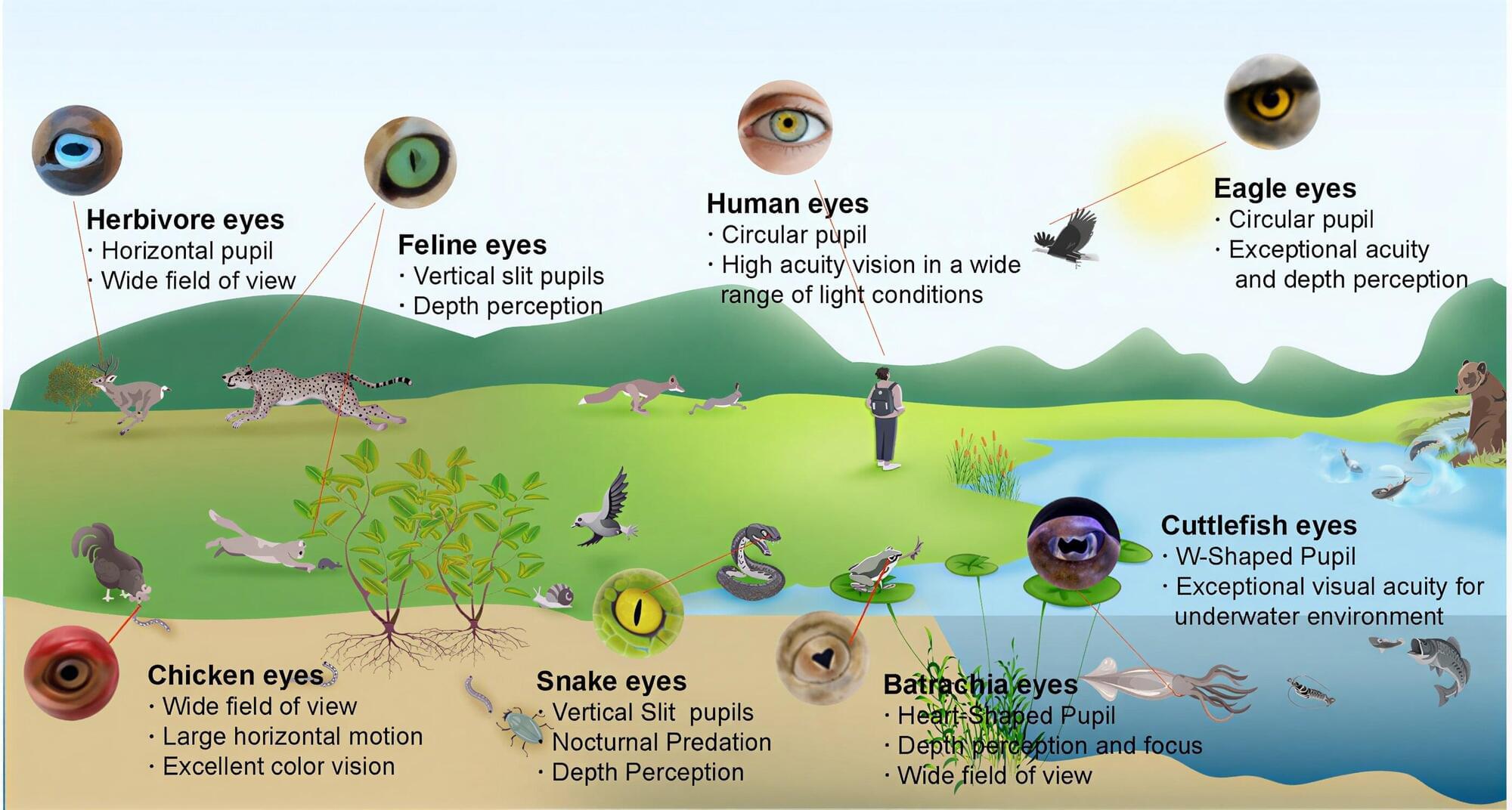
Robot vision could soon get a boost thanks to the development of a bioinspired eye that can automatically adjust its pupil size in response to changing light levels. Robots, self-driving cars and drones often struggle with dynamic lighting. If a car enters a dark tunnel, its camera aperture needs to stay wide open to capture enough light to see, just like our pupils do when the lights go out. But when it exits into daylight, it can be instantly blinded by the glare.

In a study published in the journal Science Robotics, researchers detail how they have created a bioinspired vision system that not only mimics the way eyes see but also adapts to light conditions. The technology is designed to bridge the gap between how a standard camera sees and how living creatures view their surroundings.

Cameras may excel at capturing high-resolution images, but in dynamic environments, they lack the flexibility to adapt.

Power producers have financial incentives to block market integration despite cost savings, says study

Renewable energy is lowering electricity costs in some parts of the country, but those benefits aren’t being seen by consumers everywhere because they’re typically placed far away from demand centers. Better integrating electricity transmission networks across regions could significantly reduce generation costs, new research from the University of Michigan shows—at the expense of generation companies’ profits. The study is published in the journal Proceedings of the National Academy of Sciences.

Economist Catherine Hausman, associate professor at the Ford School of Public Policy, and colleagues found that improving interregional connectivity could have saved anywhere from $5.8 billion to $7.1 billion in electricity generation costs in 2022, and $3.4 billion to $5 billion in 2023.

At the same time, investing in regional connectivity could cost some power plants over $20 million in annual net revenue—giving them financial incentives to block or delay transmission network improvements.

Hidden atomic dichotomy drives superconductivity in ultra-thin compound

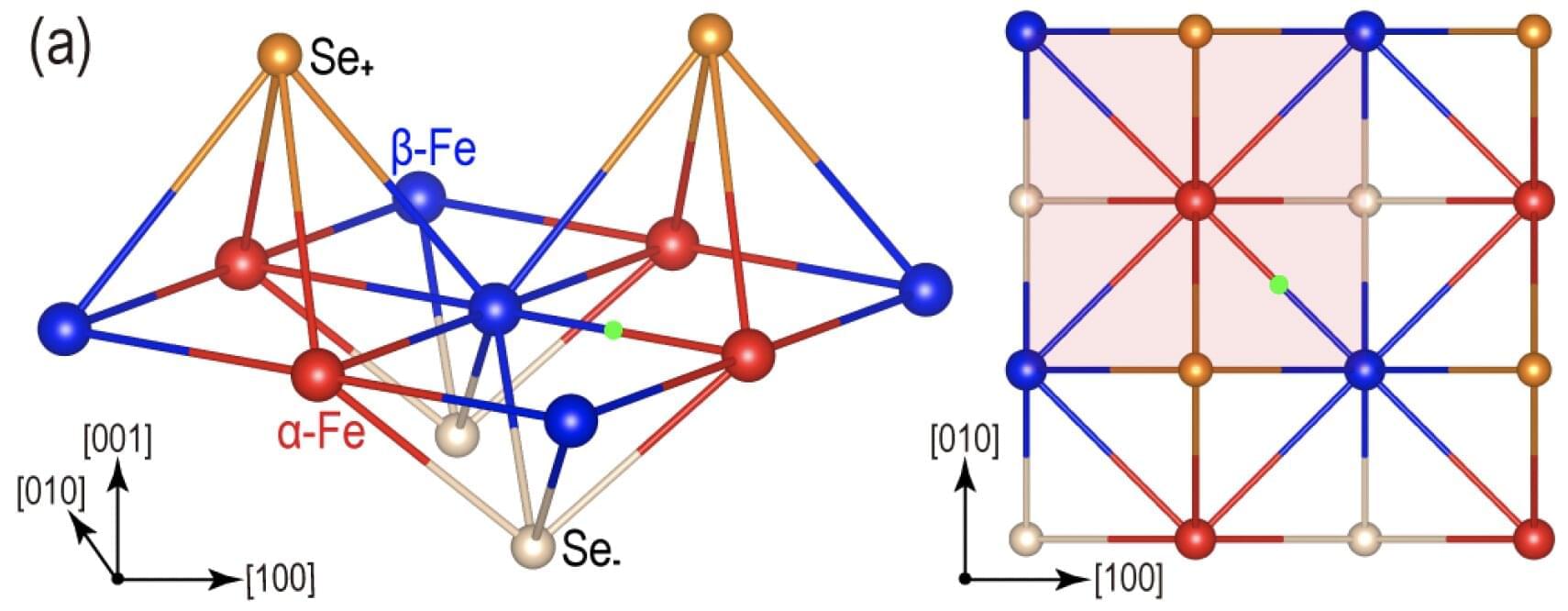
Physicists in China have unveiled new clues to the origins of high-temperature superconductivity in an iron-based material just a single unit-cell thick. Led by Qi-Kun Xue and Lili Wang at Tsinghua University, the team’s experiments show that the effect emerges through a striking dichotomy between two atomic “sublattices” in the material—offering deeper insight into how superconductivity arises. Their results are published in Physical Review Letters.

When cooled below its critical temperature, a superconductor allows electrical currents to flow with virtually zero resistance. While most superconductors discovered so far have critical temperatures close to absolute zero, recent decades have seen the discovery of increasingly advanced materials that host the effect at ever higher temperatures, making them far easier to implement for practical applications.

In 2012, superconductivity was discovered in a single-unit-cell-thick layer of iron selenide (FeSe), consisting of a Se–Fe–Se trilayer only 0.55 nm thick. However, it remained unclear how such a strong superconducting effect could emerge in such an ultrathin system.

Liquid crystal phase in antiferromagnets can be detected electrically

The best candidate for next-generation magnetic devices—technology that can power, store, sense or transport information—may be, counterintuitively, antiferromagnets. Today, the most widely used magnetic materials are ferromagnets, which exhibit permanent magnetization and therefore strongly attract each other. Their opposite, called antiferromagnetic materials, exhibit no net magnetization at all. Despite a net zero magnetic field, they offer appealing properties that would solve the challenges of current magnetic technologies, like stray magnetic field generation or slow operation.

Now, a team led by researchers at Tohoku University has taken the first step toward developing antiferromagnetic technology. The researchers found, for the first time, that under a current, antiferromagnets can exhibit a phase of matter known as “liquid-crystal,” or nematic, that can be electrically detected. Their study is published in Nature Communications.

“The antiferromagnets we work with possess a fundamentally different symmetry from conventional ferromagnets, meaning that they are not simply an alternative material platform, but a new class of magnets expected to host entirely new electronic functionalities,” said corresponding author Hideaki Sakai.

Letting atomic simulations learn from phase diagrams

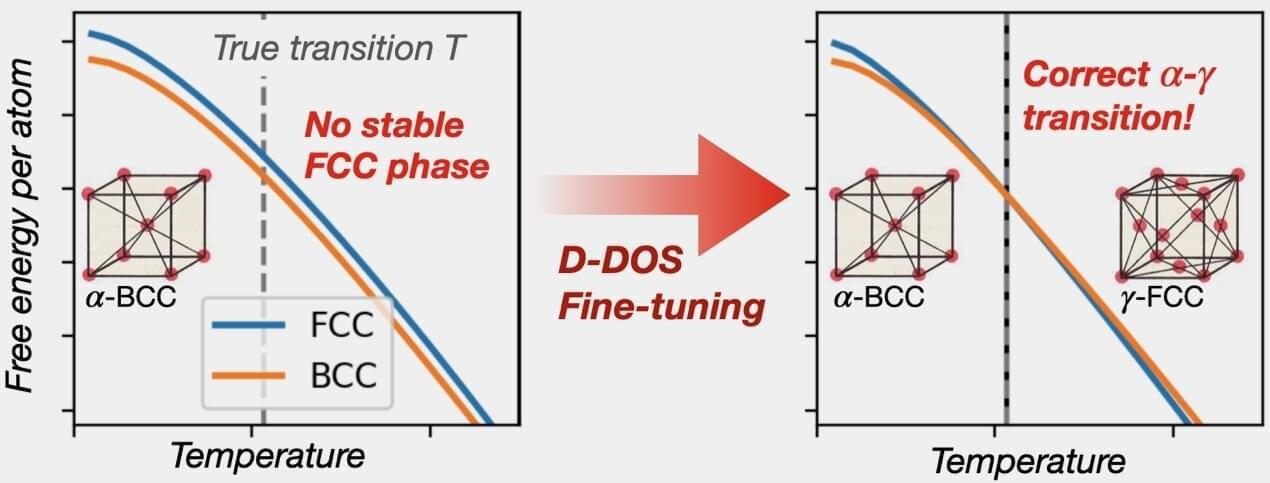
A new computational method allows modern atomic models to learn from experimental thermodynamic data, according to a University of Michigan Engineering and Université Paris-Saclay study published in Nature Communications. Leveraging a machine learning technique called score matching, the method expresses the thermodynamic free energy of atomic systems as a function of the underlying atomic interaction model, unlike standard schemes where the interaction model is fixed.

By returning thermodynamic predictions as functions rather than static numbers, the method, which is also over 10 times more efficient than previous approaches, can easily quantify and help accelerate computational materials discovery by opening up new inverse design capabilities. The method is called “descriptor density of states” and is abbreviated D-DOS.

“The D-DOS method provides a two-way connection between the latest generation of atomic simulations and the classical resource of phase diagrams, exposing these datasets to machine learning-driven computer models,” said Thomas Swinburne, an assistant professor of mechanical engineering at U-M and co-corresponding author of the study.

A new ‘uncertainty relation’ for quantum measurement errors

One of the most striking features of quantum physics is that certain properties cannot be measured at the same time. Every measurement may inevitably affect the object’s physical state being measured—and therefore also the outcome of any subsequent measurement. How fast something is moving, for example, can depend on whether its position was measured beforehand.

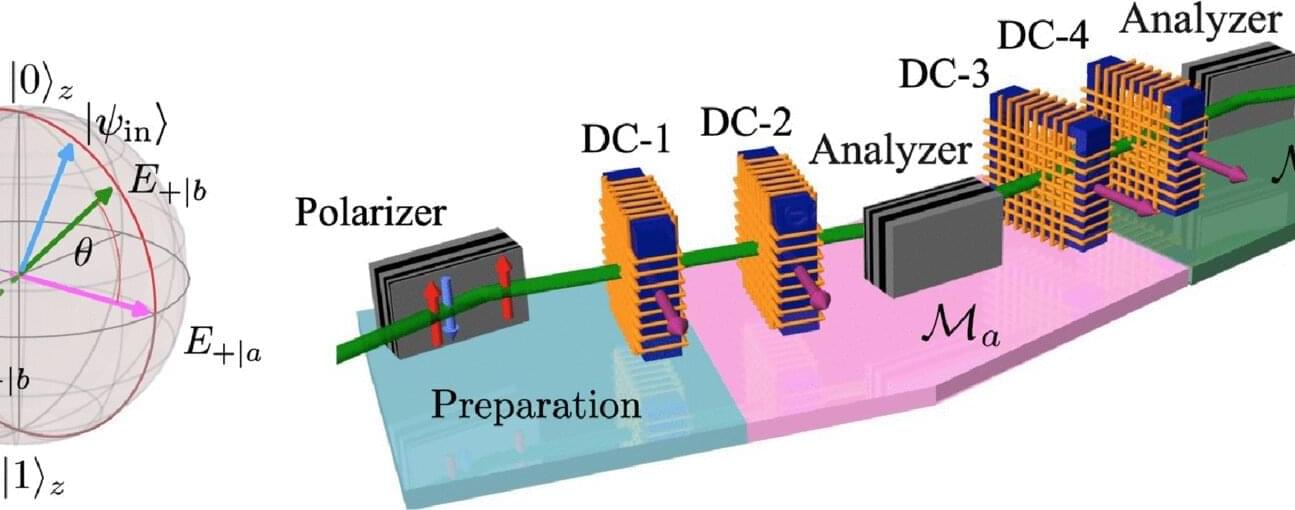
How strongly a measurement intervenes in the quantum state determines how reliably the result of a second measurement can be predicted from the first. This qualitative connection has been known for a long time. What is new, however, is that researchers at TU Wien have now found a formula that allows this effect to be quantified exactly.

They discovered a simple “uncertainty relation” that links measurement disturbance and measurement correlation. Using this relation, it becomes possible in a remarkably straightforward way to determine which combinations of quantum operations are possible—and which are fundamentally excluded. Their paper is published in the journal Physical Review Research.

/* */