Summary: A breakdown in regulatory mechanisms causes iron to build up in the brain during aging, increasing oxidative stress and increasing the risk of age-related cognitive decline, a new study reports.
Source: Northwestern University.
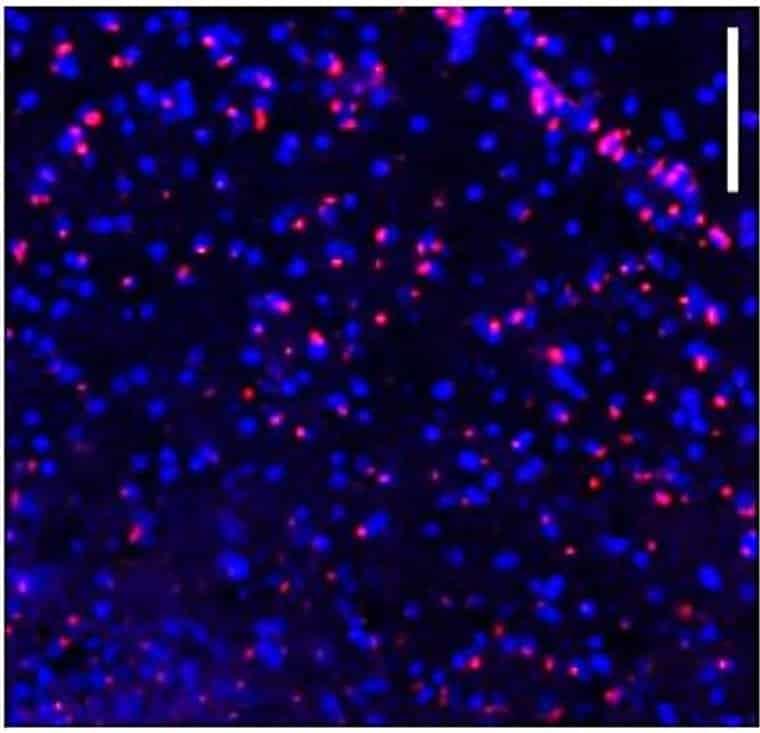
Breakdowns in regulatory mechanisms cause iron to build up in the brain as organisms grow older, increasing oxidative stress and causing cellular damage, according to a Northwestern Medicine study published in the journal eLife.
Our eyes are continuously bombarded by an enormous amount of visual information – millions of shapes, colors, and ever-changing motion all around us.
For the brain, this is no easy feat.
On the one hand, the visual world alters continuously because of changes in light, viewpoint, and other factors. On the other, our visual input constantly changes due to blinking and the fact that our eyes, head, and body are frequently in motion.
𝘾𝙤𝙜𝙣𝙞𝙩𝙞𝙫𝙚 𝙙𝙚𝙘𝙡𝙞𝙣𝙚 𝙖𝙣𝙙 𝙛𝙤𝙧𝙜𝙚𝙩𝙩𝙞𝙣𝙜 𝙩𝙝𝙞𝙣𝙜𝙨 𝙖𝙨 𝙬𝙚 𝙜𝙚𝙩 𝙤𝙡𝙙𝙚𝙧 𝙞𝙨 𝙖𝙡𝙢𝙤𝙨𝙩 𝙖 𝙧𝙞𝙜𝙝𝙩 𝙤𝙛 𝙥𝙖𝙨𝙨𝙖𝙜𝙚. 𝘼𝙡𝙡… See more.
Cellular senescence is a state where cells get stuck in a particular phase of their cell cycle, which can affect physiological function. In the brain this effect can block neuroregeneration. Clearing them may reverse certain aspects of cognitive decline associated with aging, including memory loss.
What are biomarkers? They are medical signals that can measure health in an accurate and reproducible way. Common examples include blood pressure readings, heart rate, and even genetic test results.
Modern digital devices measure several health parameters. Fitbit trackers use sensors such as accelerometers to tell how many steps we’ve taken in a day or how fast we’ve been walking. When can such novel health measures function as medical biomarkers?
The measures must be objective, quantifiable, and reproducible. Additionally, scientific evidence needs to show that the health attribute measured by the device maps consistently and accurately to a clinical outcome. For example, voice signals from a smartphone’s microphone can detect mild cognitive impairment due to Alzheimer’s disease. World War II, commanders and troops communicated using hand-sent Morse codes. To avoid capture by enemies, telegraph operators had to remain anonymous. Any clues about operator identity or location could influence battle outcomes.
New research published in Human Brain Mapping provides evidence of a shared neural mechanism that underlies sleep disturbance and mental disorders in preadolescents. The findings indicate that sleep disturbance and mental health problems are both related to the connectivity between and within two important brain networks.
“I noticed the importance of sleep years ago when I read several papers about the immediate amyloid protein deposition in the brain after short-term sleep deprivation. Amyloid is neurotoxic waste in the brain and needs to be transported out by cerebrospinal fluid,” said study author Ze Wang, an associate professor of diagnostic radiology and nuclear medicine at the University of Maryland School of Medicine.
“But cerebrospinal fluid is basically static most of the time. The best time to have more cerebrospinal fluid and increased flow rate is at night when you lay down and fall asleep. It is this time that our cerebral blood flow reduces. Because our brain has a fixed size, the reduction of cerebral blood flow creates space for cerebrospinal fluid and the inhomogeneous change of blood flow creates power for cerebrospinal fluid to flow and then transport the neural waste out. This is why our brain generates two times as much cerebrospinal fluid at night than daytime.”
Summary: Researchers reveal how the brain creates an illusion of visual stability.
Source: The Conversation.
Our eyes are continuously bombarded by an enormous amount of visual information – millions of shapes, colours and ever-changing motion all around us. For the brain, this is no easy feat.