Toggle light / dark theme

Transparent Tribe Launches New RAT Attacks Against Indian Government and Academia

The threat actor known as Transparent Tribe has been attributed to a fresh set of attacks targeting Indian governmental, academic, and strategic entities with a remote access trojan (RAT) that grants them persistent control over compromised hosts.

“The campaign employs deceptive delivery techniques, including a weaponized Windows shortcut (LNK) file masquerading as a legitimate PDF document and embedded with full PDF content to evade user suspicion,” CYFIRMA said in a technical report.

Transparent Tribe, also called APT36, is a hacking group that’s known for mounting cyber espionage campaigns against Indian organizations. Assessed to be of Indian origin, the state-sponsored adversary has been active since at least 2013.

Cybercriminals Abuse Google Cloud Email Feature in Multi-Stage Phishing Campaign

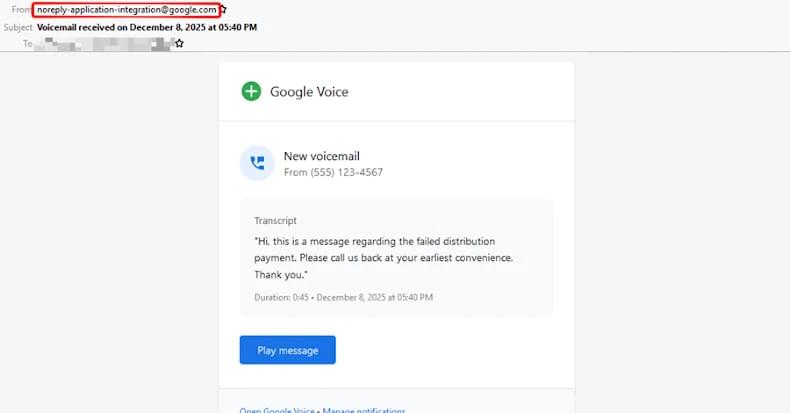
In response to the findings, Google has blocked the phishing efforts that abuse the email notification feature within Google Cloud Application Integration, adding that it’s taking more steps to prevent further misuse.

Check Point’s analysis has revealed that the campaign has primarily targeted manufacturing, technology, financial, professional services, and retail sectors, although other industry verticals, including media, education, healthcare, energy, government, travel, and transportation, have been singled out.

“These sectors commonly rely on automated notifications, shared documents, and permission-based workflows, making Google-branded alerts especially convincing,” it added. “This campaign highlights how attackers can misuse legitimate cloud automation and workflow features to distribute phishing at scale without traditional spoofing.”

The biggest cybersecurity and cyberattack stories of 2025

2025 was a big year for cybersecurity, with major cyberattacks, data breaches, threat groups reaching new notoriety levels, and, of course, zero-day vulnerabilities exploited in incidents.

Some stories, though, were more impactful or popular with our readers than others.

Below are fifteen of what BleepingComputer believes are the most impactful cybersecurity topics of 2025, with a summary of each. These stories are in no particular order.

New GlassWorm malware wave targets Macs with trojanized crypto wallets

A fourth wave of the “GlassWorm” campaign is targeting macOS developers with malicious VSCode/OpenVSX extensions that deliver trojanized versions of crypto wallet applications.

Extensions in the OpenVSX registry and the Microsoft Visual Studio Marketplace expand the capabilities of a VS Code-compatible editor by adding features and productivity enhancements in the form of development tools, language support, or themes.

The Microsoft marketplace is the official extension store for Visual Studio Code, whereas OpenVSX serves as an open, vendor-neutral alternative, primarily used by editors that do not support or choose not to rely on Microsoft’s proprietary marketplace.

DarkSpectre Browser Extension Campaigns Exposed After Impacting 8.8 Million Users Worldwide

The threat actor behind two malicious browser extension campaigns, ShadyPanda and GhostPoster, has been attributed to a third attack campaign codenamed DarkSpectre that has impacted 2.2 million users of Google Chrome, Microsoft Edge, and Mozilla Firefox.

The activity is assessed to be the work of a Chinese threat actor that Koi Security is tracking under the moniker DarkSpectre. In all, the campaigns have collectively affected over 8.8 million users spanning a period of more than seven years.

ShadyPanda was first unmasked by the cybersecurity company earlier this month as targeting all three browser users to facilitate data theft, search query hijacking, and affiliate fraud. It has been found to affect 5.6 million users, including 1.3 newly identified victims stemming from over 100 extensions flagged as connected to the same cluster.

New ErrTraffic service enables ClickFix attacks via fake browser glitches

A new cybercrime tool called ErrTraffic allows threat actors to automate ClickFix attacks by generating ‘fake glitches’ on compromised websites to lure users into downloading payloads or following malicious instructions.

The platform promises conversion rates as high as 60% and can determine the target system to deliver compatible payloads.

ClickFix is a social engineering technique where targets are tricked into executing dangerous commands on their systems under believable pretenses, such as fixing technical problems or validating their identity.

/* */