The cerebral cortex, which controls higher processes such as perception, thought and cognition, is the most complex structure in the mammalian central nervous system. Although much is known about the intricate structure of this brain region, the processes governing its formation remain uncertain. Research led by Carina Hanashima from the RIKEN Center for Developmental Biology has now uncovered how feedback between cells, as well as molecular factors, helps shape cortical development during mouse embryogenesis.
The cortex is made up of layers of interconnecting cells that are produced in a particular order from progenitor cells. The relatively cell-sparse outer layer is formed first, then the dense deep layer, and finally the tightly packed upper layer. Hanashima and her colleagues were interested to discover exactly how the various layers form, so they created a mouse model that enabled them to control the expression of a particular protein, Foxg1, known to be involved in cortical development.
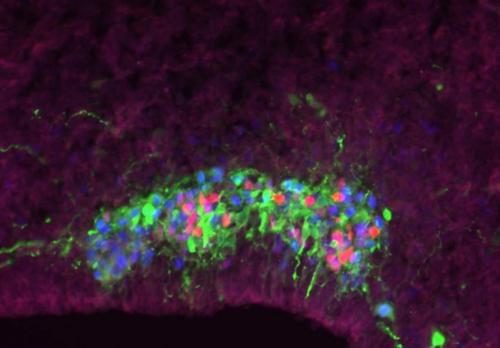
The Foxg1 gene, if switched on toward the end of embryogenesis after the outer layer of neurons has formed, triggers the production of deep-layer neurons, followed by upper-layer neurons (Fig. 1). The researchers found that it does this by repressing the activity of another gene, called Tbr1, in the outer-layer neurons.

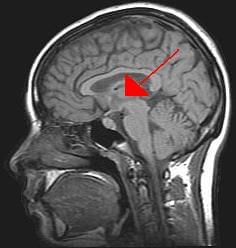 Oscillations in the brain occur because of an interplay between two forces, such as stimulation and inhibition. This dynamic can either come from two different cortical layers or a cortical and subcortical layer. Feedback properties affect the oscillations by either continuing the give and take of the two forces or changing them in various ways. Even with no outside input, the brain creates spontaneous oscillations; a well-known example is the one, connected to the thalamus and cortex, that occurs during sleep. Currently, it is believed that these oscillations help to synthesize and filter the previous day’s memories. While these oscillations are associated with sleep, most other brain oscillations are not clearly correlated with mental states.